The Complete Debt Consolidation Glossary: Terms You Must Know

The Complete Debt Consolidation Glossary: Terms You Must Know
Affiliate & Editorial Disclosure: The Money Question may earn a commission if you click through certain links on this page and are approved for a financial product. This does not influence our editorial content or rankings. We are committed to providing accurate, unbiased information to help you make informed financial decisions. For full details, please review our Affiliate Disclosure Policy.
This debt consolidation glossary is designed to help you understand the financial terms that appear in loan offers, credit reports, and repayment plans. Whether you are comparing consolidation loans, reviewing your credit file, or trying to understand how lenders evaluate applications, this glossary provides clear, beginner‑friendly definitions. Use it as a reference whenever you encounter unfamiliar language during your debt repayment journey. New to this topic? Start with our Beginner’s Guide to How Debt Consolidation Loans Work.
Quick Summary
This glossary explains the most important terms related to debt consolidation, credit reports, and repayment strategies. Each definition is written in plain language to help you compare loan options, understand lender requirements, and avoid common pitfalls. Use the Table of Contents to jump directly to any term.
Table of Contents
- Amortization
- Annual Percentage Rate (APR)
- Avalanche Method
- Balance Transfer
- Bankruptcy
- Charge-Off
- Collateral
- Collection Agency
- Consumer Disclosure (Canada)
- Consumer Proposal (Canada)
- Consolidation Loan
- Credit Bureau
- Credit Counseling
- Credit Freeze
- Credit Limit
- Credit Report
- Credit Score
- Credit Utilization
- Debt Consolidation
- Debt Management Plan (DMP)
- Debt Relief
- Debt Settlement
- Debt Validation Letter
- Default
- Delinquency
- DTI (Debt-to-Income Ratio)
- Equifax
- Experian
- FDCPA (Fair Debt Collection Practices Act)
- Fixed Rate
- Fraud Alert
- Grace Period
- Hard Inquiry
- Installment Loan
- Interest Rate
- Loan Servicer
- Minimum Payment
- Origination Fee
- Prepayment Penalty
- Principal Balance
- Revolving Credit
- Secured Loan
- Snowball Method
- Soft Inquiry
- Statute of Limitations on Debt
- TransUnion
- Underwriting
- Unsecured Loan
- Variable Rate
Glossary Terms
Amortization
Amortization is the process of repaying a loan through scheduled payments over time. Each payment includes both interest and principal, gradually reducing the balance. Debt consolidation loans typically follow an amortization schedule that shows how long repayment will take.
Annual Percentage Rate (APR)
APR represents the total yearly cost of borrowing, including interest and certain fees. It provides a more complete picture than the interest rate alone. Comparing APRs helps you determine whether a consolidation loan will save you money.
Avalanche Method
The avalanche method prioritizes paying off debts with the highest interest rates first. This approach minimizes total interest paid and can shorten your repayment timeline. It requires discipline but is mathematically efficient. See How Much Can Debt Consolidation Save You? for real-world examples.
Balance Transfer
A balance transfer moves debt from one credit card to another, often to take advantage of a lower interest rate or promotional offer. It can be a form of consolidation if multiple balances are combined. Success depends on paying off the balance before promotional rates expire.
Bankruptcy
Bankruptcy is a legal process that can eliminate or restructure certain debts when repayment is no longer possible. It offers strong protections but has long‑lasting credit consequences. Many people explore consolidation before considering bankruptcy.
Charge-Off
A charge‑off occurs when a creditor writes off a debt as uncollectible after significant delinquency. The debt may still be collected or sold to a collection agency. Charge‑offs harm your credit and can affect consolidation loan approval.
Collateral
Collateral is an asset pledged to secure a loan, such as a vehicle or savings account. If you fail to repay, the lender can claim the collateral. Secured consolidation loans may offer lower rates but carry higher risk.
Collection Agency
A collection agency pursues overdue debts on behalf of creditors or after purchasing the debt. Collection accounts can be stressful and damaging to your credit. Some consolidation lenders allow you to include collection accounts in a new loan.
Consumer Disclosure (Canada)
A consumer disclosure is a free, detailed credit report available to Canadians from Equifax or TransUnion. It includes account history, inquiries, and public records. Requesting a disclosure does not affect your credit score.
Consumer Proposal (Canada)
A consumer proposal is a legally binding agreement in Canada that allows you to settle unsecured debts for less than the full amount owed. It is administered by a Licensed Insolvency Trustee and provides protection from creditors. It is less severe than bankruptcy but still impacts your credit. Canadian borrowers can compare consolidation lenders on our Best Debt Consolidation Loans in Canada page.
Consolidation Loan
A consolidation loan combines multiple debts into one new loan with a single monthly payment. The goal is to simplify repayment and potentially reduce interest costs. It works best when you avoid taking on new debt during repayment. Compare lenders on our Best Debt Consolidation Loans of 2026 (US) or Best Debt Consolidation Loans in Canada pages.
Credit Bureau
A credit bureau collects and maintains information about your borrowing history. Lenders use this data to assess creditworthiness. Major bureaus include Equifax, Experian, and TransUnion.
Credit Counseling
Credit counseling provides guidance on budgeting, debt management, and repayment strategies. Nonprofit agencies may offer debt management plans that consolidate payments without taking out a new loan. Counseling can help you evaluate consolidation options.
Credit Freeze
A credit freeze restricts access to your credit report, preventing new accounts from being opened without your authorization. It is a strong tool for preventing identity theft. You can freeze and unfreeze your credit for free.
Credit Limit
A credit limit is the maximum amount you can borrow on a credit card or line of credit. High balances relative to your limit can hurt your credit score. Consolidation can help reduce utilization by paying down revolving debt.
Credit Report
A credit report is a detailed record of your credit accounts, payment history, and public records. Lenders review it when evaluating loan applications. Checking your report regularly helps you spot errors and prepare for consolidation. Learn how to access yours for free in our Annual Credit Report Guide.
Credit Score
A credit score is a three‑digit number that reflects your credit risk. Higher scores improve your chances of qualifying for consolidation loans with better rates. Payment history and credit utilization are major factors.
Credit Utilization
Credit utilization measures how much of your available revolving credit you are using. Lower utilization is better for your credit score. Consolidation can help reduce utilization by paying off credit card balances.
Debt Consolidation
Debt consolidation combines multiple debts into a single payment, often through a personal loan or balance transfer. It simplifies repayment and may reduce interest costs. Consolidation works best when paired with a disciplined budget. Use our free Debt Consolidation Savings Calculator to estimate your monthly savings.
Debt Management Plan (DMP)
A DMP is a structured repayment program offered by credit counseling agencies. You make one monthly payment to the agency, which distributes funds to creditors. It can reduce interest rates without requiring a new loan.
Debt Relief
Debt relief refers to strategies that reduce or restructure what you owe. Options include consolidation, settlement, consumer proposals, and bankruptcy. Each option has different costs and credit impacts.
Debt Settlement
Debt settlement involves negotiating with creditors to pay less than the full amount owed. It can reduce balances but often damages your credit. Settlement is different from consolidation, which focuses on full repayment.
Debt Validation Letter
A debt validation letter requests proof that a collection agency has the right to collect a debt. Collectors must provide documentation showing the amount owed and the original creditor. This helps protect you from errors and fraudulent claims.
Default
Default occurs when you fail to meet the terms of a credit agreement, usually after extended missed payments. It can lead to collections, legal action, and severe credit damage. Defaulted accounts may still be eligible for consolidation depending on the lender.
Delinquency
Delinquency refers to being late on a required payment. Lenders may report delinquencies to credit bureaus after a certain number of days past due. Repeated delinquencies increase the risk of default.
DTI (Debt-to-Income Ratio)
DTI compares your monthly debt payments to your monthly income. Lenders use it to determine whether you can handle a consolidation loan. Lower DTI ratios improve approval chances.
Equifax
Equifax is a major credit bureau that maintains consumer credit files. Lenders use Equifax data when evaluating applications. You can request your Equifax credit report to review your information.
Experian
Experian is a global credit bureau that provides credit reports and scores. Many lenders rely on Experian data when making credit decisions. Reviewing your Experian report helps you prepare for consolidation.
FDCPA (Fair Debt Collection Practices Act)
The FDCPA is a U.S. law that regulates how third‑party debt collectors may contact and treat consumers. It prohibits harassment, false statements, and unfair practices. Understanding your rights can help you respond confidently to collection attempts.
Fixed Rate
A fixed rate remains the same for the entire loan term, making payments predictable. Many consolidation loans use fixed rates to provide stability. Fixed rates are helpful for long‑term budgeting.
Fraud Alert
A fraud alert notifies lenders to verify your identity before opening new accounts. It is often used after suspected identity theft. Fraud alerts do not block access to your credit report but add a layer of protection.
Grace Period
A grace period is the time after a due date during which you can pay without incurring penalties or interest. Credit cards often offer grace periods on new purchases. Missing the grace period can lead to interest charges.
Hard Inquiry
A hard inquiry occurs when a lender checks your credit report during a credit application. Multiple hard inquiries in a short period can lower your credit score. Limiting applications helps protect your credit.
Installment Loan
An installment loan is repaid through fixed payments over a set period. Personal loans, auto loans, and mortgages are common examples. Most consolidation loans are installment loans.
Interest Rate
The interest rate is the cost of borrowing money, expressed as a percentage. It affects how much you pay over the life of a loan. Comparing interest rates is essential when evaluating consolidation options.
Loan Servicer
A loan servicer manages billing, payments, and customer support for a loan. Your servicer may be different from the original lender. Servicers handle day‑to‑day account management.
Minimum Payment
The minimum payment is the smallest amount required to keep a credit account in good standing. Paying only the minimum can extend repayment and increase interest costs. Consolidation aims to replace multiple minimum payments with one structured payment.
Origination Fee
An origination fee is a charge some lenders apply when issuing a new loan. It is often a percentage of the loan amount. Origination fees increase the total cost of borrowing.
Prepayment Penalty
A prepayment penalty is a fee charged if you pay off a loan early. Some lenders use this fee to recover lost interest. If you plan to repay aggressively, choose a lender without prepayment penalties.
Principal Balance
The principal balance is the amount you still owe on a loan, excluding interest. Each payment reduces the principal and the interest owed on it. Consolidation loans combine multiple principal balances into one.
Revolving Credit
Revolving credit allows you to borrow, repay, and borrow again up to a set limit. Credit cards and lines of credit are common examples. High revolving balances can hurt your credit score.
Secured Loan
A secured loan is backed by collateral, such as a car or savings account. Secured loans may offer lower interest rates but carry the risk of losing the asset if you default. Some consolidation loans are secured.
Snowball Method
The snowball method focuses on paying off the smallest debts first. Each payoff creates momentum and motivation. It is popular for its psychological benefits. Read our Beginner’s Guide to Debt Consolidation to understand which repayment strategy suits your situation.
Soft Inquiry
A soft inquiry is a credit check that does not affect your credit score. It occurs when you check your own credit or when lenders pre‑screen you for offers. Soft inquiries are visible only to you.
Statute of Limitations on Debt
The statute of limitations defines how long a creditor can sue you to collect a debt. The time limit varies by region and debt type. After the period expires, the debt still exists but legal enforcement is limited.
TransUnion
TransUnion is a major credit bureau that maintains consumer credit files. Lenders use TransUnion data when evaluating applications. Reviewing your TransUnion report helps you prepare for consolidation.
Underwriting
Underwriting is the process lenders use to evaluate
Frequently Asked Questions About Debt Consolidation Terms
What is the most important term to understand before getting a debt consolidation loan?
The most important term to understand is the Annual Percentage Rate (APR). APR reflects the true yearly cost of borrowing, including interest and certain fees. Comparing APRs helps you determine whether consolidation will actually save you money.
How do my credit report and credit score affect debt consolidation?
Your credit report and credit score influence your approval odds and the interest rate you receive. A stronger credit profile typically leads to better consolidation loan offers, while negative items like delinquencies or charge-offs can limit your options.
Is debt consolidation the same as debt settlement?
No. Debt consolidation combines multiple debts into one new payment, usually with the goal of paying everything in full. Debt settlement attempts to reduce the amount owed by negotiating lump-sum payments for less than the full balance. Settlement often has more serious credit consequences.
Can I still use my credit cards after consolidating my debt?
You may technically be able to use your credit cards after consolidation, but doing so can undermine your progress. Many borrowers keep cards open for credit history purposes but avoid new charges until the consolidation loan is paid off.
What should I check before choosing a consolidation lender?
Before choosing a lender, review the interest rate, APR, any origination fees, and whether the loan includes a prepayment penalty. Clear terms and transparent disclosures are signs of a reputable lender.
The Gold Standard Debate: Should We Return to Backed Money?

AFFILIATE DISCLOSURE:
This article contains affiliate links. We may receive a commission for purchases made through these links, at no extra cost to you. We only recommend products and services we believe will genuinely help you achieve your financial goals.
Explore the gold standard debate — should modern economies return to gold-backed money, or is fiat currency the better path forward?
Introduction: Why The Gold Standard Debate Still Matters Today
If there’s one topic that never seems to lose its shine in economic circles, it’s the gold standard debate. From YouTube finance influencers to policymakers and everyday savers, many are asking: Should we bring back money backed by gold?
The question isn’t just about nostalgia for shiny coins or distrust in “paper money.” It cuts to the heart of how value is created, stored, and protected in our financial system. In an age of inflation fears, digital currencies, and mounting government debt, people are searching for a system that feels real again — one grounded in something tangible.
So, should we go back to the gold standard? Or has the world moved beyond it for good?
Let’s unpack the history, arguments, and real-world implications — and see how this debate connects directly to your financial life today.
️ What Was the Gold Standard?
The gold standard was a monetary system where a country’s currency was directly tied to a specific amount of gold. For example, under the U.S. gold standard of the early 20th century, $35 equaled one ounce of gold. That meant every dollar in circulation could theoretically be exchanged for gold held in government vaults.
This system limited how much money could be created. The government couldn’t print more money unless it had more gold to back it up. Supporters say that kept inflation low and disciplined public spending.
Types of Gold Standards:
- Classical Gold Standard (1870–1914): Money was fully convertible to gold, and global trade was stable.
- Gold Exchange Standard (1925–1931): Countries held foreign currencies (like U.S. dollars or British pounds) backed by gold.
- Bretton Woods System (1944–1971): The U.S. dollar was pegged to gold, and other nations pegged their currencies to the dollar.
When President Richard Nixon ended dollar convertibility to gold in 1971, the world entered the era of fiat money — currency not backed by a commodity, but by government decree and economic trust.
⚖️ Fiat Money vs. Gold-Backed Money: What’s the Real Difference?
The debate often boils down to control versus stability.
Feature Gold-Backed Money Fiat Money
Value Basis Linked to a physical commodity (gold) Based on government trust and regulation
Money Supply Control Limited by gold reserves Determined by central banks
Inflation Control Naturally constrained Requires policy discipline
Economic Flexibility Restricted (limited stimulus) Highly flexible
Historical Stability Long-term stable prices Prone to inflation and crises
Crisis Response Slow — limited tools Quick — central banks can print money
Fiat systems allow nations to respond to crises like COVID-19 or financial crashes by injecting liquidity. But critics argue this power often leads to debt bubbles, currency devaluation, and inequality.
“Gold Standard vs. Fiat Money Comparison Template”
Use this simple template to compare how each system affects you personally.
Reflect and fill in your own observations.
Category Gold Standard System Fiat System (Today’s Money) Your Reflection
Money Creation Backed by physical gold reserves Created digitally or through lending _______________
Inflation Impact Historically low Often higher, depends on policy _______________
Savings Power Stable value over time Subject to erosion by inflation _______________
Debt and Borrowing Limited government borrowing High debt flexibility _______________
Economic Growth Slower but steadier Faster but volatile _______________
Financial Stability Hard money discipline Dependent on trust and regulation _______________
Personal Comfort Level Tangible security Policy-driven confidence _______________
Tip: Use this template as part of your personal financial education journal — track how your beliefs about money evolve as you understand the system better.
The Case For the Gold Standard
Advocates believe that returning to gold-backed money could restore trust and discipline in the economy. Here are the key arguments:
1. Inflation Control
Because money creation would be limited by gold reserves, governments couldn’t inflate away debt or overspend.
2. Fiscal Discipline
The gold standard forces governments to live within their means — reducing reckless deficit spending and long-term debt accumulation.
3. Stable Value
Over centuries, gold has retained its value better than any fiat currency. This stability can restore confidence for savers and investors.
4. Global Trust
A universal gold-based system could stabilize international exchange rates and reduce speculative currency wars.
As economist Milton Friedman once said:
“Inflation is taxation without legislation.”
The gold standard, in theory, prevents that kind of hidden tax.
The Case Against the Gold Standard
Critics argue that while gold may shine, it can also trap economies in rigidity.
1. Limited Flexibility
In times of crisis, such as the Great Depression, the gold standard prevented central banks from increasing the money supply to revive the economy.
2. Deflation Risk
When money supply can’t expand, prices fall — leading to wage cuts, job losses, and economic stagnation.
3. Resource Dependence
Economic growth would depend on mining more gold — not innovation or productivity.
4. Unequal Gold Distribution
Countries rich in gold (like the U.S. post–World War II) would dominate, leaving others vulnerable to external shocks.
5. Not Fit for the Digital Age
Modern economies rely on electronic transfers, derivatives, and dynamic credit systems — not physical metal locked in vaults.
A Balanced View: Could a Partial Gold Standard Work?
Some economists propose a hybrid system — where currencies are partially backed by gold, digital assets, or a commodity basket.
This could combine the stability of hard assets with the flexibility of fiat systems.
For example:
- The International Monetary Fund (IMF) has explored “Special Drawing Rights” (SDRs) as a diversified reserve currency.
- Central banks could issue digital currencies (CBDCs) with fractional gold backing to maintain public confidence.
Such innovations could represent a “Gold Standard 2.0” — not a step backward, but an evolution toward responsible money creation.
Trending Question: Would Returning to the Gold Standard Stop Inflation?
This is one of the most common questions driving the gold standard debate with strong arguments on both sides.
In theory, yes — tying money to gold would limit inflation by limiting the money supply and imposing fiscal discipline. But in practice, it is not guaranteed to stop inflation and could limit economic growth and increase unemployment during downturns resulting in economic instability and a loss of monetary policy flexibility to manage it.
The U.S. Congressional Research Service (CRS) notes that the Great Depression worsened because the gold standard restricted government action (source: crsreports.congress.gov).
Meanwhile, the Federal Reserve explains that fiat flexibility has helped stabilize output and prices since 1971 (federalreserve.gov).
So, while gold backing could discipline policy, it’s not a magic cure. The real solution lies in responsible governance, not just shiny metal.
What It Means for You: How This Debate Impacts Your Finances
Even if we never return to a gold standard, understanding this debate helps you make smarter decisions.
✅ 1. Inflation Awareness
Knowing how fiat systems work helps you protect your savings with inflation-hedged assets (like TIPS, real estate, or diversified ETFs).
✅ 2. Diversified Investing
Gold can be part of a balanced portfolio — not because of nostalgia, but as a hedge against monetary uncertainty.
✅ 3. Debt Perspective
In fiat systems, debt is a feature, not a flaw. Understanding this lets you navigate credit systems and government borrowing logically.
✅ 4. Critical Thinking
When politicians or influencers promise “sound money” through gold, you’ll be able to ask: How would that affect jobs, liquidity, and growth?
To deepen your understanding:
Internal Links (TheMoneyQuestion.org)
- Who Really Controls the Money? A Look at Central Banks
- The Debt Myth: Why Government Borrowing Isn’t Like a Household Budget
External Links
-
Federal Reserve History – The End of the Gold Standard https://www.federalreservehistory.org/essays/gold-standard
Overview from the Federal Reserve on why the U.S. ended gold convertibility in 1971 and the long-term economic implications. -
Congressional Research Service (CRS) – Returning to the Gold Standard: Historical and Policy Perspectives
https://crsreports.congress.gov/product/pdf/R/R43890
A nonpartisan U.S. government analysis explaining the potential effects of reinstating a gold-backed monetary system. -
Investopedia – What Is the Gold Standard?
→ https://www.investopedia.com/terms/g/goldstandard.asp
Educational reference summarizing the gold standard’s history, advantages, and disadvantages in accessible language.
“Then vs. Now: How the Gold Standard and Fiat Money Compare”
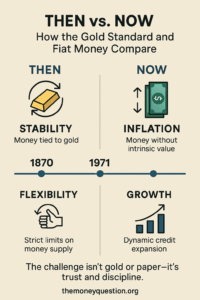
Sections:
- Visual timeline (1870 → 1971 → Today)
- Icons for stability, inflation, flexibility, and growth
- Key takeaway: “The challenge isn’t gold or paper — it’s trust and discipline.”
- Add footer: themoneyquestion.org
Key Takeaways
- The gold standard offered stability, but limited flexibility.
- Fiat money offers flexibility, but risks inflation and overspending.
- The best system may blend discipline with innovation.
- Understanding money’s foundation empowers smarter financial choices.
Conclusion: Beyond the Gold Standard Debate
The gold standard debate isn’t just academic — it’s about who controls money, and how that control affects your life.
Whether we back currency with gold, digital code, or trust, the key issue remains accountability.
If citizens understand money creation, demand transparency, and make informed personal choices, the system becomes stronger — whatever form it takes.
Gold isn’t the answer. But the discipline it represents might be the one lesson modern money still needs.
FAQs: The Gold Standard Debate
1. What was the purpose of the gold standard?
The gold standard aimed to ensure monetary stability by tying each unit of currency to a fixed quantity of gold. This limited governments from creating money arbitrarily and helped control inflation. It also made international trade smoother because exchange rates were predictable and trusted.
2. Why did the U.S. abandon the gold standard?
The U.S. left the gold standard in 1971 when President Nixon ended convertibility to preserve economic flexibility. Global trade imbalances and postwar spending made it impossible to maintain fixed gold prices. Moving to fiat money allowed the government and Federal Reserve to respond more effectively to inflation, unemployment, and recession pressures.
3. Would a return to gold stop inflation permanently?
A gold-backed system could reduce inflation by limiting the money supply, but it wouldn’t eliminate it entirely. Prices also depend on productivity, wages, and global demand. Historically, gold standards have sometimes caused deflation, which can be just as harmful as inflation.
4. Is gold-backed money safer than fiat money?
Gold-backed money can feel safer because its value is linked to a tangible asset rather than government trust. However, this safety comes at the cost of flexibility — governments can’t easily stimulate growth or respond to crises. Fiat systems rely on policy discipline instead of metal reserves for stability.
5. Can digital currencies be gold-backed?
Yes, several new technologies allow for digital currencies partially backed by gold. Central Bank Digital Currencies (CBDCs) or stablecoins could use gold reserves to ensure value stability while allowing digital efficiency. This hybrid model combines traditional trust with modern innovation.
6. What caused the Great Depression under the gold standard?
During the Great Depression, the gold standard limited how much money governments could create to boost their economies. As prices and wages fell, deflation deepened the downturn. Countries that left the gold standard earlier — like the U.K. — recovered faster than those that stayed tied to it.
7. Does any country use the gold standard today?
No major economy operates on the gold standard today; all use fiat money issued by central banks. However, countries like Switzerland and Singapore maintain strong gold reserves as part of their financial security strategy. Gold remains an important reserve asset, even without direct convertibility.
8. Should investors buy gold now?
Gold can be a good diversification tool, especially during times of inflation or market uncertainty. Financial advisors often recommend allocating 5–10% of your portfolio to gold or similar assets. It’s not about betting on a gold standard comeback — it’s about hedging against fiat volatility.
9. What are the pros of fiat money?
Fiat money gives governments and central banks the flexibility to manage the economy, fund public programs, and respond to crises. It allows for credit expansion and innovation, which drive growth. The challenge is maintaining discipline so that flexibility doesn’t lead to runaway inflation.
10. What’s the biggest takeaway from the gold standard debate?
The real question isn’t whether we should return to gold — it’s whether we can create a responsible and transparent monetary system. Sound money depends more on good governance and informed citizens than on any metal. Understanding both systems empowers you to make better financial and policy judgments.
Affiliate Disclosure
Some links on this page may be affiliate links. This means we may earn a small commission at no extra cost to you if you purchase through them.
Disclaimer: The content provided is for informational purposes only and is not a substitute for professional financial or legal advice.
A Brief History of Money and Banking

AFFILIATE DISCLOSURE:
This article contains affiliate links. We may receive a commission for purchases made through these links, at no extra cost to you. We only recommend products and services we believe will genuinely help you achieve your financial goals.
Discover how money and banking evolved—from ancient trade to banking in the Middle Ages—and what it reveals about today’s financial system.
Introduction: The Long Journey of Money and Banking
Money didn’t start as coins, paper, or digital code. It began as trust. From seashells and salt to gold coins and digital ledgers, the story of money is really a story about how humans organize trust, power, and value.
In this post, we’ll explore banking in the Middle Ages, the roots of modern finance, and what these historical lessons can teach you about money management today.
By the end, you’ll understand:
-
How early banking systems laid the groundwork for today’s economy
-
Why medieval innovations like bills of exchange changed everything
-
How understanding the past can help you make smarter financial decisions today
Before the Banks: Barter and Early Exchange
Long before credit cards and online transfers, humans relied on barter—trading goods and services directly.
But barter was inefficient. A farmer with wheat might not need a fisherman’s catch. This “double coincidence of wants” problem forced societies to find a common medium of exchange—something durable, portable, and universally accepted.
The Birth of Commodity Money
-
Early forms of money included cattle, shells, salt, silver, and gold.
-
By 2500 BCE, the Sumerians recorded transactions on clay tablets, one of the earliest examples of accounting.
-
The Code of Hammurabi (circa 1750 BCE) outlined interest rates and loan contracts, showing how old money management really is.
Money simplified trade, but it also required new systems of record-keeping, lending, and regulation—the precursors of banking.
Temples, Merchants, and the First “Banks”
Before there were bankers, there were priests. In Mesopotamia, temples held grain and precious metals for safekeeping. People deposited their valuables, and the temple lent resources to others—collecting interest as profit.
This early system mirrored modern banking principles:
-
Deposits: People entrusted goods to a trusted intermediary.
-
Loans: Those resources were lent to others.
-
Interest: The intermediary profited by lending at a higher rate.
By the time of ancient Greece and Rome, moneylenders—called trapezitai in Greek—handled deposits, loans, and currency exchange. In Rome, bankers (argentarii) even recorded transactions in ledgers similar to modern account books.
The Collapse of Rome and the Dormant Centuries
When the Roman Empire fell in the 5th century, Europe’s trade networks disintegrated. Roads decayed, cities emptied, and coins became scarce. The idea of “banking” all but disappeared.
But not everywhere.
In the Islamic world, scholars preserved and expanded financial knowledge. Islamic banking principles—rooted in partnerships and profit-sharing rather than interest—thrived from Baghdad to Cordoba.
These ideas would later influence European banking practices during the Middle Ages.
Banking in the Middle Ages: The Birth of Modern Finance
Banking in the Middle Ages—marks a turning point in financial history.
Between the 11th and 15th centuries, European commerce revived, trade routes reopened, and merchants needed safer, faster ways to move money across distances. Carrying gold was dangerous and inefficient, so they turned to paper instruments, early credit systems, and trusted financial intermediaries.
The Italian Banking Renaissance
The story begins in Italy, the heart of medieval trade. Cities like Venice, Florence, and Genoa became bustling hubs of commerce—and innovation.
Key Developments:
-
Bills of Exchange: Merchants could pay with paper instead of coins. These acted like early checks, allowing someone to deposit money in one city and withdraw it in another.
-
Merchant Banks: Families like the Medici of Florence created banking houses that offered currency exchange, loans, and investment services.
-
Double-Entry Bookkeeping: A revolutionary accounting method (first codified by Luca Pacioli in 1494) made it easier to track profits and losses accurately.
This was the dawn of financial literacy. Banking became systematic, and the word “bank” itself derived from banca—the Italian word for “bench,” where moneylenders once did business.
Faith, Trust, and Regulation in Medieval Finance
In the Middle Ages, money was not just economics—it was morality.
The Catholic Church forbade usury (charging interest), believing it sinful to profit from lending. But trade demanded credit, so bankers found creative ways around the rule—charging “fees” or “exchange rates” instead of explicit interest.
Meanwhile, trust became the currency of commerce. Banks held vast power but depended on reputation. A single rumor could trigger a medieval bank run, collapsing fortunes overnight—just as it can today.
Case Study: The Medici Bank
The Medici Bank (1397–1494) is often considered the blueprint of modern banking.
Founded by Giovanni di Bicci de’ Medici, it grew into a financial empire spanning Europe. The Medici family financed kings, popes, and trade expeditions—while pioneering practices like:
-
Branch banking (offices across cities)
-
Letters of credit (predecessors to modern wire transfers)
-
Partnership management structures
However, political entanglements and risky loans eventually led to the bank’s downfall—a timeless reminder that over-leverage and corruption destroy even the strongest institutions.
The Birth of National Banks
As Europe entered the Renaissance, monarchs realized they needed centralized systems to finance wars and trade. This led to additional developments to money and banking as financiers adapted to changing requirements of users of the financial system.
The Bank of Amsterdam (1609) became one of the first public banks, followed by the Bank of England (1694), which introduced the concept of fractional reserve banking—holding only a fraction of deposits in reserve while lending out the rest.
This innovation fueled economic growth but also created systemic risk, linking credit cycles, inflation, and government debt in ways that shape our world today. This led to developments in record keeping, credit assessment
From Paper to Policy: The Age of Central Banking
As trade globalized, so did money. Governments standardized currencies, issued banknotes, and began regulating credit and interest.
By the 19th century, central banks—like the Bank of France and later the U.S. Federal Reserve (1913)—emerged to stabilize economies, issue currency, and manage crises.
Yet, the roots of their power trace directly back to banking in the Middle Ages, when trust, record-keeping, and liquidity management first became financial science.
How Historical Banking Shapes Your Finances Today
Understanding this history isn’t just trivia—it’s empowerment.
Many modern banking practices—credit scoring, interest, savings accounts, and loans—stem from ideas refined over centuries. Knowing this can help you:
-
Make smarter borrowing decisions
-
See how banks manage (and sometimes manipulate) money supply
-
Recognize how trust and regulation shape financial stability
For instance, just as medieval merchants diversified trade routes, modern investors diversify portfolios. The principles endure even as the tools evolve.
Controversial Question: Should We Return to Gold-Backed Money?
One trending debate asks: “Would a return to gold-backed money restore financial stability?”
The gold standard, once common after the Renaissance, tied currency value to physical gold. Some argue it prevents inflation; others say it limits economic flexibility.
History shows that while gold systems created stability, they also restricted growth—especially in times of crisis. The flexibility of credit and monetary policy (originating from medieval and Renaissance banking) enabled societies to rebuild after wars, pandemics, and depressions.
Takeaway: Stability requires trust, not just metal. Sound governance matters more than what backs the currency.
Downloadable Freebies
1. Timeline of Money & Banking Evolution Worksheet
Visualize the transformation of trade and finance—from bartering to digital currency.
➡️ Download the Timeline Worksheet here (insert download link on site)
2. Money Systems Through History Cheat Sheet
A one-page quick reference summarizing key milestones, from Mesopotamian temples to crypto economies.
➡️ Download the Cheat Sheet here
Internal Links
To deepen your understanding, explore related posts on TheMoneyQuestion.org:
-
The Gold Standard Debate: Should We Return To Backed Money? (Coming Soon)
- The End of Fractional Reserve Banking? Here’s What We Know
External Sources
Conclusion: The Past Is the Blueprint for the Future
The story of money and banking is the story of civilization itself. From the grain banks of Mesopotamia to the Medici in Florence, from paper notes to digital ledgers, one thing remains constant: money is a system of trust.
Understanding banking in the Middle Ages shows that our financial system—while complex—is built on simple human principles of trust, record-keeping, and mutual benefit.
Whether you’re managing a household budget or analyzing global finance, knowing where money came from helps you navigate where it’s going.
FAQs
1. What was banking in the Middle Ages like?
It revolved around merchant families, bills of exchange, and trust-based credit systems—especially in Italy and Northern Europe. It was a time of significant innovation, though practices were constrained by religious prohibitions.
2. Who were the first bankers?
This question depends on how broadly you define “banking”, as the practice evolved over thousands of years. Temples in Mesopotamia (~2000BC), The Knights Templar (12th – 13th Century), and merchants in Renaissance Italy (14th – 15th Century) are considered the world’s earliest bankers.
3. What replaced barter systems?
Commodity money—like silver, gold, and salt—eventually evolved into coins and paper money.
4. Why was usury banned in medieval Europe?
The Church viewed charging interest as immoral, though trade required credit, leading to workarounds. Bankers found ways to circumvent this ban by:
- imposing a “fine” for late repayment, with the understanding that the debtor would always pay late.
- using contracts like the bill of exchange and adjusting the exchange rate to incorporate an implicit interest payment.
5. Who invented double-entry bookkeeping?
Luca Pacioli formalized it in 1494; this system remains the foundation of modern accounting.
6. What led to the fall of the Medici Bank?
Political risk, bad loans, and mismanagement caused its collapse.
7. How did banking spread beyond Italy?
Through trade networks into France, England, and the Low Countries, setting the stage for national banks.
8. What was the first central bank?
- The world’s oldest surviving central bank, and the one widely recognized as the first, is the Sveriges Riksbank (the Swedish Riksbank). It was founded in Sweden in 1668. The Bank of England (1694) is often credited as the second central bank.
9. How did medieval banking influence today’s system?
- Medieval banking, primarily led by Italian merchant families and religious orders, provided the foundational tools and concepts that are indispensable to the modern financial system. The core contribution was the shift from a physical, coin-based economy to a credit-based, document-driven system.
10. What can modern savers learn from history?
Here are four major lessons drawn from past financial crises, economic downturns and centuries of human behaviour:
- Everyone should have a Cash Emergency Fund. Failure to have access to cash make people more vulnerable to events like The Great Depression, the 2008 financial crisis and the COVID-19 economic shock.
- Diversification across different asset classes, geographic regions and industries is a must so no single event can wipe out your entire portfolio.
- Avoid overleveraging and speculation. Be cautious with debt, especially consumer debt.
- Pay yourself first. This is the ancient discipline of thrift. Make saving automatic and non-negotiable.
Affiliate Disclosure
This post may contain affiliate links. If you purchase through these links, TheMoneyQuestion.org may earn a small commission—at no extra cost to you.
Content is for informational purposes only and not a substitute for advice from certified financial professionals.
The Tyranny of the Rate of Return

AFFILIATE DISCLOSURE:
This article contains affiliate links. We may receive a commission for purchases made through these links, at no extra cost to you. We only recommend products and services we believe will genuinely help you achieve your financial goals.
Discover how the rate of return influences your money decisions, shapes wealth inequality, and learn strategies to break free from its hidden tyranny.
Introduction: Why “The Rate of Return” Rules Your Financial Life
When most people think about wealth, they picture hard work, budgeting, and saving. But behind the scenes, a single force quietly dictates how money grows—and who benefits most: the rate of return.
Whether it’s the interest you earn in a savings account, the growth of your retirement fund, or the yield on real estate, the rate of return acts as a financial “gravity.” It pulls wealth upward toward those who already have more, while making it harder for the average saver to catch up.
In this article, we’ll break down:
-
What the rate of return really means (and why it matters more than you think).
-
How it fuels inequality and shapes global economics.
-
Practical steps to use it for your advantage instead of being trapped by it.
By the end, you’ll understand why experts call it “the tyranny of the rate of return”—and how you can navigate it with confidence.
What Is the Rate of Return? A Simple Definition
The rate of return (ROR) is the percentage gain or loss on an investment over time.
Example:
-
You invest $1,000 in a stock.
-
A year later, it’s worth $1,100.
-
Your rate of return = (Gain ÷ Original Investment) × 100 = 10%.
ROR can apply to:
-
Savings accounts (interest earned).
-
Bonds (yield).
-
Stocks (price gains + dividends).
-
Real estate (rental income + appreciation).
It seems simple—but its long-term impact is profound.
The Power (and Tyranny) of Compounding
Albert Einstein allegedly called compound interest the “eighth wonder of the world.” But compounding works very differently depending on what rate of return you start with.
Example: Two Savers Over 30 Years
-
Saver A: Invests $10,000 with a 4% annual return → ends with about $32,000.
-
Saver B: Invests $10,000 with an 8% annual return → ends with about $100,000.
Same effort. Same time. Different access to returns. The tyranny lies in the fact that higher rates of return are easier to access if you already have wealth—through hedge funds, private equity, or real estate deals unavailable to the average worker.
The Rate of Return and Wealth Inequality
One of the most famous works on this topic is Thomas Piketty’s Capital in the Twenty-First Century. His research highlighted the formula:
r > g
-
r = the rate of return on capital.
-
g = economic growth (wages, productivity, GDP).
When the rate of return on investments consistently outpaces wage growth, wealth naturally concentrates at the top.
This is why billionaires’ fortunes grow faster than the paychecks of everyday workers. Your salary might rise 3% a year, but their portfolio grows 8–12%.
To dive deeper into inequality and money systems, see our post: Who Really Owns the Central Banks?
Trending Question: Is Chasing High Returns Always Worth It?
“Should I chase a higher rate of return?”
Many people ask whether they should pursue risky investments for higher returns. Here’s the truth:
-
Higher returns = higher risk. Crypto, meme stocks, and speculative real estate can yield double-digit returns, but they also come with the risk of major losses.
-
Moderate, steady returns build lasting wealth. A balanced portfolio of stocks, bonds, and index funds may “only” return 6–8% annually, but over decades, this creates massive compounding power.
-
Behavior matters more than the product. Avoiding panic selling, staying invested, and consistently contributing often beats the “hot tip” approach.
How Policy Shapes the Rate of Return
The rate of return is not just about personal finance—it’s shaped by larger forces:
-
Federal Reserve policies (interest rates influence bond yields and savings rates).
-
Government programs (retirement tax incentives encourage stock market participation).
-
Inflation (real return = nominal return – inflation).
For a deeper dive, read: What the Fed’s Move Means for Your Wallet.
How to Use the Rate of Return to Your Advantage
You can’t change global wealth dynamics—but you can improve your personal strategy.
1. Focus on Real Returns
If inflation is 4% and your savings account pays 2%, your real rate of return is -2%. Always consider inflation-adjusted returns.
2. Prioritize Asset Classes with Proven Returns
-
Stocks: Historically ~7–10% per year.
-
Bonds: ~3–5%.
-
Real estate: Varies, but often competitive with stocks.
3. Reduce Fees and Expenses
Even a 1% fee eats away thousands over decades. Favor low-cost index funds (like Vanguard or Fidelity).
4. Diversify
Don’t rely on one rate of return. Balance risk and stability.
5. Invest Early and Consistently
Time in the market beats timing the market.
Case Study: Two Investors and the Tyranny of Return
-
Alex: Starts investing at 25, contributes $300/month at 7% → has ~$720,000 at age 60.
-
Jordan: Starts at 35 with the same contributions and return → has ~$340,000 at age 60.
The tyranny? Same habits, different starting points. Early exposure to higher returns matters.
Authoritative References
-
U.S. Securities and Exchange Commission (SEC): Compound Interest
-
National Bureau of Economic Research: Capital and Wealth Inequality
FAQs: The Rate of Return Explained
1. What is a good rate of return on investments?
Historically, 7–10% annually in stocks is considered strong.
2. How does inflation affect the rate of return?
It reduces your real return. If inflation = 5% and your return = 6%, your real return = 1%.
3. Why do the wealthy get higher rates of return?
They access private investments, have tax advantages, and can take more risks.
4. What is the average rate of return on a 401(k)?
Commonly cited averages fall in the range of 5% to 8% annually, assuming a balanced or moderate-risk portfolio (mix of stocks and bonds). Investopedia
5. Is the rate of return guaranteed?
No—returns vary based on risk, market, and time horizon.
6. Should I invest in bonds if they have a lower rate of return?
Yes, for stability. Bonds balance out volatile assets.
7. How can I improve my rate of return safely?
Focus on low-cost index funds, diversify, and start early.
8. What is the difference between nominal and real rate of return?
Nominal = raw return. Real = adjusted for inflation.
9. Does compounding make a big difference?
Yes, small differences in return lead to massive wealth gaps over decades.
10. Can I retire with a 4% rate of return?
Yes, but it requires larger savings contributions compared to someone earning 8%.
Conclusion: Don’t Be Ruled by the Tyranny of the Rate of Return
The rate of return shapes not just your personal wealth but the broader global economy. While you can’t control market dynamics or systemic inequality, you can control how you respond:
-
Start early.
-
Stay consistent.
-
Focus on real, inflation-adjusted returns.
-
Cut costs and fees.
By understanding and working with the forces of compounding, you’ll put yourself in the best position to thrive—even in a system where the rate of return seems stacked against you.
Affiliate Disclosure
Some links in this article may be affiliate links. If you click and make a purchase, TheMoneyQuestion.org may earn a commission at no additional cost to you. This content is for informational purposes only and is not a substitute for professional financial advice from a licensed advisor.
Banking Regulations Explained: How New Policies Affect Your Money
AFFILIATE DISCLOSURE:
This article contains affiliate links. We may receive a commission for purchases made through these links, at no extra cost to you. We only recommend products and services we believe will genuinely help you achieve your financial goals.
Learn how 2024 banking regulations—from overdraft fees to open banking—affect your money and what you can do to adapt.
Introduction
Banking regulations are crucial in maintaining financial stability, ensuring consumer protection and promoting fair practices in the financial sector. However, frequent policy changes can leave consumers confused about how these rules impact their money.
This comprehensive guide will explain the latest banking regulations and their implications for your finances Here is a clearer version of the text:
“and offer practical insights to help you adapt to these changes.”
Why Banking Regulations Matter
Banking regulations are laws and guidelines government agencies impose to oversee financial institutions. These rules aim to:
- Protect consumers from unfair practices.
- Ensure financial stability by preventing bank failures.
- Promote transparency in banking operations.
- Combat fraud and money laundering.
Key regulatory bodies include:
- Federal Reserve (Fed) – Oversees monetary policy and bank stability.
- Federal Deposit Insurance Corporation (FDIC) – insures deposits and supervises banks.
- Consumer Financial Protection Bureau (CFPB) – Protects consumers from predatory financial practices.
- Office of the Comptroller of the Currency (OCC) – Regulates national banks.
Recent Changes in Banking Regulations
- Stricter Capital Requirements (Basel III Endgame)
The Basel III reforms, implemented globally, require banks to hold more capital to absorb losses during economic downturns. The U.S. Federal Reserve’s “Basel III Endgame” proposal further tightens these rules for large banks.
How It Affects You:
- Banks may offer lower interest rates on deposits to maintain higher capital reserves.
- Tighter lending standards could make obtaining loans (mortgages, personal loans) harder.
- Overdraft Fee Restrictions (CFPB Rules)
The Consumer Financial Protection Bureau (CFPB) has proposed capping overdraft fees at 3−3−14, down from the current average of $35 per transaction.
How It Affects You:
- Fewer surprise fees, saving consumers billions annually.
- Banks may increase other fees (monthly maintenance, ATM charges) to compensate.
- Open Banking & Data Sharing (CFPB’s Section 1033)
The CFPB’s Section 1033 rule promotes open banking, allowing consumers to share all of their financial data securely with third-party apps (e.g., budgeting tools lenders).
How It Affects You:
- More control over financial data.
- Better access to fintech services (e.g., personalized loan offers, automated savings).
- Stronger data privacy protections are required.
- Climate Risk Disclosures (SEC Rules)
The Securities and Exchange Commission (SEC) now requires large banks to disclose climate-related risks in their operations.
How It Affects You:
- Banks may adjust lending policies (e.g., fewer loans to fossil fuel projects).
- Potential higher costs for certain services as banks adapt.
- CBDCs & Digital Dollar Exploration
The Federal Reserve is researching a Central Bank Digital Currency (CBDC), a government-backed digital dollar.
How It Affects You:
- Faster, cheaper transactions if implemented.
- Privacy concerns over government tracking of spending.
How to Adapt to These Changes
- Shop Around for Better Banking Services
With banks adjusting fees and interest rates, compare options:
- High-yield savings accounts (e.g., Ally, Marcus by Goldman Sachs).
- Credit unions (often have lower fees).
- Monitor Your Credit & Loan Eligibility
If lending standards tighten:
- Improve your credit score (pay bills on time, reduce debt).
- Pre-approve loans before significant purchases.
- Use Fintech Tools for Better Money Management
With open banking, leverage apps like:
- Mint (budgeting).
- Credit Karma (credit monitoring).
- Stay Informed About Regulatory Updates
Follow:
- Federal Reserve announcements.
- CFPB consumer alerts.
FAQs: Banking Regulations & Your Money
- How do banking regulations protect my money?
Regulations ensure banks follow safe practices, provide deposit insurance (FDIC), and prevent fraud.
- Will new rules make loans harder to get?
Possibly—stricter capital requirements may lead to tighter lending standards.
- Are overdraft fees going away completely?
Not entirely, but the CFPB’s proposed caps will significantly reduce them.
- What is open banking?
A system allowing secure sharing of your financial data with approved third-party apps.
- How does climate risk affect my bank?
Banks may avoid risky loans (e.g., coastal real estate), impacting loan availability.
- What is a CBDC?
A digital dollar issued by the Federal Reserve, potentially replacing some cash transactions.
- Can regulations cause banks to raise fees?
Yes—Banks may increase other fees if they lose revenue from overdrafts.
- Should I switch banks due to new regulations?
Compare fees, interest rates, and services—some banks adapt better than others.
- How can I avoid being affected by tighter lending rules?
By maintaining a strong credit score and stable income.
- Where can I check for updates on banking laws?
Follow the FDIC, CFPB, and Federal Reserve websites.
Conclusion
Banking regulations constantly evolve, impacting everything from overdraft fees to loan accessibility. By staying informed and adapting your financial strategy, you can minimize disruptions and even benefit from new policies like open banking.
What banking changes have you noticed recently? Share your thoughts in the comments!
TheMoneyQuestion.org may earn a commission if you use affiliate links in this article (e.g., for banking products and credit monitoring services). We only recommend trusted providers that align with our readers’ financial goals. Read our full disclosure policy for details.
How To Build Wealth In An Unstable Economy


AFFILIATE DISCLOSURE:
This article contains affiliate links. We may receive a commission for purchases made through these links, at no extra cost to you. We only recommend products and services we believe will genuinely help you achieve your financial goals.
Discover practical, research-backed strategies to build wealth and protect your financial situation during economic instability. Learn how to take control of your finances in uncertain times with proven tactics and smart financial habits.
Introduction
Economic instability has become the new norm. From pandemics to inflation spikes, Market crashes to global conflicts, the financial landscape is riddled with uncertainty. For many, this uncertainty breeds fear and financial paralysis. But it offers an opportunity for those who understand the principles of wealth building.
This post will explore how to build lasting wealth in a volatile economic environment. We’ll connect high-level monetary trends to personal financial strategies and show you how to thrive when others panic.
-
Understand the Economic Landscape
Before building wealth, it’s critical to understand the terrain. Economic instability often includes high inflation, rising interest rates, currency devaluation, market volatility, and unstable job markets. These are symptoms of deeper systemic forces:
- Central bank policies (quantitative easing, rate hikes)
- Government debt levels
- Monetary system design flaws
- Geopolitical conflict and supply chain disruption
Understanding how these forces work helps you anticipate risks and make more informed financial decisions. [Read: Modern Monetary Theory: Rethinking Economics and Monetary Reform]
- Build a Resilient Financial Foundation
- Emergency Fund: Have cash available equal to at least 6 months of living expenses in a high-yield savings account. This protects you in case of job loss or unexpected expenses.
Affiliate suggestion: Open a high-yield savings account with CIT Bank to grow your emergency fund faster.
- Diversify Your Income Relying on one job is risky. Diversify with side hustles, freelance work, or passive income streams like:
- Renting out a room or property
- Creating digital products
- Starting a niche blog or YouTube channel
Affiliate suggestion: Launch your side hustle with Bluehost Website Hosting or sell digital products with Podia.
- Budget with Flexibility Use a budgeting method that adjusts to income variability. Either the zero-based budgeting approach or the 50/30/20 rule can help.
Recommended tool: YNAB (You Need A Budget)
- Invest Wisely and Regularly
- Stay in the Market Trying to time the Market rarely works. Consistent investing in diversified, low-fee index funds remains one of the safest paths to long-term wealth.
Recommended platform: Fidelity or Vanguard
- Dollar-Cost Averaging: Get in the habit of investing a fixed amount each month, regardless of market conditions. This smooths out volatility and avoids emotional investing.
- Inflation-Hedged Assets Diversify into assets that protect against inflation:
- Real estate
- Commodities (like gold)
- Treasury Inflation-Protected Securities (TIPS)
- Dividend-paying stocks
Affiliate recommendation: Fundrise for real estate exposure with low minimums.
- Learn About Cryptocurrency (With Caution) Crypto assets can offer outsized returns but come with high risk. Learn before you leap.
Educational affiliate: Crypto.com University
- Pay Off Toxic Debt
High-interest debt, especially from credit cards, can sabotage your wealth goals. Focus on paying down:
- Credit card balances
- Payday loans
- High-interest personal loans
Use either the debt snowball or debt avalanche method to pay down your debt.
Recommended service: Tally – Automates your credit card payments and saves on interest.
- Invest in Yourself
In unstable times, your skills are your most reliable asset. Invest in:
- Continuing education
- Certifications
- High-demand skills (e.g., data analysis, cybersecurity, healthcare, digital marketing)
Learning platforms: Coursera, Skillshare, LinkedIn Learning
- Own Assets, Not Just Income
To escape the rat race, convert earned income into asset ownership:
- Stocks and ETFs
- Real estate
- Small businesses
- Intellectual property (books, courses, software)
These assets can produce cash flow and grow in value over time.
Affiliate opportunity: Use LegalZoom to set up your LLC or business entity.
- Understand the Monetary System
Most people misunderstand money itself. In a sovereign fiat currency system, governments cannot run out of money. Still, they can mismanage inflation or fail to invest productively.
By understanding how money is created, circulated, and destroyed, you can:
- Interpret news more intelligently
- Avoid fear-based decisions
- Align your finances with economic cycles
Further reading: [Parasistem and the Sovereign Money System: What You Need to Know]
- Protect Your Wealth
- Insurance Ensure you’re adequately covered:
- Health
- Auto
- Home/renters
- Life (especially term life if you have dependents)
- Legal Structures Use trusts or LLCs to protect assets from lawsuits or economic downturns.
- Estate Planning: Have a will, healthcare proxy, and durable power of attorney in place.
Affiliate resource: Trust & Will for digital estate planning.
- Stay Informed, Not Overwhelmed
Choose trusted sources to follow economic developments. Avoid doomscrolling. Instead, build financial literacy:
- Read books like “The Psychology of Money” or “Rich Dad Poor Dad.”
- Follow balanced YouTube educators
- Join communities focused on smart money management
Trusted newsletter: The Daily Upside – Market news with no hype.
- Practice Long-Term Thinking
Wealth isn’t built overnight, and it doesn’t require perfect timing. It’s the result of:
- Consistent habits
- Informed risk-taking
- A calm, strategic mindset
During times of chaos, those who act rationally and consistently come out ahead.
Final Thoughts
Economic instability doesn’t have to mean personal instability. You can build wealth even in turbulent times with the proper knowledge, tools, and mindset. Use these principles to not only survive but thrive.
Frequently Asked Questions (FAQs)
- What is the safest investment during economic instability?
- Treasury bonds, gold, and diversified index funds are generally considered safe.
- Should I invest during a recession?
- Yes, if you can afford to. Markets are typically lower during recessions, creating buying opportunities.
- How much should I keep in an emergency fund?
- At least 3–6 months of living expenses.
- Is cryptocurrency a good hedge against inflation?
- It’s a debated topic. Some argue Bitcoin is a hedge, while others cite its volatility.
- What if I’m already in debt?
- First, focus on reducing high-interest debt while maintaining minimum payments on the rest.
- Are index funds still a good investment?
- Yes, especially for long-term, diversified growth.
- What’s the best way to start a side hustle?
- Start with your skills and interests, then explore platforms like Fiverr or Etsy.
- How can I protect my assets legally?
- Consider trusts, insurance, and forming LLCs for business activities.
- What books can help me learn more about money?
- “The Psychology of Money,” “Your Money or Your Life,” and “Debt: The First 5,000 Years.”
- How can I learn about economic policy and personal finance?
- Follow reputable blogs like themoneyquestion.org and take free online courses.
Affiliate Disclosure
This post may contain affiliate links. If you use these links to make a purchase, we may earn a small commission at no extra cost to you. This helps support our work at themoneyquestion.org and allows us to keep creating valuable, free content. Thank you for your support!
Authoritative Sources
Editorial Disclosure: This article is for informational purposes only and does not constitute financial advice. Some links on this page may be affiliate links — if you click through and make a purchase or apply for a product, The Money Question may receive a commission at no additional cost to you. We only recommend products and services we believe provide genuine value. Always consult a qualified financial professional before making major financial decisions.
Money Creation – Why Banks Don’t Just Lend Out Existing Money

AFFILIATE DISCLOSURE:
This article contains affiliate links. We may receive a commission for purchases made through these links, at no extra cost to you. We only recommend products and services we believe will genuinely help you achieve your financial goals.
Why Banks Don’t Just Lend Out Existing Money (And How They Really Create It)
Discover the surprising truth about money creation! Learn how private banks generate most of the money in our economy and how this impacts your financial life.
Have you ever wondered where all the money in the economy comes from? It’s a question that often sparks curiosity and sometimes even confusion. Many assume that banks act like giant warehouses, lending out the money deposited by their customers. But the reality is far more intriguing and has significant implications for your financial well-being.
Forget the image of banks simply shuffling existing funds. The truth is, private banks are the primary creators of new money in our modern economy. This might sound counterintuitive or even a little shocking, but understanding this fundamental principle is crucial for anyone wanting to truly grasp how our financial system works and make smarter money decisions.
This long-form guide will demystify the process of money creation, explaining it in clear, straightforward language. We’ll delve into the mechanics behind it, explore its impact on everything from inflation to loan availability, and empower you with the knowledge to navigate the financial landscape with greater confidence.
Debunking the Myth: Banks as Mere Intermediaries
For a long time, the popular understanding of banking was that institutions collected deposits and then lent those same deposits out to borrowers. This “loanable funds” theory paints a picture of banks as intermediaries, connecting savers with borrowers. While deposits are certainly important to banks, this model doesn’t fully explain how the vast majority of money enters our economy.
Mini Case Study: Imagine Sarah deposits $1,000 into her savings account at First National Bank. According to the simple intermediary view, the bank would then lend out a portion of that $1,000 to Mark who wants to start a small business. However, the reality is that when the bank approves Mark’s loan, it doesn’t necessarily take that $1,000 directly from Sarah’s deposit. Instead, it creates a new deposit in Mark’s account – essentially, new money comes into existence.
The Bank of England, in its seminal paper “Money creation in the modern economy,” explicitly states: “Commercial banks create money by making new loans.” https://www.bankofengland.co.uk/-/media/boe/files/quarterly-bulletin/2014/q1/money-creation-in-the-modern-economy.pdf This isn’t just theoretical; it’s how the system fundamentally operates.
The Magic of Fractional Reserve Banking and Loan Creation
So, how exactly do banks create money out of seemingly thin air? The key lies in the system of fractional reserve banking. Under this system, banks are required to hold only a fraction of their deposits in reserve (either in their vaults or at the central bank). This fraction is known as the reserve requirement, set by the central bank (in Canada, this was historically in place but is no longer a strict requirement in the same way, though banks still maintain reserves for operational and regulatory reasons).
Mini Case Study: Let’s say, for simplicity, a hypothetical reserve requirement is 10%. If First National Bank receives a $100 deposit, it is only obligated to keep $10 in reserve. The remaining $90 can then be lent out. When this $90 is lent to another customer, it becomes a new deposit in their account, effectively increasing the total amount of money in the economy.
This process can repeat itself. The borrower who received the $90 might deposit it into another bank, which can then lend out a portion of that deposit, and so on. This is known as the multiplier effect, where an initial deposit can lead to a larger overall increase in the money supply.
What Limits Money Creation by Private Banks?
While private banks have the power to create money, this power isn’t unlimited. Several factors constrain their ability to do so:
- Demand for Loans: Banks can only create money if there are individuals and businesses willing and able to borrow. If loan demand is low, money creation will be limited.
- Creditworthiness of Borrowers: Banks need to assess the risk of borrowers defaulting on their loans. They will only create money (issue loans) to those they deem likely to repay.
- Profitability: Banks are profit-seeking entities. They will only extend loans if they believe they can earn a sufficient return through interest payments.
- Capital Requirements: Regulatory bodies often set capital requirements, which dictate the amount of capital banks must hold relative to their assets (including loans). These requirements act as a buffer against losses and can limit the amount of lending a bank can undertake. You can learn more about capital requirements from the Bank for International Settlements (BIS): https://www.bis.org/bcbs/basel3.htm
- Central Bank Influence: The central bank plays a crucial role in influencing the overall money supply and credit conditions through various tools, such as setting interest rates and conducting open market operations (buying and selling government securities).
Mini Case Study: During an economic downturn, even if banks have the capacity to lend, businesses and individuals might be hesitant to take on new debt due to uncertainty about the future. This reduced demand for loans would naturally limit the amount of new money created by the banking system.
The Role of the Central Bank: Steering the Monetary Ship
While private banks create most of the money, the central bank (like the Bank of Canada) plays a vital role in overseeing the monetary system and ensuring its stability. The central bank does not typically create physical currency in the way private banks create digital money through loans, but it controls the supply of physical currency and bank reserves.
The central bank’s key functions include:
- Setting Monetary Policy: Influencing interest rates and credit conditions to achieve macroeconomic goals like price stability and full employment.
- Issuing Banknotes and Coins: Providing the physical currency in circulation.
- Acting as a Lender of Last Resort: Providing liquidity to banks facing financial difficulties.
- Supervising and Regulating Banks: Ensuring the safety and soundness of the banking system.
Understanding the distinct but interconnected roles of private banks and the central bank is essential for a complete picture of money creation.
Download Your Free Guide: Want a quick reference to the key terms and concepts discussed? Download our free “Understanding Money Creation: Key Concepts Checklist” to reinforce your learning!
Understanding Money Creation: Key Concepts Checklist
TheMoneyQuestion.org
- Fractional Reserve Banking: [ ]
- Loan Creation: [ ]
- Multiplier Effect: [ ]
- Reserve Requirement: [ ]
- Capital Requirements: [ ]
- Central Bank’s Role: [ ]
<footer><p style=”text-align:center;”>themoneyquestion.org</p></footer>
Why Does This Matter to You? Understanding the Implications
Grasping how money is created has several important implications for your financial life:
- Inflation: When banks create more money, and if the supply of goods and services doesn’t keep pace, it can lead to inflation – a general increase in prices and a decrease in the purchasing power of your money. Understanding this link can help you make informed decisions about saving and investing.
- Mini Case Study: Imagine a period where there’s a surge in lending and new money creation, but factories are facing supply chain issues, limiting the production of goods. The increased money chasing a limited supply of goods can lead to higher prices for everyday items like groceries and gasoline.
- Economic Cycles: The availability of credit and the rate of money creation can significantly influence economic booms and busts. During economic expansions, increased lending can fuel investment and consumption. Conversely, during recessions, reduced lending can exacerbate the downturn.
- Interest Rates: The process of money creation is closely linked to interest rates. When demand for loans is high, or when the central bank tightens monetary policy, interest rates tend to rise, making borrowing more expensive for individuals and businesses. This impacts everything from mortgage payments to business investment.
- Mini Case Study: If you’re considering taking out a loan for a new car, understanding the current interest rate environment, which is influenced by money creation and central bank policy, is crucial for determining the overall cost of your loan.
- Financial Literacy: By understanding the fundamentals of money creation, you become a more informed participant in the economy. You can better interpret financial news, understand the potential impact of government policies, and make more strategic financial decisions for yourself and your family.
Related Article: To further explore the role of central banks, read our article on “[Understanding Central Bank Interest Rate Hikes and Their Impact](insert internal link to relevant TMQ article here)”.
Trending Question Answered: Does the Government Print All the Money?
A common misconception is that the government printing presses are responsible for creating most of the money in the economy. While the government (through the central bank) does print physical currency (banknotes and coins), this constitutes a relatively small fraction of the total money supply. The vast majority of money in modern economies exists in digital form as bank deposits, created by private banks when they issue loans.
The printing of physical currency is primarily to meet public demand for cash. The amount of physical currency in circulation is influenced by factors like consumer spending habits and the level of economic activity. The central bank carefully manages the supply of physical currency to ensure there is enough to meet demand without causing instability in the financial system.
Actionable Tips: How to Navigate a Money-Creating Economy
Now that you have a better understanding of how money is created, here are some actionable tips to help you navigate this environment effectively:
- Manage Your Debt Wisely: In an economy where credit is readily available (and creates new money), it’s crucial to be mindful of your borrowing. Understand the terms of your loans, avoid unnecessary debt, and strive to maintain a healthy debt-to-income ratio.
- Mini Case Study: Maria took out a low-interest personal loan to consolidate some higher-interest credit card debt. By understanding the power of credit and using it strategically, she reduced her monthly payments and improved her overall financial situation.
- Invest for the Long Term: Given the potential for inflation in a money-creating economy, consider investing in assets that have the potential to outpace inflation over the long term, such as stocks, real estate, and diversified investment funds.
- Build an Emergency Fund: Economic conditions can fluctuate, and job security isn’t always guaranteed. Having a well-funded emergency fund can provide a financial cushion during unexpected events, reducing the need to take on debt during vulnerable times.
- Continuously Improve Your Financial Literacy: The more you understand about how the financial system works, the better equipped you’ll be to make informed decisions and adapt to changing economic conditions. Stay curious, read reputable financial resources, and seek out educational opportunities.
- Consider Inflation in Your Financial Planning: When setting financial goals, such as retirement planning, factor in the potential impact of inflation on the future cost of living.
Freebie Alert! Download our “Debt Management Checklist” to help you assess your current debt situation and develop a plan to manage it effectively.
Debt Management Checklist
TheMoneyQuestion.org
- List all outstanding debts (including interest rates and minimum payments): [ ]
- Calculate your debt-to-income ratio: [ ]
- Identify high-interest debts to prioritize for repayment: [ ]
- Explore debt consolidation or balance transfer options: [ ]
- Create a debt repayment plan and track your progress: [ ]
- Review your credit report for any errors: [ ]
Here are some affiliate products and services that can help you take control of your finances in a money-creating economy:
- Personal Finance Tracking Software (e.g., Mint, Personal Capital):
- Description: These platforms allow you to link your bank accounts, credit cards, and investment accounts to get a holistic view of your financial situation.
- Value to Reader: Helps you track your spending, monitor your net worth, and identify areas where you can save more money, crucial in managing your finances effectively.
- Call to Action: Sign up for [Personal Finance Software Name] today and gain better visibility into your financial life!
- Online Brokerage Account (e.g., Vanguard, Fidelity, Interactive Brokers):
- Description: Provides a platform to invest in stocks, bonds, ETFs, and other securities.
- Value to Reader: Enables you to grow your wealth over the long term and potentially outpace inflation, a key strategy in a money-creating economy.
- Call to Action: Start investing in your future – open an account with [Brokerage Name] now!
- Credit Monitoring Service (e.g., Equifax, TransUnion):
- Description: Monitors your credit report for changes and alerts you to potential fraud or errors.
- Value to Reader: Helps you maintain a good credit score, which is essential for accessing loans and favorable interest rates in a credit-driven economy.
- Call to Action: Protect your credit – enroll in [Credit Monitoring Service] for peace of mind.
- Financial Education Courses (e.g., Coursera, Udemy):
- Description: Offers a wide range of courses on personal finance, investing, and economics.
- Value to Reader: Empowers you with the knowledge and skills to make informed financial decisions in a complex economic environment.
- Call to Action: Invest in your financial literacy – explore the courses available on [Online Education Platform]!
- Budgeting Apps (e.g., YNAB, PocketGuard):
- Description: Tools designed to help you create and stick to a budget.
- Value to Reader: Essential for managing your spending and ensuring you’re not overextending yourself in a credit-based economy.
- Call to Action: Take control of your spending – download [Budgeting App Name] and start budgeting today!
Conclusion: Empowering Your Financial Future Through Understanding
Understanding that private banks create most of the money in the economy might seem like an abstract concept, but its implications for your financial life are very real. By grasping this fundamental principle, you can better understand the forces that shape inflation, interest rates, and economic cycles.
This knowledge empowers you to make more informed decisions about managing your debt, saving and investing for the future, and navigating the financial landscape with greater confidence. Continue to learn, stay informed, and take proactive steps to secure your financial well-being in this dynamic economic environment.
Frequently Asked Questions (FAQ)
- If banks create money by lending, where does the money come from to repay the loan? When a borrower repays a loan, the corresponding deposit in their account is reduced, effectively “destroying” the money that was created when the loan was issued. Interest payments compensate the bank for the risk and cost of lending.
- Does the government control how much money banks can create? While private banks create the initial deposits through lending, the central bank influences the overall amount of lending and money creation through tools like reserve requirements (historically), capital requirements, and interest rate adjustments.
- Is it dangerous that private banks have the power to create money? The system has inherent risks, such as the potential for excessive lending leading to asset bubbles and financial instability. This is why regulation and central bank oversight are crucial to maintaining a stable financial system.
- How does inflation relate to banks creating money? If banks create too much money relative to the amount of goods and services available in the economy, it can lead to an increase in demand that outpaces supply, causing prices to rise (inflation).
- Can banks create unlimited amounts of money? No, banks are constrained by factors like the demand for loans, the creditworthiness of borrowers, profitability considerations, capital requirements, and the influence of the central bank.
- What is the difference between the money created by banks and the money printed by the government? Banks create digital money in the form of deposits when they make loans. The government (through the central bank) prints physical currency (banknotes and coins), which is a smaller portion of the overall money supply and is primarily used for transactions.
- How do central bank interest rate changes affect money creation by private banks? When the central bank raises interest rates, borrowing becomes more expensive, which can reduce the demand for loans and thus slow down the rate of money creation by private banks.
- Why don’t banks just create a lot of money for themselves? Banks are heavily regulated and must adhere to capital requirements. Creating excessive amounts of money without sufficient capital backing would put them at risk of failure and violate regulatory standards. Their profit comes primarily from the interest charged on loans, not from simply creating money for their own accounts.
- How does the money creation process differ in different countries? The fundamental principle of private banks creating money through lending is similar across most modern economies that utilize fractional reserve banking. However, the specific regulations and tools used by central banks to influence money creation can vary.
- As an individual, how can I protect myself from the potential negative effects of money creation and inflation? By managing debt responsibly, investing strategically in assets that can outpace inflation, building an emergency fund, and continuously improving your financial literacy.
Affiliate Disclosure: Please note that some of the links above may be affiliate links, and I may earn a commission if you make a purchase through these links. This helps support TheMoneyQuestion.org and allows us to continue providing valuable content to you. We only recommend products and services that we believe can genuinely benefit our readers.
How to Spot Predatory Lending and Credit Traps: Protect Your Financial Future


Authoritative Sources
Editorial Disclosure: This article is for informational purposes only and does not constitute financial advice. Some links on this page may be affiliate links — if you click through and make a purchase or apply for a product, The Money Question may receive a commission at no additional cost to you. We only recommend products and services we believe provide genuine value. Always consult a qualified financial professional before making major financial decisions.
How to Improve Your Credit Score Fast (7 Proven Tips)


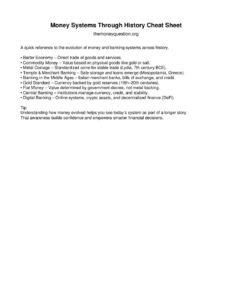
Authoritative Sources
Editorial Disclosure: This article is for informational purposes only and does not constitute financial advice. Some links on this page may be affiliate links — if you click through and make a purchase or apply for a product, The Money Question may receive a commission at no additional cost to you. We only recommend products and services we believe provide genuine value. Always consult a qualified financial professional before making major financial decisions.
How to Manage Your Debt Effectively

AFFILIATE DISCLOSURE:
This article contains affiliate links. We may receive a commission for purchases made through these links, at no extra cost to you. We only recommend products and services we believe will genuinely help you achieve your financial goals.
Learn actionable steps to manage your debt effectively and regain financial freedom. Discover proven strategies for everyday readers to take control of their money.
Introduction
Debt is a burden that many individuals carry throughout their lives, often feeling like a never-ending cycle. Whether it’s credit card debt, student loans, or personal loans, debt can take a toll on your mental and financial well-being. But it doesn’t have to be this way. With the right strategies, you can manage your debt effectively, regain control of your finances, and pave the way toward a debt-free life.
In this guide, we’ll walk you through the most actionable steps you can take to understand your debt, reduce it efficiently, and develop habits that will keep you debt-free in the future. By using these tips and taking a proactive approach, you’ll be empowered to take control of your financial life.
Why Debt Management Is Important
Before we delve into the strategies, it’s essential to understand why managing your debt is so important.
-
Improved Credit Score: Your credit score directly impacts your ability to borrow money, apply for loans, and even secure a rental property or job. Debt management can improve your credit score over time, making it easier to access financial opportunities. Check out our article How to Improve Your Credit Score Fast (7 Proven Tips).
-
Mental and Emotional Relief: Carrying debt can cause stress and anxiety, especially when it feels overwhelming. Learning how to manage debt can bring peace of mind and reduce financial anxiety.
-
Better Financial Opportunities: By reducing or eliminating debt, you create space for other financial goals like saving for retirement, buying a home, or traveling.
Understanding the impact of debt on your financial future is the first step toward managing it effectively. Now, let’s explore how you can start taking control.
Step 1: Understand Your Debt
The first step in managing debt is to get a complete picture of your financial obligations. This means taking stock of every debt you owe and understanding the details of each.
List All Your Debts
Start by creating a comprehensive list of all your debts. This includes:
-
Credit card balances
-
Student loans
-
Personal loans
-
Auto loans
-
Mortgage payments
-
Medical debt (if applicable)
For each debt, write down the following information:
-
Amount owed
-
Interest rate
-
Minimum monthly payment
-
Due dates
-
Creditor contact information
Creating a clear list of your debts will help you prioritize them and develop a strategy for repayment.
Evaluate the Impact of Interest Rates
Interest rates play a crucial role in debt repayment. The higher the interest rate, the more money you’ll pay over time. Credit card debt typically carries the highest interest rates, while student loans and mortgages usually have lower rates. Understanding how much interest you’re paying will help you prioritize which debts to focus on first.
Step 2: Categorize Your Debts
Once you have a complete list of your debts, it’s time to categorize them. Debt prioritization is crucial to paying off debt efficiently. Two popular strategies are the Debt Snowball Method and the Debt Avalanche Method.
The Debt Snowball Method
The Debt Snowball Method involves paying off your smallest debts first. By eliminating smaller debts quickly, you gain momentum and motivation to keep going. As you pay off smaller debts, you free up more money to apply to larger debts.
Example:
If you have a $500 credit card balance and a $5,000 car loan, focus on paying off the $500 credit card first. Once that’s paid off, apply the money you were paying toward the credit card to the car loan.
The Debt Avalanche Method
The Debt Avalanche Method is based on paying off your highest-interest debts first. While it may take longer to see progress with this method, you’ll save more money in the long run by tackling the debts that are costing you the most.
Example:
If your credit card has a 20% interest rate and your student loan has a 4% rate, pay off the credit card first to reduce the amount of interest you’re paying over time.
Both methods are effective, but the right choice depends on your personality and financial goals. If you need quick wins to stay motivated, the Debt Snowball may be best. However, if you’re focused on saving money on interest, the Debt Avalanche is more cost-effective.
Step 3: Create a Budget That Works for You
Creating a budget is a crucial step in managing debt effectively. A well-designed budget helps you track your income and expenses, enabling you to allocate more funds to debt repayment.
50/30/20 Rule
The 50/30/20 Rule is a simple budgeting framework that can guide your financial decisions:
-
50% Needs: Essential expenses like rent, utilities, groceries, and transportation.
-
30% Wants: Non-essential items such as entertainment, dining out, and hobbies.
-
20% Savings/Debt Repayment: This portion should be used to pay off debt and build savings.
When you allocate 20% of your income to debt repayment, you can make significant progress toward eliminating debt. If you can allocate more—say, 30% or 40%—you’ll reduce your debt even faster.
Track Your Spending
To make your budget effective, track your spending. Use a budgeting tool or app (such as YNAB) to categorize your expenses and identify areas where you can cut back. This will help you increase the portion of your income directed toward debt repayment.
Step 4: Cut Back on Unnecessary Expenses
One of the quickest ways to accelerate debt repayment is by cutting back on non-essential spending. This gives you more money to put toward your debt without needing to find extra income.
Smart Ways to Cut Back:
-
Cancel unused subscriptions: Evaluate your streaming services, gym memberships, and other subscriptions. Cancel anything you’re not using regularly.
-
Cook at home: Dining out can add up quickly. Try cooking at home more often to save money.
-
Shop smart: Use coupons, shop during sales, or buy secondhand to reduce your spending on clothing and household items.
Small changes can add up quickly, giving you more money to pay down your debt.
Step 5: Consider Debt Consolidation or Refinancing
If you have multiple high-interest debts, consider consolidating them into one loan or refinancing them to lower interest rates. This can make it easier to manage your payments and may save you money in interest.
Debt Consolidation
Debt consolidation involves taking out a new loan to pay off multiple existing debts. This can simplify your payments by combining them into one monthly payment. Additionally, it might offer a lower interest rate, which can help you save money.
-
Personal loans: You can take out a personal loan to consolidate your credit card debt and other loans.
-
Balance transfer credit cards: These cards allow you to transfer high-interest credit card debt to a card with a lower (or 0%) interest rate for an introductory period.
Refinancing
Refinancing involves replacing an existing loan with a new loan at a lower interest rate. You can refinance auto loans, student loans, and mortgages to reduce your interest rate and monthly payment.
Example:
Refinancing a mortgage with a lower interest rate can save you thousands of dollars over the life of the loan.
Before consolidating or refinancing, make sure to compare offers and consider any fees associated with these options. Consolidation and refinancing can be beneficial, but they must fit your financial situation.
Step 6: Build an Emergency Fund
An emergency fund is a financial cushion that can help you avoid further debt when unexpected expenses arise. Without an emergency fund, you might be forced to rely on credit cards or loans when life throws you a curveball.
How to Build an Emergency Fund:
-
Start small: Set a realistic goal, such as saving $500 or $1,000, and build from there.
-
Automatic transfers: Set up automatic transfers from your checking account to your savings account to make saving easier.
-
Prioritize your emergency fund: Treat building your emergency fund as a top priority, especially if you don’t have one yet.
An emergency fund will prevent you from adding to your debt in case of unforeseen circumstances, like medical bills, car repairs, or job loss. Check out our post How to Build an Emergency Fund – Even if You Are Struggling
Step 7: Avoid Accumulating More Debt
One of the most important steps in managing your debt is making sure you don’t accumulate more. Here are some strategies to avoid adding to your debt load:
-
Freeze your credit cards: If you tend to overspend, consider freezing your credit cards or leaving them at home to avoid impulse purchases.
-
Pay bills on time: Avoid late fees and penalties by paying your bills on time. Late payments can also negatively impact your credit score.
-
Live within your means: Focus on living below your means and avoiding unnecessary debt. Budgeting effectively and prioritizing your needs over wants can help you avoid the temptation to spend on non-essentials.
Trending Question: Should You Pay Off Debt or Save for Retirement First?
A common question many people have is whether they should focus on paying off debt or saving for retirement. While both are important, there’s a general guideline to follow:
-
Pay off high-interest debt first: Prioritize paying off high-interest debt, like credit card debt, before saving for retirement. The interest on high debt can accumulate faster than the gains from retirement savings.
-
Contribute to retirement savings: If you have employer-matched retirement contributions, aim to contribute at least enough to get the match. It’s essentially “free money.”
External Links:
-
-
National Foundation for Credit Counseling (NFCC) – A trusted resource for credit counseling and debt management advice.
-
Federal Trade Commission (FTC) Consumer Information – Offers valuable insights on managing debt and understanding consumer rights.
-
Conclusion
Managing your debt effectively doesn’t have to be a daunting task. By following the steps outlined in this guide, you can reduce your debt, improve your financial situation, and work toward financial freedom. Remember, the key is to take action and stay disciplined.
Start with understanding your debt, create a solid budget, and commit to making small changes that will add up over time. With persistence, you’ll be well on your way to a debt-free future.
FAQs
-
How can I pay off debt quickly without extra income?
-
Cut unnecessary expenses and allocate those savings to your debt repayment.
-
-
Is debt consolidation a good option for me?
-
Debt consolidation can simplify payments and lower interest rates, but make sure to compare offers carefully.
-
-
What’s the best method to pay off credit card debt?
-
Use the Debt Avalanche Method to tackle high-interest debt first, or the Debt Snowball for quick wins.
-
-
Should I invest while paying off debt?
-
Focus on paying off high-interest debt first, but consider contributing to retirement accounts if your employer offers matching funds.
-
-
Can I negotiate my credit card interest rate?
-
Yes, you can contact your credit card company to request a lower interest rate.
-
-
How much of my income should I use to pay off debt?
-
Aim to allocate at least 20% of your income to debt repayment.
-
-
How do I stay motivated to pay off debt?
-
Track your progress and celebrate small victories to stay motivated.
-
-
What should I do if I can’t make a debt payment?
-
Contact your creditor to negotiate a modified payment plan or deferment.
-
-
Can I pay off debt with a side job?
-
A side job can help increase your income and accelerate your debt repayment.
-
-
How do I prevent new debt from accumulating?
-
Stick to your budget, avoid impulse purchases, and live below your means.
-
Disclosure:
Authoritative Sources
Editorial Disclosure: This article is for informational purposes only and does not constitute financial advice. Some links on this page may be affiliate links — if you click through and make a purchase or apply for a product, The Money Question may receive a commission at no additional cost to you. We only recommend products and services we believe provide genuine value. Always consult a qualified financial professional before making major financial decisions.