Monetary Theory & Policy
Who Really Owns Central Banks? Let’s Clear Up the Confusion
Central banks are often viewed as mysterious, all-powerful entities that pull the strings of the global economy behind closed doors. This perception has led to countless myths and conspiracy theories, particularly regarding who actually owns and controls them. The truth, however, is far more nuanced and grounded in structural design aimed at balancing public accountability with economic stability.
Understanding the ownership of central banks is crucial because these institutions serve as the backbone of a country’s economy. They manage the money supply, set interest rates, and act as the lender of last resort during financial crises. But who holds the keys to these powerful organizations? Let’s demystify the ownership structures of central banks and explore why it matters.
What Do Central Banks Actually Do?
AFFILIATE DISCLOSURE:
This article contains affiliate links. We may receive a commission for purchases made through these links, at no extra cost to you. We only recommend products and services we believe will genuinely help you achieve your financial goals.
Before diving into ownership, it is essential to understand the core functions of a central bank. While regular commercial banks provide services like savings accounts and loans to individuals and businesses, central banks operate on a macroeconomic level.
- Printing Money: They are responsible for creating and circulating the national currency, ensuring there is enough liquidity in the system.
- Controlling Inflation and Interest Rates: By adjusting interest rates and managing the money supply, central banks aim to keep inflation in check and prevent the economy from overheating or stalling.
- Regulating Financial Institutions: Central banks oversee commercial banks to ensure they maintain adequate reserves and follow regulations, protecting the broader financial system.
- Lender of Last Resort: During times of severe financial stress, central banks step in to provide emergency funding to failing institutions to prevent systemic collapse.
Famous examples of central banks include the Federal Reserve in the United States, the European Central Bank (ECB), and the Bank of England.
The Three Models of Central Bank Ownership
Ownership models for central banks vary significantly around the world. There is no single “correct” way to structure a central bank, and different countries have adopted models that best suit their historical and political contexts. Generally, these structures fall into three categories:
| Model | Description | Examples |
| Government-Owned | Fully owned by the national government. Profits are typically returned to the state treasury. | Bank of England, Reserve Bank of India (RBI), Bank of Canada, European Central Bank |
| Privately-Owned | Involves private shareholders, often commercial banks. However, these shareholders do not control monetary policy. | Federal Reserve System (USA) |
| Hybrid | A mix of public and private ownership, designed to balance national interests with independent oversight. | Swiss National Bank, Bank of Japan |
1. Government-Owned Central Banks
The most common model globally is full government ownership. In this structure, the central bank is a public institution, and its capital is entirely held by the state. The Bank of England, for example, was nationalized in 1946. Similarly, the Bank of Canada operates as a Crown corporation, meaning it is wholly owned by the federal government but operates with considerable independence from the political process. Any profits generated by these banks—often through interest on loans or government bonds—are handed back to the respective governments. This model emphasizes direct accountability to the public through elected officials.
2. Privately-Owned Central Banks
The concept of a “privately-owned” central bank often sparks the most confusion. The Federal Reserve System in the U.S. is the classic example. It consists of 12 regional Federal Reserve Banks, which are technically owned by the private commercial banks in their respective districts. These member banks are required to hold stock in their regional Fed.
However, this “ownership” does not equate to control. The private shareholders do not dictate monetary policy, nor can they sell or trade their shares. The true decision-making power lies with the Board of Governors in Washington, D.C., whose members are appointed by the President and confirmed by the Senate. The private ownership aspect is largely a structural legacy designed to ensure regional representation and keep the central bank somewhat insulated from day-to-day political pressures.
3. Hybrid Ownership Models
Some central banks blend public and private ownership. The Swiss National Bank (SNB) is a prime example. It is a joint-stock company where the majority of shares are held by public entities (Swiss cantons and cantonal banks), while the remaining shares are traded on the stock market and held by private individuals. Despite having private shareholders who receive a capped dividend, the SNB is governed by a strict mandate to serve the national interest, blending accountability with operational independence.
Debunking Common Myths About Central Banks
The complex structures of central banks, particularly those with private elements, have given rise to persistent myths.
- Myth: Central banks are controlled by secretive private elites. Even in systems with private shareholders, like the Federal Reserve, key monetary policy decisions are made by independent boards or government-appointed officials, not by private bankers seeking personal profit.
- Myth: Central banks operate without oversight. While central banks need operational independence to be effective, they are heavily audited and must regularly report to their governments or legislative bodies.
How Do Ownership Models Handle Political Influence?
A major concern with central banks is how they manage political pressure, especially since their decisions can make or break an economy. The ownership model plays a significant role in this dynamic:
- Government-Owned: Because these banks are fully owned by the state, there is a higher risk of political interference. Politicians might pressure the bank to lower interest rates before an election to create a short-term economic boom, even if it risks long-term inflation. To counter this, countries like Canada and the UK have established strict legal frameworks that grant their central banks operational independence, separating day-to-day monetary policy from political whims.
- Privately-Owned: The inclusion of private shareholders acts as a structural buffer against direct government control. In the U.S. Federal Reserve, for example, the regional banks are owned by private member banks, which helps decentralize power away from Washington. However, the overarching Board of Governors is still politically appointed, ensuring the bank remains accountable to the public rather than private interests.
- Hybrid: These models attempt to strike a balance by distributing ownership among public entities and private investors. The Swiss National Bank’s structure ensures that no single political party or private group can monopolize decision-making, fostering a highly independent environment focused on long-term stability.
How Central Bank Policies Impact the Average Person
While central banks operate at the highest levels of the financial system, their decisions ripple down to affect the daily lives of everyday people. The most direct impact is felt through interest rates. When a central bank raises its benchmark interest rate to combat inflation, commercial banks follow suit. This means higher costs for mortgages, auto loans, and credit card debt, leaving consumers with less disposable income. Conversely, when the central bank lowers rates to stimulate a sluggish economy, borrowing becomes cheaper, encouraging people to buy homes and businesses to expand and hire more workers.
Beyond borrowing costs, central bank policies directly influence inflation and purchasing power. If a central bank increases the money supply too rapidly, the value of the currency can drop, causing the prices of everyday goods—like groceries and gas—to skyrocket. On the other hand, effective monetary policy keeps inflation stable and predictable, protecting the value of your savings and ensuring that your paycheck stretches just as far tomorrow as it does today. Ultimately, the central bank acts as the thermostat for the economy, and its settings determine whether your financial environment feels comfortable or strained.
Why Does Ownership Even Matter?
The ownership structure of a central bank is not just a technical detail; it has real-world implications for how an economy functions.
- Economic Stability: Central banks influence inflation, employment rates, and overall economic growth. The governance structure—dictated by ownership—affects how effectively they can perform these critical tasks without undue interference.
- Accountability vs. Independence: Government-owned banks are directly accountable to the public, but they risk being pressured by politicians seeking short-term economic boosts. Private or hybrid models often provide a buffer, allowing the central bank to make unpopular but necessary long-term decisions.
- Public Trust: Clarity regarding ownership helps build public trust. When citizens understand that their central bank operates with oversight and a mandate for the public good, they are more likely to have confidence in the financial system.
How Do Central Banks Make Money?
A common question is how central banks fund their operations if they don’t rely on taxpayer money. Central banks generate their own income through several channels:
- Interest on Loans: Commercial banks pay interest when they borrow funds from the central bank.
- Government Bonds: Central banks hold large portfolios of government bonds and earn interest on these investments.
- Foreign Exchange: They manage foreign currency reserves and can profit from currency trading and investments.
Crucially, central banks are not profit-driven entities. Any profits left over after covering their operational expenses are typically remitted to the national government (in government-owned models) or distributed as strictly capped dividends to shareholders (in hybrid models).
The Critical Importance of Independence
Whether a central bank is government-owned, privately owned, or a mix of both, the most critical factor for its success is operational independence. Politicians operate on election cycles and often prioritize short-term economic boosts to win votes. Central banks, however, must focus on the long-term health of the economy. If politicians can dictate monetary policy, they might push for lower interest rates or demand the central bank print more money to fund government spending. While this might create a temporary boom, it almost inevitably leads to severe, long-term economic damage—most notably in the form of runaway inflation.
History provides stark, real-world examples of what happens when central bank independence is compromised:
- Turkey (2021–2024): Turkey’s President Recep Tayyip Erdoğan exerted heavy political pressure on the Turkish central bank, firing multiple bank governors who disagreed with his unconventional economic views. Despite rising inflation, Erdoğan demanded the central bank cut interest rates, arguing—contrary to mainstream economics—that high rates cause inflation rather than cure it. The result was disastrous: the Turkish lira lost over 80% of its value against the U.S. dollar, and official inflation soared past 80% in 2022, devastating the purchasing power of ordinary Turkish citizens. It was only after the political pressure eased and the central bank was permitted to aggressively raise rates in 2023 and 2024 that the crisis began to stabilize.
- Argentina (1980s–Present): Argentina has a long and painful history of political interference in its central bank. For decades, successive governments used the central bank as a printing press to finance massive public spending deficits. Because the central bank lacked the independence to push back against political demands, the country suffered through multiple devastating bouts of hyperinflation—including a catastrophic peak of over 3,000% in 1989. Even today, the legacy of this political interference continues to haunt the Argentine economy with chronic instability and persistently high inflation rates, serving as a cautionary tale for the rest of the world.
These examples underscore a fundamental truth: when a central bank loses its independence, it is the ordinary citizen—not the politician—who pays the price through eroded savings, higher prices, and economic hardship.
The Bottom Line
Central banks might seem like mysterious entities, but their ownership structures are deliberately designed to ensure balance, transparency, and stability. By understanding how they work, who truly controls them, and why their independence is so fiercely protected, we can demystify the financial system and recognize their vital role in keeping the global economy on track.
FAQs
1. What sets a central bank apart from a regular bank?
A central bank oversees and manages a country’s entire monetary system and currency. Regular commercial banks, on the other hand, provide direct financial services like savings accounts, mortgages, and credit cards to individuals and businesses.
2. Are central banks completely independent from the government?
Not entirely. While many central banks operate with operational independence to avoid short-term political interference, they are still bound by mandates set by the government and have accountability mechanisms, such as regular reporting to legislative bodies, to ensure transparency.
3. Can a central bank ever run out of money?
Not in the traditional sense. Central banks have the unique authority to create money (often digitally). However, doing so recklessly or excessively can lead to severe inflation, devaluing the currency.
4. Do central banks make money simply by printing currency?
No. Printing money is a tool for controlling economic liquidity, not a source of profit. Central banks earn their income primarily through interest on loans to commercial banks and returns on investments like government bonds.
5. Why is the Federal Reserve’s structure considered unique?
The Federal Reserve utilizes a hybrid structure. It has private member banks that hold non-transferable shares in regional Reserve Banks, but the overarching control and monetary policy decisions are handled by the Board of Governors, who are appointed by the U.S. government. This model aims to balance regional banking representation with national public oversight.
“The End of Fractional Reserve Banking? Here’s What to Know”
AFFILIATE DISCLOSURE:
This article contains affiliate links. We may receive a commission for purchases made through these links, at no extra cost to you. We only recommend products and services we believe will genuinely help you achieve your financial goals.
Is fractional reserve banking ending? Learn what it means, what’s changing, and how it impacts your money and the financial system today.
Introduction: What If the Rules of Money Just Changed?
For over a century, fractional reserve banking has been at the heart of how money flows through the economy. However, recent changes by central banks and shifts in how money is created have led some experts to ask: Is fractional reserve banking over? And if so, what does that mean for your savings, the economy, and the future of money?
In this guide, we’ll break it all down in simple terms—no PhD in economics is required. You’ll learn:
- What fractional reserve banking is (and isn’t)
- What’s changing in the banking system
- How it affects your personal finances
- And why it could signal a new era in monetary policy
Let’s dig into the real story behind the headlines—and what it means for you.
What Is Fractional Reserve Banking, Really?
➤ A Simple Definition
Fractional reserve banking is a system where banks are required to keep only a portion (or “fraction”) of their depositors’ money in reserve while lending out the rest. For example:
- You deposit $1,000.
- The bank keeps $100 (10% reserve) and lends out $900.
- That $900 ends up in someone else’s bank account, and the process repeats.
This system creates money through lending—and it’s one of the main ways the money supply grows in a modern economy.
➤ Why It Matters
Fractional reserve banking:
- Fuels economic growth by making loans more available.
- Increases the money supply through “money multiplication.”
- It introduces systemic risks like bank runs if too many people withdraw at once.
Has the Fed Already Ended Fractional Reserve Banking?
The Big Change: 0% Reserve Requirement
In March 2020, the Federal Reserve dropped the reserve requirement for banks to 0%. That means U.S. banks are no longer required to hold any portion of deposits in reserve.
Federal Reserve Announcement (March 2020)
Wait, So Does That Mean It’s Over?
Technically, yes. But here’s the nuance:
- Banks still manage reserves because of other regulations and liquidity needs.
- The Fed now controls lending behavior more through interest rates and capital requirements, not reserve mandates.
- The mechanism of money creation has shifted more towards central banks, especially through Quantitative Easing (QE).
⚠️ Controversial Question: Is Fractional Reserve Banking Still Used, or Is It Outdated?
Some economists argue that fractional reserve banking is misunderstood—or even obsolete.
Critics say:
- The focus on reserves is misleading.
- Modern banks create money by issuing loans and then find reserves afterward.
- Central banks backstop the entire system, so reserve ratios are symbolic.
This has fueled calls for:
- A move toward 100% reserve banking or
- A Sovereign Money System where only central banks can create new money.
Bank of England Report (2014): Money Creation in the Modern Economy
How This Affects You: Real-World Impacts
1. Savings Are Less Protected by Reserve Requirements
With 0% required reserves:
- Your bank might not hold any of your deposit as cash.
- However, FDIC insurance still protects deposits up to $250,000 per account.
2. Banks Rely on Central Bank Liquidity
- Instead of reserves, banks now rely more on Federal Reserve liquidity tools (like the discount window).
- In crises, this could centralize risk even more.
3. Money Creation Has Shifted Upstream
- The Fed creates digital money directly to support the financial system (as seen in QE programs).
- This blurs the line between central bank money and private bank-created money.
✅ Actionable Tips: How to Navigate the Changing System
1. Understand Where Your Bank Stands
Not all banks are equally exposed. Ask:
- Is your bank conservative with its lending practices?
- Does it hold excess reserves or rely on overnight borrowing?
2. Diversify Your Money Holdings
Spread your funds across:
- High-liquidity accounts
- FDIC-insured savings
- Treasury-backed options like I-Bonds or TreasuryDirect accounts
3. Stay Informed About Central Bank Policy
Watch for:
- Interest rate decisions
- Liquidity programs
- Moves toward Central Bank Digital Currencies (CBDCs)
Read our article: “CBDCs vs. Crypto – What’s the Real Digital Currency Revolution?”
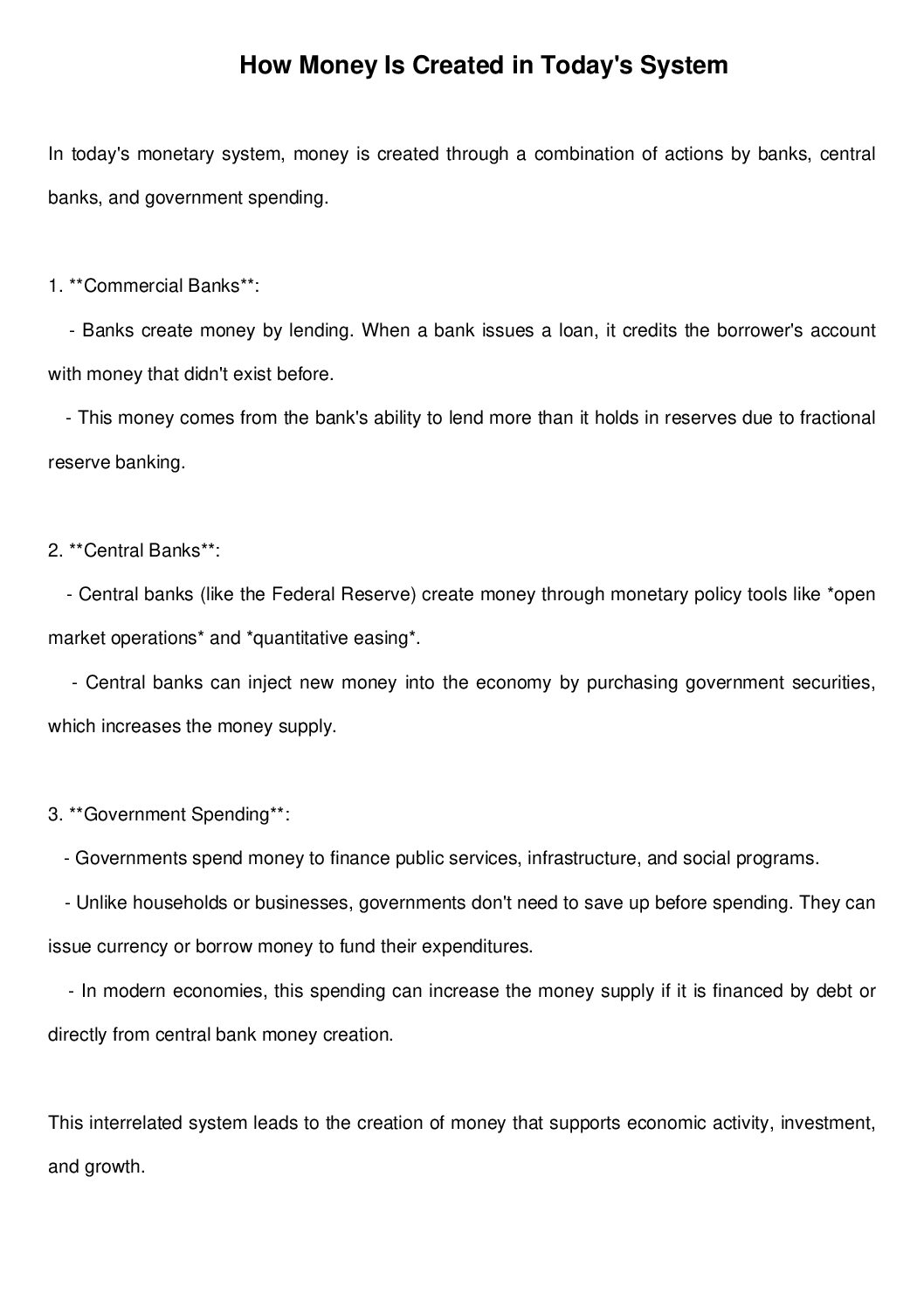
Get our downloadable PDF that shows how banks, central banks, and government spending create money in today’s system.
Free Download: “How Money is Really Created” – A Simple One-Page Visual Guide
Related Articles from TheMoneyQuestion.org
- Modern Monetary Theory: Rethinking Economics and Monetary Reform
- Parasistem and the Sovereign Money System: What You Need to Know
FAQs: Fractional Reserve Banking Explained
- What does a 0% reserve requirement mean for everyday people?
Banks are no longer required to keep a specific amount of your deposit in reserve, but protections like FDIC insurance still apply.
- Is fractional reserve banking still in use?
Functionally, yes—but without mandated reserves, it operates more as a lending-first system guided by capital constraints.
- Does fractional reserve banking create money out of thin air?
In a way, yes. Banks create new money by issuing loans, expanding the total money supply.
- Could we switch to a 100% reserve system?
Yes, but it would be a major overhaul requiring new laws and structures, potentially slowing credit availability.
- Are central banks taking over money creation?
Increasingly, yes—especially through quantitative easing and potentially through digital currencies.
- Can banks lend more money than they have?
They can lend beyond deposits as long as they meet capital adequacy and liquidity requirements.
- What are the risks of eliminating reserve requirements?
Potential over-lending, centralization of risk, and greater dependence on central bank oversight.
- How can I protect my money in a changing system?
Diversify your holdings, understand bank stability, and monitor policy trends.
- Why did the Fed eliminate reserve requirements?
To provide more liquidity during COVID-19 and shift focus to more effective tools like interest rates.
- What’s the difference between reserves and capital?
Reserves are liquid funds held at the central bank. Capital is the bank’s own cushion against losses.
✅ Affiliate Disclosure
This post may contain affiliate links. If you click and make a purchase, TheMoneyQuestion.org may earn a small commission at no extra cost to you. We only recommend tools and resources we trust. Read our full disclosure here.
What is Modern Monetary Theory — and Why It Matters
AFFILIATE DISCLOSURE:
This article contains affiliate links. We may receive a commission for purchases made through these links, at no extra cost to you. We only recommend products and services we believe will genuinely help you achieve your financial goals.
Discover what Modern Monetary Theory is, how it works, and why it matters for your money and the economy.
Introduction: Why This Economic Idea Could Change Everything
Ever heard the phrase “The government is spending money it doesn’t have”? Or maybe someone told you that “printing money causes inflation” — end of story. But what if those ideas weren’t the full picture?
Enter Modern Monetary Theory (MMT) — a fresh perspective that’s turning traditional economic thinking upside down.
This article will demystify MMT in simple, practical terms and show you why it’s more than just an academic debate. It’s a lens that could help you understand how government money really works — and how it impacts your financial life.
Whether you’re trying to manage your personal Budget or just make sense of national Debt and inflation headlines, understanding Modern Monetary Theory gives you the power to see through the noise.
What is Modern Monetary Theory (MMT)?
Understanding the Basics
Modern Monetary Theory is a macroeconomic framework that challenges conventional wisdom about government spending, taxation, and deficits.
In simple terms, MMT argues that a government that issues its own currency (like the US does with the dollar) can never “run out” of money in the same way a household or business can.
Key Principles of MMT:
- Sovereign currency issuers (like the US, UK, and Japan) don’t need to tax or borrow to spend — they can create money.
- Taxes and borrowing do not fund spending directly; they help regulate inflation and manage demand.
- The real constraint on spending is inflation, not deficits.
- Unemployment is a sign that the government is spending too little — not too much.
Why It Matters for You: From Policy to Pocketbook
You might be thinking: “Okay, but what does this have to do with me?”
Let’s break it down:
- Jobs and Unemployment
MMT supports full employment policies, such as a federal job guarantee. Instead of waiting for the private sector to create jobs, the government could directly fund work that benefits communities.
Real-life impact: Imagine recession-proof, publicly funded work options for anyone who wants a job — providing stability for families while boosting the economy.
- Social Programs and Affordability
Under MMT, the question isn’t “How will we pay for it?” but rather, “Do we have the resources (workers, materials, tech) to deliver it without causing inflation?”
Think Medicare for All, free college, or climate resilience programs — all potentially affordable under this lens.
- Rethinking Debt Fear
When the government borrows in its own currency, it’s not like household debt. Deficits can be a sign of economic support, not irresponsibility.
Next time you hear a politician panic about the national Debt, you’ll know to ask — “Debt to whom? And what are we getting for it?”
Does Printing Money Always Cause Inflation?
“Does printing money cause inflation in Modern Monetary Theory”
A common critique of MMT is: “Won’t all that money printing cause runaway inflation?”
Let’s unpack that with facts:
MMT’s Answer:
- Not necessarily. Inflation happens when demand outpaces the economy’s capacity to produce goods and services.
- Government spending should be targeted and responsive, increasing when the economy has slack (e.g., unemployment) and slowing when it overheats.
Case Study: During the pandemic, massive government spending didn’t initially lead to Inflation — until supply chains broke down and oil prices spiked. MMT doesn’t deny inflation risks; it simply says the cause isn’t always “too much money.”
Inflation is complex, and blindly cutting spending can actually make things worse by reducing income and growth.
Breaking the Household Budget Myth
Traditional economics often compares the government budget to a household. But here’s the truth:
Households vs. Currency-Issuing Governments:
Category Household Government (MMT View)
Can print money? No Yes
Must earn before spending? Yes No (can create money first)
Can it go bankrupt in its own currency? Yes No
MMT flips the script: Spending comes before taxing and borrowing. That changes how we think about policy choices — especially in times of crisis.
Authoritative Sources That Back This Up
Don’t just take our word for it. Check out:
- US Congressional Research Service: Modern Monetary Theory
- Brookings Institution: What is Modern Monetary Theory?
Actionable Insights — How You Can Use MMT Thinking
Even if you’re not in Congress, you can apply the mindset:
Stop blaming yourself for systemic issues
Unemployment or underfunded schools aren’t your fault — they’re choices made under outdated economic assumptions.
Advocate smarter
When someone says, “We can’t afford that,” ask: “Do we have the real resources? And who benefits from the current scarcity narrative?”
Budget personally, think nationally
Run your household like a household — but don’t let politicians pretend the government works the same way.
Downloadable Freebie — “MMT Mindset: 5 Questions to Challenge Economic Myths”
This quick worksheet helps you spot common myths in news headlines and political speeches — and how to reframe them using MMT.
Related Posts from TheMoneyQuestion.org
- ✅ Modern Monetary Theory: Rethinking Economics and Monetary Reform
- ✅ The Debt Myth: Why Government Borrowing Isn’t Like a Household Budget
FAQ – 10 Questions About Modern Monetary Theory
1. What is Modern Monetary Theory in simple terms?
- It’s the idea that governments that issue their own currency can create money to support the economy, and inflation — not debt — is the real fundamental constraint.
2. Does Modern Monetary Theory work in real life?
- Elements of MMT have been used during major crises (like COVID relief) when governments spent money without raising taxes first.
3. Who supports Modern Monetary Theory?
- Economists like Stephanie Kelton, Warren Mosler, and Pavlina Tcherneva are leading advocates.
4. Can MMT reduce poverty?
- Yes — through policies like job guarantees, better public services, and targeted investment.
5. Is MMT a left-wing idea?
- It’s often associated with progressive policies, but its framework can inform any economic agenda that values real resource use.
6. How does MMT affect inflation control?
- MMT suggests managing inflation through taxes, regulation, and strategic spending — not austerity.
7. Is Modern Monetary Theory dangerous?
- Only if misunderstood. Reckless spending without considering capacity can cause inflation — but so can cutting too much.
8. Does MMT apply globally?
- It works best for countries that issue Debt in their own floating currency (like the US, Japan, and the UK).
9. How does MMT view government debt?
- As private sector savings — not something to be feared, but a tool to manage demand.
10. How can I learn more about MMT?
- Start with “The Deficit Myth” by Stephanie Kelton, and follow educational sites like TheMoneyQuestion.org.
Affiliate Disclosure
Some of the links in this article may be affiliate links. If you choose to make a purchase through them, we may earn a small commission — at no extra cost to you. We only recommend tools and resources we trust. Thank you for supporting TheMoneyQuestion.org!
Who Really Controls the Money? A Look at Central Banks
AFFILIATE DISCLOSURE:
This article contains affiliate links. We may receive a commission for purchases made through these links, at no extra cost to you. We only recommend products and services we believe will genuinely help you achieve your financial goals.
Discover who really controls the money, how central banks work, and why understanding them can help you take control of your financial future.
Introduction: The Power Behind the Curtain
Have you ever wondered who really pulls the strings in the global financial system? Who decides interest rates, influences inflation, and steers the economy during booms and busts?
The answer often points to one powerful institution: central banks.
From the Federal Reserve in the U.S. to the European Central Bank, these mysterious entities hold enormous influence over your money — whether you’re applying for a mortgage or paying off student loans. But how do they work? And more importantly, who really controls the money?
In this article, we’ll break down the truth about central banks in plain English — no PhD in economics required. You’ll walk away with not only a better understanding of monetary power but also the confidence to make smarter financial decisions in your life.
Table of Contents
- What Is a Central Bank, Really?
- Who Owns Central Banks?
- What Do Central Banks Actually Do?
- Controversial Topic: Do Central Banks Create Money Out of Thin Air?
- Who Holds Central Banks Accountable?
- How Central Bank Decisions Impact Your Everyday Life
- Case Study: The Fed and the 2008 Crisis
- How to Stay Empowered in a Central Bank World
- Free Download: “Your Central Bank Survival Guide”
- FAQs
- Conclusion
What Is a Central Bank, Really?
At its core, a central bank is a national institution responsible for managing a country’s currency, money supply, and interest rates. It’s like the engine behind the economy — often invisible but always running.
Common Roles of a Central Bank:
- Setting interest rates to control inflation
- Issuing and regulating the national currency
- Overseeing and stabilizing the banking system
- Acting as a lender of last resort in times of crisis
Two of the most well-known central banks are:
Others include the Bank of England, the Bank of Japan, and the People’s Bank of China.
Who Owns Central Banks?
This is where things get a bit murky — and controversial.
Most central banks are independent public institutions but may have private shareholders. The U.S. Federal Reserve, for example, is composed of 12 regional banks that member banks technically own. Yet, it operates independently of the federal government.
Meanwhile, the Bank of England was nationalized in 1946, meaning it’s fully owned by the government.
So, who owns them?
- In the U.S., Private banks hold shares in the regional Fed banks.
- In the UK: The government owns the Bank of England.
- In the EU: The European Central Bank is owned by member nations.
Learn more about this topic in our article: Who Really Owns the Central Banks? Let’s Clear Up the Confusion
What Do Central Banks Actually Do?
Here’s what central banks are responsible for in plain language:
Monetary Policy
They set interest rates to influence how much people and businesses borrow and spend. Lower rates = more borrowing and spending. Higher rates = less.
Inflation Targeting
Most aim to keep inflation around 2%. Too high, and money loses value. Too low, and the economy may stall.
Bank Regulation
They ensure commercial banks don’t take on too much risk and help prevent bank collapses.
Crisis Response
During financial crises (like 2008 or the pandemic), central banks flood the market with money to keep things running.
Controversial Topic: Do Central Banks Create Money Out of Thin Air?
This question is one of the internet’s most controversial — and the answer is yes, in a way.
When a central bank conducts quantitative easing (QE) or buys government bonds, it essentially creates digital money that didn’t exist before.
Here’s how it works:
- The central bank buys bonds from banks or institutions.
- It credits the seller’s account with newly created digital money.
- This adds liquidity into the system — often in the trillions.
According to the Bank of England:
“When banks make loans, they create new money.”
— Source: Bank of England’s “Money Creation in the Modern Economy”
So, while they don’t literally print cash, they digitally expand the money supply, shaping the entire economy — and your wallet.
Who Holds Central Banks Accountable?
Despite their influence, central banks aren’t completely unchecked.
Accountability mechanisms include:
- Regular reports to Congress or Parliament
- Transparency through meeting minutes and economic projections
- Media and academic scrutiny
- Internal audits
But they’re not elected. That means your vote doesn’t influence central bankers — something critics argue reduces democratic control over monetary policy.
How Central Bank Decisions Impact Your Everyday Life
This isn’t just abstract economics — it hits home. Here’s how:
| Central Bank Action | Personal Impact |
|---|---|
| Raises interest rates | Higher credit card & mortgage rates |
| Lowers interest rates | Easier borrowing, lower savings interest |
| Prints more money | Potential inflation, weaker currency |
| Tightens money supply | Can cause recession or job losses |
Example: In 2022–2023, the Federal Reserve raised rates to fight inflation. Mortgage rates jumped above 7%, pricing out many homebuyers and slowing the housing market.
️ Case Study: The Fed and the 2008 Financial Crisis
When the U.S. economy collapsed in 2008, the Federal Reserve took unprecedented steps:
- Slashed interest rates to near zero
- Injected over $3 trillion through QE
- Bailed out banks “too big to fail”
This arguably saved the financial system — but also widened inequality. Asset prices rose, helping the wealthy more than everyday workers.
For more, check out the Federal Reserve Crisis Response Archive.
✊ How to Stay Empowered in a Central Bank World
Even if you can’t vote out a central banker, you can still protect and grow your own financial power.
Here’s how:
- Track rate changes and adjust your credit card or loan strategies accordingly.
- Refinance debt when rates are low.
- Invest in assets like index funds or real estate to hedge inflation.
- Build emergency savings to stay independent during downturns.
- Educate yourself (you’re doing that now — go you!).
Also read: Understanding Money 101: Master The Basics And Take Control Of Your Financial Future
Free Download: Your Central Bank Survival Guide
Get our free checklist to confidently navigate rate hikes, inflation changes, and monetary shifts.
Download “Your Central Bank Survival Guide” (PDF)
❓ FAQs: Who Really Controls the Money?
- What is the primary purpose of a central bank?
To manage inflation and interest rates and ensure financial stability.
- Who controls the U.S. Federal Reserve?
It operates independently but reports to Congress. The Board of Governors is appointed by the President.
- Can central banks print unlimited money?
Technically, yes, but excessive printing leads to inflation and economic instability.
- Is the Federal Reserve a private company?
Partially — regional banks are owned by member banks but operate under federal oversight.
- How do central banks affect mortgage rates?
By setting benchmark rates that banks use to price loans.
- Can central banks go bankrupt?
Unlikely. They can create money, but too much can destroy credibility.
- Why do central banks raise interest rates?
To cool down inflation and control excessive economic growth.
- Who benefits from central bank policies?
Often investors and asset holders, not always everyday workers.
- Are there alternatives to central banks?
Some propose sovereign money systems or decentralized models.
- Can I influence central bank policy?
Directly, no — but staying informed helps you adapt.
Conclusion: Know the Game, Play it Better
Central banks may not be voted in, but their decisions shape your everyday financial reality. By understanding who controls the money and how it works, you can respond wisely — not react blindly.
The more we understand the system, the better we can thrive within it.
Want to take control of your finances in a world shaped by central banks?
Start with knowledge — and then use it.
Affiliate Disclosure
Some links in this post may be affiliate links. That means we may earn a small commission — at no cost to you — if you click and make a purchase. We only recommend resources we truly believe can empower your financial journey.
Monetary Policy vs Fiscal Policy: How They Shape Your Financial Future in the U.S. and Europe
AFFILIATE DISCLOSURE:
This article contains affiliate links. We may receive a commission for purchases made through these links, at no extra cost to you. We only recommend products and services we believe will genuinely help you achieve your financial goals.
Introduction
Monetary and fiscal policies are the invisible hands shaping economies on both sides of the Atlantic. Whether you’re an American homeowner tracking Federal Reserve rate hikes or a European saver frustrated by negative ECB deposit rates, these policies directly impact your wallet.
This comprehensive guide will:
- Compare how the Federal Reserve (U.S.) and European Central Bank (ECB) implement monetary policy
- Examine key differences in U.S. vs. European fiscal approaches
- Analyze real-world case studies from both regions
- Provide actionable strategies to protect and grow your wealth
Let’s explore how these economic levers work in practice.
Monetary Policy: U.S. vs. Europe
The Federal Reserve’s Playbook (U.S.)
The Fed operates under a dual mandate: maximum employment and price stability (2% inflation target).
Key Tools:
- Federal Funds Rate (primary interest rate tool)
- Quantitative Easing/Tightening (balance sheet adjustments)
- Forward Guidance (signalling future policy moves)
Recent Example (2022-2023):
- The Fed raised rates from 0.25% to 5.5% in just 16 months to combat inflation
- Result: 30-year mortgage rates jumped from 3% to 8%, cooling the housing market
The ECB’s Approach (Europe)
The ECB’s primary mandate is price stability (2% inflation target), with a secondary focus on supporting EU economic policies.
Key Tools:
- Main Refinancing Rate (equivalent to Fed Funds Rate)
- Negative Deposit Facility Rate (-0.5% from 2014-2022)
- Pandemic Emergency Purchase Programme (PEPP)
Recent Example (2023):
- Lagged behind the Fed, finally raising rates in July 2023 after inflation hit 10.6%
- Southern European countries (Italy, Spain) faced higher borrowing costs due to ECB tightening
Fiscal Policy: Contrasting Systems
U.S. Fiscal Policy
- Highly centralized through Congress and the White House
- No strict debt limits (frequent debt ceiling battles)
- Automatic stabilizers (unemployment insurance, progressive taxes)
COVID-19 Response Example:
- $5 trillion in stimulus (CARES Act, ARP Act)
- Direct payments (1,200−1,200−2,000 checks)
- PPP loans (forgivable small business aid)
European Fiscal Policy
- Decentralized system: 27 national budgets + EU-level coordination
- Stability and Growth Pact: 3% deficit / 60% debt-to-GDP rules (often ignored)
- Limited EU budget (just 1% of EU GDP)
COVID-19 Breakthrough:
- First-ever joint EU debt issuance (€750B NextGenerationEU)
- Conditions: 37% must fund climate transition, 20% digitalization
Case Studies: Policy in Action
- The Great Recession (2008-2012)
U.S. Response:
- Fed: Cut rates to 0-0.25%, launched QE ($4.5T balance sheet expansion)
- Fiscal: $831B stimulus (ARRA), auto bailouts
EU Response:
- ECB: Initially hesitated to cut rates, leading to a double-dip recession
- Fiscal: Germany enforced austerity on Southern Europe (Greek pension cuts, Spanish labour reforms)
Outcome:
- U.S. recovered faster (6.5 years to regain pre-crisis GDP)
- The Eurozone took 10+ years for a full recovery
- Energy Crisis (2021-2023)
U.S. Approach:
- Fed: Aggressive rate hikes (inflation = 9.1% peak)
- Fiscal: Inflation Reduction Act ($370B green subsidies)
EU Approach:
- ECB: Delayed response (fearing Southern Europe debt crisis)
- Fiscal: Germany €200B energy subsidy (breaking EU competition rules)
Result:
- U.S. inflation fell faster (3.7% vs EU’s 4.3% by late 2023)
- European industry suffered from higher energy costs
Financial Strategies for Each Region
For Americans:
✔️ When Fed Pauses Rates: Lock in long-term CD rates (5%+ in 2023)
✔️ During Fiscal Stimulus: Watch infrastructure stocks (construction, materials)
❌ Avoid: Adjustable-rate mortgages when the Fed is hiking
For Europeans:
✔️ ECB Rate Hikes: Refinance mortgages early (rates rose from 1% to 4%+)
✔️ EU Green Subsidies: Invest in renewable energy/solar ETFs
❌ Caution: Southern European bonds during debt crises
10 Key FAQs
Why does the ECB care more about inflation than employment?
- Its legal mandate prioritizes price stability (unlike the Fed’s dual manda
Can the EU implement U.S.-style stimulus?
No – requires 27 national approvals (see slow COVID-19 response)
How do negative rates work?
Banks pay to deposit money at ECB (aimed at forcing lending)
Why did U.S. inflation fall faster than Europe’s?
More flexible labour markets, energy independence
What’s the “Transatlantic Policy Divergence”?
Fed typically moves faster than ECB (2022-2023 rate hikes)
Do Europeans benefit from ECB QE?
Yes – lowered government borrowing costs (especially in Italy)
How does the EU Stability Pact work?
Supposed to limit deficits to 3% GDP (suspended 2020-2023)
Why U.S. Treasury yields affect Europe?
Global benchmark – ECB often follows Fed moves
What’s “Fiscal Dominance”?
When central banks (like the ECB) accommodate high government debt
What is the best inflation hedge in Europe vs. the U.S.?
EU: Inflation-linked bonds (€), U.S.: TIPS
Final Thought:
While the Fed and ECB share similar tools, their constraints differ dramatically. Americans enjoy more flexible fiscal policy, while Europeans navigate complex EU rules. Savvy investors track both – because when Jerome Powell and Christine Lagarde speak, your portfolio listens.
Which central bank do you think handles crises better? Share your views below!
Special Purpose Money: A Game-Changer for Limited Globalization
AFFILIATE DISCLOSURE:
This article contains affiliate links. We may receive a commission for purchases made through these links, at no extra cost to you. We only recommend products and services we believe will genuinely help you achieve your financial goals.
| Type | Purpose |
| Localized Currencies | Boosts local trade and supports communities. |
| Industry Tokens | Simplifies transactions in specific sectors. |
| Carbon Credits | Aids in meeting environmental goals. |
| Healthcare Vouchers | Allocates funds for medical services. |
| Digital Government Money | Ensures secure and efficient transactions. |
What Exactly is Special Purpose Money?
Special purpose money is like the Swiss Army knife of currencies—it’s designed for specific uses rather than being a one-size-fits-all solution like traditional money. Whether it’s tied to a particular industry, region, or transaction type, SPM is tailored to get the job done.
- What makes it special: It’s not meant to replace traditional money but rather to enhance it in targeted ways. SPM focuses on efficiency and solving specific financial problems.
- How it’s designed: SPM often incorporates advanced technology like blockchain, which enables things like smart contracts or restricted spending for predefined purposes.
- Why it’s important: As economies prioritize regional trade, SPM ensures that financial systems evolve to meet these specific needs effectively.
Why Do We Need It in Limited Globalization?
Limited globalization is all about balancing global connectivity with local focus. As countries look inward to boost local economies, SPM becomes a natural fit.
- Supports local trade: SPM ensures that money stays within regional economies, helping local businesses thrive.
- Reduces global currency dependency: It minimizes reliance on major currencies like the USD or Euro, which can be volatile.
- Simplifies trade processes: Whether it’s industry-specific or community-focused, SPM makes transactions smoother and more reliable.
Quick Takeaway: As the world shifts toward localized economies, SPM offers the perfect solution to balance autonomy and trade.
What Can Special Purpose Money Do?
- Boost local trade: Imagine a currency created just for a farming community or a local business hub. It helps keep money circulating within the community and strengthens the local economy.
- Reduce risk from currency fluctuations: Global currencies can be unpredictable. SPM shields local economies from these ups and downs, creating a more stable financial environment.
- Encourage economic independence: SPM empowers countries and regions to make their own financial rules, tailoring money to fit their unique needs.
How Does Special Purpose Money Work in Real Life?
- Localized currencies: Think about the Bristol Pound in the UK or BerkShares in the U.S. These local currencies keep money within the community, helping local businesses thrive.
- Industry-specific tokens: SPM can be tailored for particular industries, like energy credits or carbon offset tokens. For instance, healthcare vouchers can ensure funds are allocated exactly where they’re needed.
- Government-led initiatives: Some countries are exploring digital currencies issued by their central banks. These digital currencies aim to make transactions faster and more secure while supporting local economies.
Why Special Purpose Money is Worth Considering
- It’s efficient: SPM speeds up transactions by cutting out middlemen. Technologies like blockchain can automate processes, making everything faster and smoother.
- It promotes stability: By isolating local economies from the unpredictability of global markets, SPM provides a sense of financial security.
- It inspires innovation: SPM isn’t just about money—it’s driving advancements in technology and finance, opening doors for industries far beyond banking.
Quick Takeaway: SPM is more than a financial tool—it’s a driver for technological and economic growth.
What Are the Challenges?
- Getting people on board: Change is hard, and many people are hesitant to move away from the financial systems they know. Education and clear benefits are key to overcoming this.
- Navigating rules and regulations: Creating and using SPM means dealing with a lot of legal and regulatory hurdles. It’s not impossible, but it’s definitely something to keep in mind.
- Scaling it up: SPM works great in specific cases, but expanding it to broader markets requires a lot of investment in technology and infrastructure.
What’s Next for Special Purpose Money?
- A tech-driven future: With innovations in blockchain and AI, SPM will only get smarter, more secure, and easier to use.
- Expanding its reach: While it’s currently focused on niche markets, SPM has the potential to bridge local economies with global trade networks.
- Supporting sustainability: SPM could also play a big role in promoting environmentally friendly practices, making it a win-win for the economy and the planet.
Quick Takeaway: The future of SPM lies in combining cutting-edge tech with sustainable practices to create a balanced financial system.
Wrapping It Up
Special purpose money is changing the game for economies shifting toward limited globalization. By supporting local trade, reducing reliance on volatile global currencies, and promoting innovation, it’s paving the way for a new kind of financial system. The potential is huge, and as more industries and regions adopt SPM, it’s set to become a key player in the evolving global economy.
FAQs
What sets special purpose money apart from traditional currencies?
SPM is designed for specific uses, like regional trade or industry-focused transactions, while traditional currencies are more generalized.
Do we need blockchain for special purpose money to work?
Not necessarily. While blockchain makes SPM more efficient, other digital systems can also support it.
Which industries are best suited for special purpose money?
Industries like agriculture, healthcare, and energy are prime candidates for SPM due to their need for precise and efficient transaction systems.
Are there risks with adopting special purpose money?
Yes, there are challenges like regulatory issues, adoption hesitancy, and technological limitations. However, these can be managed with the right strategies.
Will special purpose money replace traditional currencies?
No, SPM is meant to complement traditional currencies by addressing specific needs, not to replace them entirely.
Sir Ben Marx: From Monetary Theory to Financialization
AFFILIATE DISCLOSURE:
This article contains affiliate links. We may receive a commission for purchases made through these links, at no extra cost to you. We only recommend products and services we believe will genuinely help you achieve your financial goals.
| Aspect | Monetary Theory | Financialization |
| Focus | Money stability. | Growth of financial markets. |
| Purpose | Economic stability. | Maximizing financial returns. |
| Key Players | Central banks, governments. | Banks, markets, investors. |
| Impact | Steady growth. | Rapid gains, higher risks. |
| Wealth | Balances distribution. | Widens inequality. |
| Criticism | Slow to adapt. | Overfocus on speculation. |
Who Was Sir Ben Marx?
Sir Ben Marx was an economist whose innovative ideas connected traditional monetary theory with the complexities of modern financial systems. His work didn’t just influence academics—it shaped real-world policies and provided a framework for understanding today’s global financial landscape. By combining deep theoretical knowledge with practical solutions, Marx became a pioneer in bridging the gap between monetary principles and financial markets.
What Did Marx Say About Money?
Marx’s monetary theory revolved around the role of money as a stabilizing force in economies. He believed that for an economy to thrive, there needed to be a balance in how money is supplied and circulated. Key insights from his work include:
- Balancing Money Supply: Marx argued that inflation and deflation could be controlled by maintaining the right amount of money in circulation.
- Trust in Monetary Systems: He emphasized that public confidence in money is vital for a stable economy. Without trust, even the most robust monetary systems can crumble.
- Behavioral Economics: Marx explored how psychological factors, like spending habits and public sentiment, impact the effectiveness of monetary policies.
Marx also advocated for adapting monetary systems to align with technological advancements, including the potential for digital currencies.
What Is Financialization?
Financialization refers to the growing dominance of financial markets and institutions in shaping economies. It’s a shift from traditional sectors like manufacturing and agriculture to a focus on financial instruments and markets. Marx was ahead of his time in recognizing this trend and its implications.
- Shifting Wealth: Financialization moves wealth from physical goods to intangible financial assets.
- Debt Dependency: While debt can fuel growth, Marx warned of the risks of excessive borrowing, which could lead to economic instability.
- Widening Wealth Gaps: Financialization often benefits the wealthy, exacerbating income inequality and creating economic divides.
Marx acknowledged the efficiency financialization brought but was vocal about the risks if left unchecked.
Why Marx’s Work Still Matters
Sir Ben Marx’s theories continue to guide policymakers and economists worldwide. His focus on monetary stability remains relevant as central banks and governments navigate inflation, financial crises, and currency regulation. Beyond academia, Marx’s work is a practical tool for tackling the challenges of today’s globalized financial systems.
In educational institutions, his theories are integral to understanding how monetary policies interact with financial markets. Students and professionals alike draw from his work to address modern economic complexities.
Critiques of Marx’s Ideas
Even though Marx’s ideas are widely celebrated, they have faced criticism over time. Here are some common points of contention:
- Adapting to Technology: Critics argue that Marx’s theories need updating to address innovations like cryptocurrency and blockchain technology.
- Applicability to Emerging Markets: His work largely focused on developed economies, leaving questions about its relevance in developing regions.
- Regulation vs. Innovation: Marx’s emphasis on regulation has sparked debate about whether it limits economic creativity and growth.
Despite these critiques, his ideas remain foundational for understanding the dynamics between money and markets.
Key Takeaway: Sir Ben Marx’s legacy lies in his ability to connect monetary theory with the realities of financialization. His insights offer a guide for navigating economic challenges by focusing on stability, adaptability, and the role of public trust.
FAQs
What is financialization, and why is it important?
Financialization is the increased role of financial markets in the economy. It matters because it shifts wealth creation and distribution, often prioritizing financial instruments over traditional industries.
How does public trust affect monetary systems?
Public trust is crucial for monetary stability. If people lose confidence in the value of money, it can destabilize the entire economy.
What risks did Marx identify with financialization?
Marx warned about risks like over-reliance on debt, widening wealth inequality, and economic instability caused by focusing too heavily on financial markets.
Are Marx’s ideas relevant to digital currencies?
Yes, Marx’s emphasis on monetary stability and adaptability makes his theories applicable to the integration of digital currencies into modern economies.
How did Marx influence modern economic policies?
His theories have shaped how governments and central banks manage inflation, regulate financial markets, and maintain currency stability.
Parasistem and the Sovereign Money System: What You Need to Know
| Benefit | How It Helps |
| Efficiency | Speeds up transactions and simplifies processes. |
| Security | Adds protection with blockchain to reduce fraud risks. |
| Trust | Ensures transparency in money flow and decisions. |
| Inclusion | Makes systems accessible to underbanked communities. |
| Scalability | Adapts easily to growing financial demands. |
What Is Parasistem?
- Understanding parasistem: At its core, parasistem is a supportive system that enhances the operations of primary monetary frameworks like the sovereign money system. Imagine a sidekick that works alongside the main financial system to fill in gaps, improve efficiency, and boost accessibility. That’s parasistem in action.
- Decentralization at its heart: Parasistem is all about decentralization. Instead of relying on a central authority like traditional systems, it uses cutting-edge technology to run smoothly. It’s flexible, forward-thinking, and built to evolve with global economic shifts, making it a key player in connecting centralized and decentralized finance.
- A broader perspective: Parasistem isn’t limited to one definition. Its applications and benefits vary depending on the context. Whether it’s enhancing financial inclusion or streamlining transactions, parasistem’s value lies in its versatility.
AFFILIATE DISCLOSURE:
This article contains affiliate links. We may receive a commission for purchases made through these links, at no extra cost to you. We only recommend products and services we believe will genuinely help you achieve your financial goals.
A Quick Look at the Sovereign Money System
- What is a sovereign money system? It’s a monetary framework where a nation’s central authority—like a national bank—is in charge of issuing currency. It eliminates reliance on commercial banks to create money, offering more stability and transparency.
- Core principles of sovereign money: The system is built on three main ideas. First, it centralizes control over money, reducing risks from private institutions. Second, it uses fiat currency, which gets its value from government backing. Finally, it emphasizes accountability, ensuring that citizens can trust the system.
- Why it matters: This setup keeps inflation in check, prevents economic instability, and creates a financial foundation that everyone can rely on.
How Parasistem Fits Into Sovereign Money Systems
- Bridging gaps: Parasistem complements sovereign money systems by addressing their limitations. While the latter ensures stability and centralized control, parasistem introduces decentralized elements, creating a balanced and adaptable framework.
- Driving inclusivity: One of parasistem’s most impactful roles is in financial inclusion. By leveraging decentralized technologies, it reaches underbanked populations, providing them access to essential financial services.
- Making systems flexible: Parasistem adapts to the ever-changing financial landscape. It adds a layer of innovation that allows sovereign money systems to evolve without compromising their core principles.
- Boosting performance: Through advanced technology, parasistem enhances operational efficiency, ensuring smoother and faster transactions. Its ability to scale with demand makes it indispensable in modern economies.
What Makes Parasistem So Beneficial?
- Efficiency and speed: Parasistem integrates advanced technologies to streamline processes, making financial transactions faster and more reliable. Its efficiency helps reduce bottlenecks, saving time and resources.
- Enhanced security: By incorporating blockchain and other cutting-edge tools, parasistem adds a robust layer of security. This minimizes the risks of fraud, cyberattacks, and data breaches, ensuring safer financial systems.
- Transparency builds trust: Parasistem fosters trust by ensuring transparency in financial operations. Users can monitor how money flows and how decisions are made, creating confidence in the system.
- Inclusivity and accessibility: Parasistem shines in making financial systems accessible to underserved communities. By connecting traditional banking with remote areas, it helps ensure everyone gets included.
- Adaptability: As financial demands grow, parasistem can scale effortlessly. Its adaptability ensures that systems remain efficient and effective, even in the face of increasing pressures.
The Challenges That Come With Parasistem
- Regulatory issues: Combining decentralized features with centralized systems is complex. Governments must create clear regulations to ensure parasistem functions within legal frameworks while maintaining the integrity of sovereign systems.
- Technical vulnerabilities: Like any technology-driven system, parasistem is prone to cyber threats. Without robust security measures, it could be susceptible to hacking, fraud, or system failures.
- Economic risks: Poorly implemented parasistem frameworks could destabilize economies. Ensuring proper integration with sovereign money systems is crucial to avoid disruptions.
- Integration challenges: Blending centralized and decentralized elements is no easy feat. It requires advanced technology, careful planning, and collaboration between multiple stakeholders to achieve a seamless operation.
Looking Ahead: What’s Next for Parasistem?
- Emerging technologies: Innovations like artificial intelligence, quantum computing, and blockchain are set to revolutionize parasistem. These technologies will enhance efficiency, security, and scalability, making parasistem even more impactful.
- Policy development: Governments need to establish clear guidelines that support parasistem while safeguarding the stability of sovereign money systems. Collaborative efforts between policymakers and tech developers will be key.
- Global cooperation: As financial systems become increasingly interconnected, international collaboration will be essential. Standardized practices and regulations will ensure that parasistem functions smoothly on a global scale.
- Expanding use cases: The versatility of parasistem means it can be applied to various sectors beyond traditional finance. From healthcare to supply chain management, its potential is vast.
Conclusion
Parasistem is more than just a buzzword—it’s a transformative force in the world of finance. By enhancing sovereign money systems, it brings efficiency, inclusivity, and transparency to the forefront. Of course, there are challenges to overcome, from regulatory complexities to technical risks. But with the right approach, parasistem can pave the way for a more stable and innovative financial future.
Key Takeaway: Parasistem enhances sovereign money systems by improving efficiency, boosting security, fostering trust, promoting inclusivity, and ensuring scalability, making financial systems more robust and accessible for everyone.
FAQs
How does parasistem improve financial accessibility?
It creates opportunities for underbanked and underserved communities, making financial systems more inclusive and accessible.
What role does technology play in parasistem?
Parasistem heavily relies on advanced tools like blockchain and AI to enhance transparency, security, and efficiency.
Is parasistem independent of sovereign money systems?
Not entirely. Parasistem is designed to complement sovereign systems, adding layers of efficiency and innovation.
What challenges do governments face with parasistem?
Governments need to navigate regulatory hurdles and create clear policies to balance decentralized features with centralized oversight.
Why is transparency important in parasistem?
Transparency builds trust by showing people how money flows and decisions are made, fostering confidence in the financial system.
Modern Monetary Theory: Rethinking Economics and Monetary Reform
AFFILIATE DISCLOSURE:
This article contains affiliate links. We may receive a commission for purchases made through these links, at no extra cost to you. We only recommend products and services we believe will genuinely help you achieve your financial goals.
| Aspect | Modern Monetary Theory (MMT) | Traditional Economics |
| Debt | Not a concern for sovereign nations. | Must be minimized or avoided. |
| Taxes | Control inflation, not fund spending. | Fund government budgets. |
| Spending | Based on resources, not budgets. | Focuses on balanced budgets. |
| Unemployment | Pushes for job guarantees. | Accepts some unemployment. |
| Inflation | Managed with taxes and spending tweaks. | Linked to government deficits. |
| Goals | Full employment and public welfare. | Growth with fiscal restraint. |
What is Modern Monetary Theory (MMT)?
- A fresh perspective on economics: At its core, MMT is an economic framework that challenges the traditional view that governments should operate like households when it comes to money. While households need to balance their budgets, MMT argues that sovereign nations with their own currency—like the United States or Japan—don’t need to worry about “running out” of money. After all, they can issue their currency whenever they need it.
- Rethinking taxes and spending: MMT also reshapes how we think about taxes and spending. It suggests that taxes don’t directly fund government expenditures. Instead, taxes help manage inflation and steer economic activity. This approach allows governments to prioritize full employment and public well-being over balancing the books.
Breaking Down MMT’s Core Ideas
- A new view on public spending: One of the most intriguing aspects of MMT is how it views public spending. According to this framework, governments can and should spend money to address big issues like unemployment or crumbling infrastructure. By using their ability to issue currency, they can stimulate the economy without being constrained by fears of running up debt.
- The role of taxes in MMT: Taxes play a different role in MMT. They aren’t seen as the main source of funding for public programs but rather as a tool to control inflation and ensure that spending doesn’t go overboard. This approach makes government finances less about restrictions and more about possibilities.
The Pushback Against MMT
- Concerns about inflation: Of course, not everyone is sold on the ideas behind MMT. Critics often point to the potential risks of inflation, arguing that unchecked government spending could spiral out of control.
- Skepticism over implementation: There’s also skepticism about whether policymakers can use MMT responsibly, given political pressures and the complexities of economic management.
- Applicability to all nations: Another concern is that MMT primarily applies to countries with monetary sovereignty—those that control their currency. This leaves out nations that use foreign currencies or are heavily reliant on foreign-denominated debt. Despite these criticisms, advocates of MMT argue that its benefits outweigh the risks, especially when compared to the current system’s shortcomings.
Why We Need Monetary Reform
- Addressing systemic problems: The way things are now, the global economy faces some serious problems. From rising income inequality to underfunded public services, the system doesn’t seem to be working for everyone. Monetary reform offers a chance to tackle these issues head-on by rethinking how governments handle money.
- Challenges of the current system: Take national debt, for instance. Ballooning debt often leads to austerity measures, which can hurt vulnerable populations the most. Then there’s the urgent need to address climate change, which requires massive investments in renewable energy and green technology. The current system struggles to provide the necessary funding for these initiatives, but monetary reform rooted in MMT principles could make it possible.
How MMT Can Help Drive Change
- Creating job opportunities: Modern Monetary Theory has the potential to reshape how we approach monetary reform. For example, by embracing MMT, governments could create programs that guarantee jobs for everyone who wants to work. These programs wouldn’t just provide employment—they’d also boost the economy and reduce inequality.
- Investing in infrastructure: Another area where MMT could shine is infrastructure. Governments could fund major projects without worrying about budget shortfalls, creating a ripple effect of economic growth.
- Improving public services: Similarly, public services like healthcare and education could see increased investment, improving quality of life for millions. The beauty of MMT is that it shifts the focus from cutting deficits to achieving tangible outcomes like better public services, lower unemployment, and a healthier economy.
Other Approaches to Monetary Reform
- Exploring Universal Basic Income (UBI): MMT paints an intriguing picture, but it’s not the only approach to monetary reform. Take Universal Basic Income (UBI), for example—it suggests giving everyone a set monthly payment. Paired with MMT, UBI could guarantee a basic standard of living for all, no matter their job status.
- Green financing initiatives: Green financing is all about funding renewable energy and tackling climate change. Governments and financial institutions are finding ways to invest in sustainability, opening doors for growth while keeping the planet safe.
- A multifaceted approach: Both of these approaches show that monetary reform isn’t a one-size-fits-all solution. Instead, it’s about using the right tools to tackle specific challenges.
Making MMT Work: What Policymakers Need to Know
- Educating the public: If MMT is going to become a reality, policymakers will need to address several practical concerns. First, public education is key. People need to understand how MMT works and why it matters. Without widespread understanding, it’ll be tough to gain the public support needed for change.
- Reforming institutions: Policymakers will also need to reform institutions to align with MMT principles. This could mean updating the way fiscal and monetary policies are implemented to ensure they’re both effective and transparent.
- Managing inflation wisely: Lastly, managing inflation will be critical. While MMT provides tools for controlling inflation, governments must use them wisely to avoid potential pitfalls.
Conclusion
Modern Monetary Theory is more than just an economic idea—it’s a call to action. By challenging traditional views on government spending and deficits, MMT opens the door to new ways of thinking about economic growth and public policy. While it’s not without its critics, the potential benefits of MMT make it an important part of the conversation around monetary reform. As we look for solutions to global challenges, embracing innovative frameworks like MMT could be the key to creating a fairer, more sustainable world.
Key Takeaway: Modern Monetary Theory isn’t just about rethinking government spending—it’s about reimagining the possibilities of what governments can achieve. By prioritizing full employment, economic stability, and public well-being, MMT offers a framework for addressing some of today’s most pressing challenges. Whether it’s fixing infrastructure, tackling unemployment, or funding the fight against climate change, MMT provides a fresh perspective on how we can build a better future.
FAQs
How does MMT redefine the role of taxes?
MMT sees taxes primarily as a way to control inflation and guide economic activity rather than as the main source of government revenue.
What are the main criticisms of MMT?
The biggest concerns are inflation risks, the need for disciplined policymakers, and its limited applicability to countries without monetary sovereignty.
How can governments ensure MMT is applied responsibly?
public education, institutional reforms, and robust inflation management strategies to make MMT work effectively.
Is MMT only relevant to certain countries?
Yes, MMT is most applicable to nations with monetary sovereignty, meaning they issue their currency and manage their monetary policies.
What other reforms complement MMT?
Universal Basic Income and green financing initiatives are two examples of reforms that align well with MMT principles, addressing poverty and sustainability.
Lessons from Libra: Shaping the Future of Digital Currency
| Aspect | Libra/Diem | CBDCs | Cryptocurrencies |
| Issuer | Private consortium | Central banks | Decentralized |
| Stability | Asset-backed | Government-backed | Highly volatile |
| Purpose | Financial inclusion | Policy and efficiency | Investment and payments |
| Regulation | Heavy resistance | Fully regulated | Minimal regulation |
| Control | Semi-centralized | Centralized | Fully decentralized |
What Was Libra?
In 2019, Meta announced Libra, a digital currency project that aimed to make financial transactions easier, faster, and more inclusive. The idea was to create a global currency that anyone with internet access could use. Backed by the Libra Association—a group of companies overseeing the project—it promised a stable and accessible digital currency.
Unlike traditional cryptocurrencies like Bitcoin, Libra was tied to a reserve of assets, including fiat currencies and government securities, to keep its value stable. It was also built on blockchain technology, which is known for being secure and transparent. The ultimate goal? To reduce the cost of international transactions and make financial services accessible to billions of people worldwide.
But despite these ambitious goals, Libra faced significant challenges. The project was rebranded as Diem in an attempt to navigate its obstacles, but it was eventually shelved.
AFFILIATE DISCLOSURE:
This article contains affiliate links. We may receive a commission for purchases made through these links, at no extra cost to you. We only recommend products and services we believe will genuinely help you achieve your financial goals.
Lessons from Libra’s Journey
Libra may not have reached its full potential, but its story offers important lessons for anyone thinking about digital currencies.
- Tackling regulatory challenges: One of the biggest hurdles for Libra was regulatory pushback. Governments around the world worried about how a global digital currency might disrupt financial systems, enable money laundering, or undermine monetary policy. Meta’s reputation, especially after its data privacy scandals, didn’t help build trust either. The lesson here? To succeed, digital currency projects need to work closely with regulators from the very beginning. Transparency and compliance with laws are essential to gain approval and avoid roadblocks.
- Earning public trust: Meta’s involvement made people skeptical about how Libra would handle sensitive financial data. Trust is a big deal when it comes to money, and Meta struggled to shake off concerns about privacy and control. This shows how crucial it is to prioritize transparency, accountability, and user privacy. People need to feel secure before they’ll embrace something as important as a digital currency.
- Global collaboration is key: Libra aimed to function as a global currency, but that vision clashed with the interests of national governments and central banks. Many countries saw it as a threat to their economic systems and monetary control, leading to coordinated opposition. The takeaway? If you want a global digital currency to succeed, it’s essential to collaborate with policymakers and financial institutions. Working together is the only way to achieve widespread acceptance.
- Overcoming technical challenges: Building a digital currency that’s secure, scalable, and user-friendly isn’t easy. Libra’s blockchain technology faced issues with scalability and accessibility, which made it hard to deliver on its promises. The bottom line? A solid technological foundation is crucial for any digital currency project. Without it, even the most ambitious plans can fall apart.
The Future of Digital Currency
While Libra’s journey may be over, it’s clear that digital currencies are here to stay. Let’s take a look at some key trends shaping their future.
- Central Bank Digital Currencies (CBDCs): Central banks worldwide are working on digital currencies called CBDCs. Unlike cryptocurrencies, these are government-backed and regulated, offering more stability and trust.
China has taken the lead by launching its digital yuan, paving the way for other countries to explore CBDCs. These digital currencies could revolutionize how we handle money—making transactions quicker, cheaper, and safer, while also helping those without access to traditional banking systems.
- The rise of decentralized finance (DeFi): Decentralized finance, or DeFi, is another big trend to watch. Built on blockchain technology, DeFi eliminates the need for banks or other middlemen in financial transactions.
This creates opportunities for greater transparency and accessibility, especially for people who might not have access to traditional financial services. From lending and borrowing to trading and investing, DeFi is making it easier than ever for people to take control of their finances.
- Consumer-friendly innovation: For digital currencies to truly take off, they need to work for everyone. That means they have to be simple to use, secure, and relevant to everyday life. Imagine paying for groceries, saving money, or investing with a few taps on your phone, all while knowing your transactions are secure. That’s the kind of experience people are looking for, and it’s where digital currencies need to focus their efforts.
What We Can Learn Moving Forward
Libra’s story highlights some clear priorities for the future of digital currencies:
- Collaboration is crucial: Governments, tech companies, and financial institutions need to work together to create sustainable digital currency systems.
- Regulation matters: Addressing legal and compliance issues early on can save a lot of headaches down the road.
- Users come first: Making digital currencies easy, safe, and useful is the key to driving adoption.
These lessons are shaping how innovators and policymakers approach the next generation of digital money.
Conclusion
Libra may not have succeeded, but its journey has provided valuable insights into the world of digital currencies. From regulatory challenges to the importance of trust and collaboration, there’s a lot to learn from its story.
As digital currencies continue to evolve, the focus should be on creating systems that are inclusive, secure, and aligned with global financial needs. The possibilities are endless, and the lessons from Libra give us a solid foundation to build on.
Key Takeaway: The future of digital currencies is all about balance—between innovation and regulation, privacy and accessibility, and global reach and local interests. Whether it’s through CBDCs or decentralized solutions, the goal is to create systems that are trustworthy, secure, and easy to use.
FAQs
What replaced Libra after its rebranding?
After rebranding to Diem, the project tried to address its challenges but eventually ceased operations due to regulatory and organizational difficulties.
How do CBDCs differ from cryptocurrencies?
CBDCs are government-backed and regulated digital currencies, while cryptocurrencies like Bitcoin operate independently and are often more volatile.
What’s the role of blockchain in digital currencies?
Blockchain provides the foundation for most digital currencies, offering transparency, security, and decentralization.
Why did Libra fail to gain global acceptance?
Libra faced regulatory opposition, public trust issues, and technical challenges, all of which made it difficult to achieve its ambitious goals.
Can digital currencies help unbanked populations?
Yes, digital currencies can make financial services more accessible and affordable, especially for those without access to traditional banking systems.