Uncategorized
Minimum Wage Increases: Do They Create Jobs or Cause Unemployment?
AFFILIATE DISCLOSURE: This site does not currently have affiliate partnerships. All content is independently researched and written to provide you with accurate, unbiased financial information.
The debate over the minimum wage is one of the most enduring and fiercely contested in economics. On one side, advocates argue that raising the wage floor is a moral imperative that lifts families out of poverty and stimulates the economy by putting money into the hands of people who spend it immediately. On the other side, critics warn that artificially inflating the cost of labor forces businesses to cut hours, lay off workers, or accelerate the shift to automation.
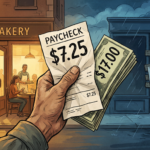
As we move through 2026, the landscape of the minimum wage in the United States is more fragmented than ever. The federal minimum wage remains frozen at $7.25 an hour — where it has sat since 2009, the longest period without an increase in U.S. history. Meanwhile, states and cities have taken matters into their own hands, pushing local minimums to $15, $17, $19, and higher.
In 2026, 88 jurisdictions across the U.S. will raise their minimum wage floors, with dozens surpassing $17.00 an hour. National Employment Law Project So what does the data actually show? When the minimum wage goes up, do workers win — or do jobs disappear?
The Frozen Federal Wage: A Shrinking Floor
Before examining the debate, it is essential to understand the baseline. The federal minimum wage of $7.25 an hour has not increased since July 2009. A full-time worker at that rate earns approximately $15,080 per year — well below the federal poverty line for a family of two, and a fraction of what a living wage calculator shows is needed in most U.S. cities.
Inflation has significantly eroded the buying power of the federal minimum wage since 2009. Stateline In real terms, the federal minimum wage is worth less today than at almost any point in the past 60 years. The $7.25 of 2009 would need to be approximately $10.50 today just to match the same purchasing power — meaning the real minimum wage has been quietly falling for 17 years without a single vote.
The minimum wage remains stagnant at $7.25 in 20 states — primarily conservative-led states including Alabama, Iowa, Texas, and Wyoming — while the policy divergence between those states and high-wage jurisdictions like California and Washington widens every year.
The Case For Raising the Minimum Wage
1. Direct Poverty Reduction
A higher wage floor directly increases take-home pay for the lowest earners, helping them afford basic necessities. The Economic Policy Institute estimates that raising the federal minimum wage to $17 by 2030 would impact 22.2 million workers — 15% of the U.S. workforce — providing an additional $70 billion annually in wages. Economic Policy Institute
2. The Economic Multiplier Effect
Low-wage workers have a high “marginal propensity to consume” — they spend almost every additional dollar they earn on immediate needs. When minimum wage workers receive a raise, that money flows directly back into local economies through spending on groceries, rent, utilities, and services. This increased consumer demand can stimulate local growth and, in theory, create new jobs to meet it.
3. Reduced Employee Turnover
Higher wages lead to higher job satisfaction and loyalty. Replacing an employee is expensive — involving recruitment, training, and lost productivity. Research finds that minimum wage hikes lead to reduced labor market turnover and reduced separations, suggesting minimal net employment effects from the perspective of frictional labor markets. ScienceDirect Businesses that pay more retain experienced staff, improve productivity, and reduce the hidden costs of constant churn.
4. Broader Social Benefits
Research increasingly finds that higher wages improve educational outcomes, mental and physical health — benefits that extend beyond workers themselves to communities and society as a whole. Children in households that benefit from minimum wage increases show measurable improvements in school attendance, academic performance, and long-term earnings.
5. Correcting Monopsony Power
A newer and increasingly influential strand of economics research argues that many low-wage labor markets are dominated by a small number of large employers — giving those employers “monopsony power” to pay workers less than their true economic contribution. Research from the University of Pennsylvania provides compelling evidence that in highly concentrated markets, minimum wage increases can actually improve employment outcomes. UPenn SP2
The Case Against Raising the Minimum Wage
1. Job Losses and Reduced Hours
Businesses operating on thin margins — restaurants, small retailers, care providers — may be unable to absorb sudden labor cost increases. To survive, they may lay off workers, halt new hiring, or cut hours. The workers who keep their jobs benefit; those who lose them do not. This is the core concern with large, rapid, uniform increases.
2. The Automation Accelerant
As the cost of human labor rises, the financial incentive to replace workers with technology increases. Self-checkout kiosks, automated ordering screens, AI-driven customer service, and warehouse robotics are already displacing entry-level jobs. A higher minimum wage can accelerate this shift in ways that are difficult to reverse — permanently eliminating the lowest rungs on the career ladder.
3. Price Inflation in Low-Margin Industries
If businesses cannot cut staff or automate, they pass increased labor costs to consumers through higher prices. Research suggests restaurants absorb minimum wage increases primarily through slight price increases rather than mass layoffs — but those price increases fall disproportionately on lower-income consumers who spend a larger share of their budgets on food.
4. Rural and Regional Harm From Uniform Mandates
A $15 minimum wage is readily absorbed by businesses in Seattle or New York City, where median wages and costs of living are high. The same mandate could devastate small businesses in rural Mississippi or Alabama, where the economic context is fundamentally different. A one-size-fits-all national mandate ignores these geographic realities in ways that can cause real harm to low-cost economies.
What the Evidence Actually Shows
The economics debate on minimum wages has shifted substantially over the past 15 years — and the evidence is more nuanced than either side typically admits.
A comprehensive review of minimum wage research finds that most studies find no job losses or only small disemployment effects. The median employment response to wage increases for studies published since 2010 is very close to zero, with 90% of studies finding no or only small disemployment effects. Economic Policy Institute
Economist Arindrajit Dube concludes that “the overall body of evidence suggests a rather muted effect of minimum wages on employment” and “the weight of the evidence suggests any job losses are quite small.”
| Scenario | Employment Impact | Key Finding |
|---|---|---|
| Moderate, phased increases | Minimal to neutral | Most studies find negligible job loss when increases are gradual and tied to inflation |
| Large, rapid increases | Moderate negative | Hours reductions and hiring slowdowns more likely; automation risk rises |
| Uniform national mandate | Mixed | Benefits high-cost cities; risks devastating rural, low-cost economies |
| Indexed to inflation | Positive long-term | Predictability allows businesses to plan; workers maintain real purchasing power |
| Highly concentrated markets | Potentially positive | Monopsony correction can improve both wages and employment simultaneously |
The 2026 Minimum Wage Landscape
While the federal wage stagnates, the state and local landscape is dramatically more dynamic in 2026:
- Denver, CO: $19.29 per hour as of January 2026
- Flagstaff, AZ: $18.35 per hour as of January 2026
- Rhode Island: Increased from $15 to $16 per hour in January 2026, on a path to $20 by 2030
- Nebraska: Increased from $13.50 to $15 per hour in January 2026
- California: Continues to lead with some jurisdictions exceeding $20 per hour for specific sectors
The legacy of the Fight for $15 movement: 20 states are now on a path to, or have reached or exceeded a $15.00 minimum wage National Employment Law Project — a dramatic transformation from just a decade ago when $15 was considered a radical demand.
Not all momentum is forward, however. In Missouri, Republican lawmakers passed a bill repealing paid sick leave provisions and nixing annual minimum wage increases tied to inflation — overriding a voter-approved ballot measure, in what critics called an unprecedented rollback of worker protections.
The Bigger Policy Picture
The minimum wage is a powerful but blunt instrument. Economists increasingly point to complementary approaches:
- Earned Income Tax Credit (EITC): A federal tax credit that boosts income for working low- and moderate-income individuals and families — targeted more precisely than a minimum wage and without the same employment risk, though it does not require employers to share the cost.
- Living Wage Ordinances: Requirements that businesses — particularly government contractors — pay wages sufficient to cover local living costs, rather than a uniform national floor divorced from geographic reality.
- Indexed Minimum Wages: Setting future increases automatically based on inflation or median wage growth eliminates political gridlock and gives businesses predictability to plan — increasingly the preferred model among economists across the political spectrum.
- Universal Basic Income (UBI): As explored in our UBI article, some economists argue that a guaranteed income floor combined with a more modest minimum wage may be more effective than relying on the wage floor alone to address poverty.
How This Impacts You
The minimum wage debate is not just about entry-level workers — it shapes wages, prices, and economic conditions across the entire economy.
If you earn near the minimum wage: The state and city you live in now matters more than federal policy. If you are in one of the 20 states still at $7.25, you are falling further behind in real terms every year. Understanding which jurisdictions offer higher floors — and the real cost of living in those places — is essential financial information.
If you run a small business: Phased, predictable wage increases are dramatically easier to absorb than sudden, large mandates. Build labor cost projections into your business planning at 2–3 year horizons, and factor in potential automation investments as a strategic hedge against future increases.
If you are a consumer: Higher minimum wages translate into slightly higher prices in restaurants, retail, and service industries — primarily through modest price increases rather than mass layoffs, according to the majority of research. Factor this into your household budget, particularly for food and services spending.
If you are an investor: Companies with large low-wage workforces — fast food chains, big-box retailers, logistics companies — face ongoing labor cost pressure regardless of what Congress does, as state and local minimum wages continue to rise. The era of the $7.25 federal floor effectively setting national labor costs is already over for most of the country.
If you are a voter: The minimum wage is increasingly decided at the ballot box through state initiatives rather than in Congress. Understanding the economic evidence — rather than ideological talking points — helps you evaluate these measures on their actual merits.
Frequently Asked Questions
1. Why hasn’t the federal minimum wage been raised since 2009?
The federal minimum wage requires Congressional action, and political consensus has been impossible to achieve for 17 years. Republicans generally oppose increases on business and employment grounds; Democrats have repeatedly introduced legislation that stalled in the Senate. The result is that policy has shifted almost entirely to the state and local level, creating a patchwork of vastly different wage floors across the country.
2. Do minimum wage increases cause inflation?
They can cause localized price increases in labor-intensive industries like food service and hospitality. Research on local minimum wages finds that $15 wage floors have increased pay for affected workers without causing significant price increases or business relocations — primarily because most affected businesses serve local customers and cannot relocate. National inflation effects are generally considered modest.
3. Who actually earns the minimum wage?
Contrary to the stereotype of the teenage summer worker, the majority of workers earning at or near the minimum wage are adults — many are the primary breadwinners for their families. They are concentrated in food service, retail, home healthcare, and caregiving — sectors that are growing, not shrinking, and that cannot be easily offshored or automated.
4. What is the difference between a minimum wage and a living wage?
A minimum wage is the legal floor set by law. A living wage is a calculation of the hourly rate needed to afford basic costs — housing, food, healthcare, childcare, transportation — in a specific geographic area. In most parts of the U.S., including many cities with $15+ minimum wages, the legal minimum still falls below the calculated living wage.
5. How does the tipped minimum wage work, and is it changing?
Under federal law, employers can pay tipped workers as little as $2.13 per hour in cash wages, provided tips bring total earnings to at least the standard minimum wage. Several states — including California, Washington, Oregon, and Minnesota — have already abolished the tipped minimum wage entirely, requiring full minimum wage before tips.
Internal Resources Worth Reading
The National Debt in 2026: Should We Worry?

AFFILIATE DISCLOSURE: This site does not currently have affiliate partnerships. All content is independently researched and written to provide you with accurate, unbiased financial information.
The U.S. national debt has surpassed $38 trillion. To put that in perspective: if you earned $1 million every single day since the birth of Jesus Christ, you still would not have enough to pay it off.
As of March 4, 2026, total gross national debt stands at $38.86 trillion — $2.64 trillion higher than one year ago, growing at an average rate of $7.23 billion per day, $301 million per hour, or $83,720 every second. The debt has increased $10.86 trillion in just the past five years alone.
With persistent deficits, the highest interest rates in over a decade, and $1 trillion a year spent just on servicing the debt, many Americans are asking: should we actually be worried — and what does this mean for my family?
The Current State of the National Debt
As of March 4, 2026, debt held by the public stands at $31.27 trillion, with intragovernmental debt at $7.59 trillion. Total gross national debt amounts to $113,638 per person or $288,283 per household.
| Metric | 2026 Status | Why It Matters |
|---|---|---|
| Total Gross Debt | $38.86 trillion | The cumulative result of decades of deficit spending |
| Debt-to-GDP Ratio | 122.49% (Q4 2025) | Debt now significantly exceeds the entire annual economic output of the U.S. |
| Annual Deficit | ~$1.8–1.9 trillion | Adding nearly $2 trillion to the debt every single year |
| Net Interest Costs | $1 trillion in 2026 | Interest payments now exceed the entire U.S. defense budget |
| Debt per Household | $288,283 | Your family’s share of the national tab |
| Daily Debt Growth | $7.23 billion/day | Growing faster than almost any other budget item |
The Federal Reserve Bank of St. Louis reports that total public debt as a percentage of GDP reached 122.49% in Q4 2025 — significantly above the previous all-time high set during World War II and on a trajectory that alarms fiscal analysts across the political spectrum.
CBO projects gross federal debt will reach $182 trillion by 2056, equivalent to roughly $2 million per American family of four — seven times the current debt burden and five times today’s median household net worth.
What Is Driving the Debt?
1. Mandatory Spending: The Unstoppable Force
Social Security, Medicare, and Medicaid account for the vast majority of federal spending — and they are growing faster than tax revenues. Social Security’s retirement trust fund and Medicare’s Hospital Insurance trust fund are on a path toward insolvency in just seven years. At that point, Social Security benefits would be automatically slashed by 24% and Medicare by 12% — unless Congress acts, which requires political will that has been conspicuously absent.
2. Interest Payments: The Debt Compounding Itself
The CBO projects that net interest payments will total $16.2 trillion over the next decade, rising from an annual cost of $1.0 trillion in 2026 to $2.1 trillion in 2036. Interest costs in FY2026 are already the third-largest spending category for the federal government — outpaced only by Social Security and Medicare.
Net interest as a share of outlays is forecast to reach 13.95% in FY2026, rising to 14.94% in FY2028 — crowding out spending on virtually everything else the government does.
3. The One Big Beautiful Bill Act
The most significant fiscal development of 2025 was the passage of the One Big Beautiful Bill Act, which extended and expanded the 2017 Trump tax cuts. According to the CBO, the bill adds $2.4 trillion to the deficit — the spending cuts of $1.3 trillion are significantly outweighed by $3.7 trillion in tax cuts, even before accounting for interest costs.
The national debt is expected to grow by at least $3 trillion additional dollars in the next decade over baseline projections due to the One Big Beautiful Bill Act.
4. The DOGE Reality Check
The Department of Government Efficiency (DOGE) was created with ambitious promises to slash spending by trillions. The actual results tell a very different story.
Despite the high-profile efforts of DOGE, the 2025 federal fiscal year ended with the government having spent $301 billion more than in the previous fiscal year. The deficit fell by only $8 billion — in a year where the government spends approximately $19 billion per day.
DOGE’s unverifiable claimed savings represent roughly four pennies for every dollar the federal government spent in the same period. The reason is structural: cutting discretionary spending, contracts, and agency budgets cannot meaningfully dent a deficit driven overwhelmingly by mandatory entitlement spending and interest payments.
As one budget analyst put it: “DOGE has created a false perception that the entire budget deficit can be eliminated by going after waste, fraud and abuse — and this exaggeration is making it even harder to do the real hard things that are needed to fix the deficit.”
5. Tax Cuts and Revenue Shortfalls
Major tax cuts in 2001, 2003, 2017, and again in 2025 reduced federal revenue without corresponding spending reductions — widening the structural deficit each time. Interest spending is projected to grow from 3.3% of GDP in 2026 to 6.9% by 2056, eventually surpassing total discretionary spending by 2038 and reaching 37% of all tax revenues by 2056.
Why This Should Concern You: The Real-World Impact
Slower Growth and Lower Wages
Government borrowing competes with private businesses for capital — “crowding out” private investment in new factories, technology, and hiring. CBO projects economic growth will average only 1.7% per year over the next 30 years — the slowest in American history, compared to a post-WWII average of 3.1%. Part of this is demographic, but the debt drag is real and growing.
Inflation Risk
If global investors lose confidence in U.S. fiscal management and begin demanding higher yields on Treasury bonds, the Federal Reserve faces a difficult choice: allow interest rates to rise sharply (crushing economic growth) or monetize the debt by creating new money (triggering inflation). Either path extracts significant cost from ordinary Americans.
Reduced Fiscal Flexibility
Every dollar spent on interest is a dollar unavailable for infrastructure, education, healthcare, defense, or responding to the next pandemic or financial crisis. Interest costs would climb to 4.6% of GDP by 2036 — a level that would make meaningful public investment increasingly difficult to sustain.
The Coming Benefit Cuts
The math is unambiguous: without touching Social Security or Medicare — the two programs that represent the core of the budget problem — there is not enough space to make significant improvements to the fiscal situation. Future generations will face a binary choice: higher taxes, reduced benefits, or both.
Is the Debt Sustainable? Expert Views
| Perspective | View |
|---|---|
| Optimists (MMT) | The U.S. borrows in its own currency and can never truly default; the only real constraint is inflation |
| Pessimists (Fiscal Hawks) | The compounding interest trajectory is mathematically unsustainable and will eventually force a crisis |
| Realists | The U.S. enjoys unique reserve currency privilege, but running $1.8 trillion deficits during economic expansion guarantees lower living standards for future generations |
| Bond Markets | Treasury demand remains healthy (bid-to-cover ratios above 2.0), but the market is watching fiscal trajectory closely |
The Verdict: Termites, Not a Meteor
The national debt is not a crisis that will arrive tomorrow. The U.S. is projected to reach $39 trillion in total debt by approximately March 25, 2026 — but no single day will feel like the crisis arrives. It is more like termites in the foundation of a house — a slow-moving, structural problem that gradually weakens the economy, raises costs, and reduces options year after year.
The U.S. has recovered from massive debt burdens before — most notably after World War II — but doing so required sustained strong economic growth, disciplined spending, and genuine political courage. All three are currently in short supply.
How This Impacts You
The national debt is not an abstraction — it shapes your mortgage rate, your tax bill, your retirement security, and the services your government can afford to provide.
- Your mortgage and loan costs: Rising government debt puts upward pressure on interest rates as the Treasury competes for capital. Higher rates mean more expensive mortgages, car loans, student loans, and credit card debt. Every percentage point increase in the 10-year Treasury yield adds roughly $200/month to the cost of a median-priced home mortgage.
- Your retirement: Social Security and Medicare face a 7-year countdown to insolvency without Congressional action. If you are under 50, planning for retirement without assuming full Social Security benefits at current promised levels is prudent risk management. Diversify your retirement savings beyond what government programs promise.
- Your taxes: There is no path to fiscal sustainability that does not involve higher taxes, reduced spending, or both. Building your financial life assuming tax rates will remain at current levels is an optimistic assumption — especially for higher earners.
- Your purchasing power: A government that cannot control its debt trajectory faces ongoing inflation pressure. Building an investment portfolio that includes inflation-resistant assets — real estate, inflation-protected securities (TIPS), dividend-paying equities, and potentially hard assets — is sound defense against the long-term fiscal outlook.
- Your financial independence: The best personal response to government fiscal irresponsibility is personal fiscal responsibility. Build an emergency fund, minimize high-interest debt, maximize tax-advantaged retirement savings, and reduce your dependence on government programs you cannot count on being unchanged over a 20- or 30-year horizon.
Practical action steps:
- Check your Social Security projected benefits at ssa.gov — and build a retirement plan that treats them as a bonus, not a guarantee
- Consider TIPS (Treasury Inflation-Protected Securities) as a portion of your fixed-income allocation
- Pay down variable-rate debt while you can — rising rates make it increasingly expensive to carry
- Stay informed about tax law changes — they are coming, and planning ahead reduces their impact
Frequently Asked Questions
1. Who owns the U.S. national debt?
Approximately 33% of U.S. publicly held marketable debt is held by foreign entities as of Q1 FY2026. The remainder is held domestically by U.S. citizens, banks, mutual funds, the Federal Reserve, and government trust funds such as Social Security. Japan and the UK are currently the largest foreign holders, with China having significantly reduced its holdings over the past decade.
2. Can the U.S. government just print money to pay off the debt?
Technically yes — the U.S. borrows in its own currency and cannot be forced into default. But monetizing the debt through money creation would trigger significant inflation, eroding the purchasing power of every dollar held by every American. It is less like paying off a debt and more like diluting everyone’s savings simultaneously.
3. What happens if the U.S. defaults on its debt?
A true default would trigger a global financial crisis — skyrocketing interest rates, a stock market collapse, and potentially the dollar losing its reserve currency status. This is precisely why the debt ceiling has always been raised despite political theater — the consequences of default are too severe for any responsible government to allow.
4. Did DOGE solve the debt problem?
No — not even close. Despite DOGE’s efforts, the 2025 federal fiscal year ended with the government spending $301 billion more than the year before, with the deficit essentially unchanged at $1.8 trillion. Cutting discretionary waste cannot meaningfully address a deficit driven by mandatory entitlement programs and compounding interest payments that together account for the vast majority of federal spending.
5. How does the national debt affect my personal finances?
Rising debt puts upward pressure on interest rates, making mortgages, car loans, and credit cards more expensive over time. It also increases the probability of higher future taxes and reduced government benefits — particularly Social Security and Medicare, whose trust funds face insolvency within seven years without Congressional action. The debt is a slow-moving threat to living standards, not an immediate catastrophe — but the window for painless solutions is closing.
Internal Resources Worth Reading
The Rise of Economic Populism: What It Really Means for Your Money, Investments, and the Global Economy in 2026
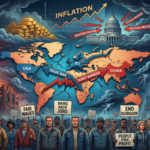
For decades, the global economy operated on a relatively predictable set of rules: free trade is good, government intervention should be limited, and central banks must remain independent. This framework — often called economic rationalism — drove globalization and lifted hundreds of millions out of poverty. But it also left many behind, hollowing out industrial heartlands and widening the gap between the ultra-wealthy and the working class.
That frustration has boiled over. From the United States to Europe, Latin America, and beyond, economic populism has moved from the political fringes to the absolute center of global power. Changes in trade policy have become the single most-cited risk to global economic growth, with the share of executives citing trade policy as a top concern more than doubling in just one year — a seismic shift in what keeps the world’s business leaders up at night.
But what exactly is economic populism? And when politicians promise to tear up the old economic rulebook, what does it actually mean for your savings, your investments, and the cost of your everyday life?
What Is Economic Populism — and Why Is It Spreading Globally Right Now?
Economic populism is a political approach that rejects mainstream economic consensus in favor of policies that promise immediate, tangible benefits to working and middle classes — often at the expense of long-term economic stability. While populism exists across the political spectrum, the economic playbook is remarkably similar regardless of ideology, relying on three core pillars: protectionism and nationalism, heavy state intervention, and deliberate disregard for budget constraints.
The appeal is straightforward: decades of globalization produced genuine winners and genuine losers. The winners — primarily the highly educated, the globally mobile, and the holders of capital — saw their wealth compound. The losers — manufacturing workers in hollowed-out regions, communities dependent on industries offshored for cheaper labor — experienced stagnant wages, declining social mobility, and the cultural disruption of rapid change. Economic populism speaks directly to that second group, offering simple villains (foreign competition, elites, institutions) and simple solutions (tariffs, subsidies, nationalist spending).
How Does Economic Populism Differ From Traditional Economic Policy?
| Feature | Economic Rationalism (The Old Rulebook) | Economic Populism (The New Reality) |
|---|---|---|
| Trade | Free trade, open borders, globalization | Tariffs, trade wars, economic nationalism |
| Government Role | Limited intervention, deregulation | Heavy intervention, industrial subsidies |
| Central Banks | Strictly independent, focused on inflation | Pressured by politicians to prioritize growth or rate cuts |
| Deficits | Viewed as a problem requiring management | Often ignored to fund tax cuts or spending promises |
| Labor | Market-driven wages, global talent pools | Immigration restrictions, wage interventions |
| Measurement of Success | GDP growth, productivity, long-run stability | Short-term job numbers, trade balances, political wins |
The 2025–2026 Populism Experiment: What the Data Actually Shows
The United States in 2025 provided the world’s most consequential real-time test of economic populism in modern history — and the results offer crucial lessons for investors and consumers everywhere.
The Tariff Shock: Larger Than Any in Decades
The Trump administration’s 2025 tariff regime — beginning with “Liberation Day” on April 2 — imposed sweeping duties on virtually all U.S. trading partners. J.P. Morgan calculated this took the average effective U.S. tariff rate from around 10% to just over 23% — the largest tax increase since the Revenue Act of 1968, potentially raising just under $400 billion in revenue or about 1.3% of U.S. GDP.
Why the Full Economic Damage Was Delayed — and Is Now Arriving
One reason American importers delayed raising prices was tremendous uncertainty over whether the tariffs were permanent. But more of the tariffs’ effects will show up in 2026. The delay mechanism involved businesses front-loading inventory purchases before tariffs hit, supply chain rerouting to avoid the highest duties, and retailers absorbing short-term margin compression rather than passing costs to consumers immediately. These buffers are now largely exhausted. U.S. annual average inflation is expected to remain elevated at 2.7–2.8% in 2025–2026.
The Federal Reserve Caught in the Middle
Perhaps the most dangerous aspect of economic populism for financial markets is the pressure it places on central bank independence. Fed Chair Jerome Powell warned that fresh import tariffs and industrial policies from Washington are raising “unusually elevated” uncertainty and could simultaneously push inflation up and dampen growth — the textbook definition of stagflation, a combination the Fed has virtually no good tools to address.
For central banks, pressures to ease monetary policy always backfire. While such measures may lower real interest rates in the short term, inflation and inflation expectations ultimately increase more than desirable. Trust in central banks helps anchor inflation expectations; as independence erodes, decades of hard-won credibility vanish.
The Global Growth Cost
The IMF projects global growth to slow from 3.3% in 2024 to 3.2% in 2025 and 3.1% in 2026 — with advanced economies growing around just 1.5%. Risks to the outlook are tilted to the downside, with prolonged uncertainty and escalating protectionist measures the primary threat.
Why Populist Economics Frequently Backfires Over the Long Term
The Inflation Trap
When populist governments restrict cheap foreign imports via tariffs and cheap foreign labor via immigration restrictions, the cost of domestic production rises. If the government is simultaneously running large deficits to fund tax cuts or stimulus programs, demand remains elevated. High demand plus restricted supply is a reliable recipe for persistent inflation — which destroys the real wages of the working-class voters populism claims to help.
The Bond Market Veto
Bond markets are highly sensitive to populist fiscal policies. When investors see a government borrowing heavily with no credible plan to restore sustainability, they demand higher interest rates as compensation for future inflation risk — pushing up long-term borrowing costs across the economy. The U.S. faces stagflationary pressures from tariffs in 2026, with long-term yields remaining elevated due to persistent or rising risk premiums even as the Fed cuts short-term rates.
The Retaliation Effect
Protectionism rarely happens in isolation. Every major U.S. trading partner imposed retaliatory measures in 2025, creating a cycle of escalation that raised costs for businesses and consumers on both sides of every border involved. The IMF estimates tariff escalation could lower global output by an additional 0.3% next year.
The Gold Signal
One of the clearest market signals of populist economic anxiety is the flight to gold. Gold reached an all-time high of $3,167.57 per ounce in April 2025, rising approximately 15% from the start of the year, driven by geopolitical uncertainty and investor concern about inflationary pressures from tariffs. When sophisticated investors are buying gold at record prices, they are signaling a fundamental distrust of the fiat monetary system under political pressure.
How This Impacts You: Navigating the Populist Era With Your Personal Finances
The macroeconomic effects of economic populism filter directly into your household budget, your mortgage rate, your retirement account, and the price of virtually everything you buy.
Expect structurally higher inflation. The era of ultra-low inflation driven by cheap global manufacturing is over. Build inflation assumptions into your financial planning — a 3–4% long-run inflation expectation is more realistic than the 2% of the 2010s.
Prepare for elevated long-term interest rates. As governments run larger deficits and bond markets demand higher yields for fiscal risk, do not plan your financial life around interest rates returning to the rock-bottom levels of the 2010s. Lock in fixed mortgage rates where possible, and be cautious with variable-rate debt.
Diversify globally — but selectively. Populism creates distinct winners and losers. Domestic industries protected by tariffs may see short-term stock gains; multinationals reliant on global supply chains face ongoing margin compression.
Consider hard assets as inflation protection. Gold’s record-breaking run in 2025 reflects genuine institutional concern about fiscal trajectories. Real assets — real estate, commodities, TIPS, and precious metals — provide meaningful protection against currency debasement risk.
Maintain a robust emergency fund. Populist economic policies increase volatility, create abrupt supply disruptions, and generate sudden industry-specific job losses. A six-month emergency fund is essential in the current environment.
Understand which sectors benefit and which suffer. Domestic steel, aluminum, and manufacturing may benefit from trade protection. Agriculture, technology, automotive, and retail face structural headwinds. Align your career and investment decisions with this reality.
📩 Stay Ahead of the Financial Curve
Economic populism is reshaping markets, prices, and your financial future in real time. Get plain-English analysis of the policies and trends that matter most — delivered straight to your inbox, free.
No spam. No fluff. Just the financial insights you actually need.
Frequently Asked Questions
1. Is economic populism a left-wing or right-wing political movement?
It is genuinely both — and that bipartisan appeal is what makes it so powerful and persistent. Left-wing populism focuses on wealth redistribution, heavy corporate regulation, and expanded government services. Right-wing populism focuses on trade protectionism, immigration restrictions, and nationalist industrial policy. Both share a fundamental skepticism of free markets and established institutions.
2. Why does economic populism so frequently produce inflation rather than prosperity?
Populist policies typically combine supply restriction (tariffs that raise input costs, immigration limits that raise labor costs) with demand expansion (deficit spending, tax cuts). Even in the United States, growth is weaker and inflation higher than projected — hallmarks of a negative supply shock that monetary policy cannot easily counteract without causing a recession.
3. How do bond markets signal distrust of populist governments — and why should I care?
When bond investors believe a government is borrowing recklessly or will pressure the central bank to inflate away its debt, they demand higher interest rates on government bonds. Those higher yields flow directly into mortgage rates, corporate borrowing costs, and consumer loan rates — affecting every borrower in the economy.
4. Can populist policies ever deliver genuine economic benefits?
In specific sectors and in the short term, yes. Targeted industrial policy, infrastructure investment, and trade protection can create real jobs in specific industries. The problem is that populist policies are typically designed for political impact rather than economic coherence, creating volatility that undermines their own objectives.
5. What investments tend to perform best during periods of economic populism and trade war uncertainty?
Historically, the assets that outperform during populist episodes include gold and precious metals, domestic-focused equities in protected industries, real estate, and short-duration bonds. Underperformers typically include export-dependent multinationals, emerging market equities tied to global trade flows, and long-duration bonds in countries running large deficits.
Internal Resources Worth Reading
- Tariffs and Trade Wars: A Comprehensive Guide to Who Really Pays
- The National Debt in 2026: Should We Worry?
- Universal Basic Income: Pros, Cons, and Its Impact on the Economy
- Who Really Owns Central Banks?
External Sources:
IMF World Economic Outlook |
McKinsey Global Economics Intelligence |
J.P. Morgan: US Tariffs Impact Analysis |
Belfer Center for Science and International Affairs |
Rabobank: Global Outlook 2026
The Impact of AI on the Global Economy: Boom, Bust, or Both?

AFFILIATE DISCLOSURE:
This site does not currently have affiliate partnerships. All content is independently researched and written to provide you with accurate, unbiased financial information.
Artificial intelligence is no longer just a buzzword for tech enthusiasts — it is the most significant economic force of the 2020s. From automating routine office tasks to revolutionizing healthcare diagnostics, AI is fundamentally rewiring how the world works. But what does this mean for the global economy? Will it unleash an unprecedented era of productivity and wealth? Or will it trigger mass unemployment and widen the gap between the rich and the poor?
As we move through 2026, the economic data is finally beginning to catch up with the hype. The reality is far more nuanced than either the utopian or doomsday scenarios suggest. AI’s impact will likely be a story of short-term strain followed by long-term gains — with the benefits distributed highly unevenly across countries, industries, and income levels.
The Productivity Promise vs. The Near-Term Strain
The numbers being thrown around are staggering. IDC projects that business spending on AI will have a cumulative global economic impact of $19.9 trillion through 2030, driving 3.5% of global GDP in that year alone — with every dollar spent on AI solutions generating $4.60 back into the economy.
Goldman Sachs Research estimates that generative AI could raise global GDP by $7 trillion over the next decade, boosting annual productivity growth by 1.5 percentage points. The Penn Wharton Budget Model estimates AI could reduce U.S. federal deficits by $400 billion over the ten-year window between 2026 and 2035.
However, realizing these gains will not happen overnight. J.P. Morgan Private Bank warns of a “valley of disappointment” — a period where AI could suppress demand before productivity gains are felt, as companies automate roles faster than new jobs emerge to replace them. Many enterprises remain stuck in “pilot purgatory” — deploying AI in limited trials without achieving the broad integration needed to unlock transformative gains.
Which Jobs Are Actually at Risk?
Unlike previous automation waves that targeted manufacturing and physical labor, the AI revolution is squarely aimed at white-collar knowledge work. Anthropic CEO Dario Amodei has suggested that up to 50% of entry-level white-collar jobs could be disrupted within five years.
In advanced economies, about 60% of jobs may be impacted by AI. Roughly half the exposed jobs may benefit from AI integration, enhancing productivity — but for the other half, AI applications may execute key tasks currently performed by humans, potentially lowering labor demand, wages, and hiring. (International Monetary Fund)
| Job Category | AI Displacement Risk | Why? |
| Data Entry & Administration | High | Routine text and number tasks easily automated by AI |
| Customer Service | High | AI chatbots now handle complex, multi-step inquiries |
| Entry-Level Coding | Medium-High | AI writes, debugs, and optimizes code faster than junior developers |
| Legal & Financial Analysis | Medium | AI can draft documents and model scenarios, but judgment remains human |
| Healthcare (Clinical) | Low | Requires physical presence, empathy, and complex judgment |
| Skilled Trades | Very Low | Physical dexterity in unpredictable environments remains uniquely human |
One early and concerning signal: unemployment among 20- to 30-year-olds in tech-exposed occupations has risen by almost 3 percentage points since the start of 2025 — notably higher than their same-aged counterparts in other trades — corroborating reports that generative AI is contributing to hiring headwinds facing recent college graduates in technology.
The Emerging Two-Tier Labor Market
Perhaps the most immediate economic story of 2026 is not mass unemployment — it is the emergence of a sharp divide between AI-fluent and AI-illiterate workers. Only 5% of workers currently possess meaningful AI skills, yet this minority earns 4.5 times higher wages and receives 4 times more promotions, creating a two-tier labor market where AI literacy is increasingly determining economic survival.
Workers in AI-exposed sectors could face a 56% wage premium if they reskill successfully. This is not a distant future scenario — it is happening now, across industries from finance to healthcare to logistics.
The World Economic Forum’s Future of Jobs Report 2025 projects that AI will displace 92 million jobs globally — but will also create 170 million new ones, for a net gain of 78 million positions. The catch: those new jobs require different skills, in different places, often in different industries — and the transition will not be seamless.
The Widening Global Divide
Perhaps the most concerning long-term impact is AI’s potential to reverse decades of global economic convergence. A December 2025 UNDP report warns of a “Next Great Divergence” — where developed nations with strong AI infrastructure pull further ahead, while developing nations see the very outsourcing and call-center jobs that powered their economic growth automated away.
In advanced economies, around 60% of jobs are exposed to AI — with 27% in roles where AI may augment productivity and 33% where it could automate human labor entirely. In emerging markets, those figures drop to 16% and 24%; in low-income countries, just 8% and 18%. The cruel irony: developing nations face fewer immediate disruptions, but also have the least infrastructure to harness AI’s upside — meaning they risk missing the productivity wave entirely while still losing their traditional economic advantages.
“AI is racing ahead, and many countries are still at the starting line. Countries that invest in skills, computing power and sound governance systems will benefit, others risk being left far behind.” — Philip Schellekens, UNDP Chief Economist for Asia and the Pacific
The Four Futures: Which Path Are We On?
The World Economic Forum has mapped out four plausible scenarios for how AI reshapes the economy by 2030:
- Supercharged Progress — Exponential AI advancement meets widespread workforce readiness. Many jobs disappear but new occupations scale up fast. Productivity soars but social safety nets and governance struggle to keep up.
- Age of Displacement — AI advances rapidly but the workforce can’t adapt fast enough. Businesses automate aggressively, unemployment spikes, and economies fracture socially even as they advance technologically.
- Co-Pilot Economy — AI progress is more incremental and AI-ready skillsets are widespread. An “AI bubble” burst shifts focus to practical augmentation rather than mass automation.
- Stalled Progress — Gradual AI advancement meets a workforce lacking critical skills. Adoption gaps fuel inequality, productivity gains concentrate among a few firms and regions, and AI-enabled prosperity fails to materialize broadly.
Which future unfolds depends less on the technology itself and more on policy choices, corporate investment in reskilling, and educational reform made in the next two to three years.
How AI Is Transforming Key Industries
Despite the risks, AI is already delivering measurable benefits across critical sectors:
Healthcare: AI is accelerating drug discovery, improving medical imaging accuracy, and streamlining hospital administration. AI systems designed to help scientists generate novel hypotheses are accelerating the clock speed of biomedical discoveries — potentially compressing decades of research into years.
Finance: Real-time fraud detection, algorithmic trading, and AI-driven risk modeling are making financial systems more efficient and more secure. Banks are deploying AI to personalize wealth management at scale — services previously available only to high-net-worth clients.
Agriculture: AI-powered tools are helping farmers in developing regions predict weather patterns, optimize crop yields, and manage water resources — with the potential to boost food security in regions most vulnerable to climate change.
Manufacturing: AI-driven robotics are enabling hyper-precise production with dramatically reduced waste. In China, AI-driven manufacturing robots increased production efficiency by 20% in 2025 trials, cutting costs significantly — and the model is spreading globally.
What Governments and Businesses Are Doing About It
The gap between AI’s arrival and policy response is real — but narrowing. Key responses emerging globally include:
- The U.S. America’s AI Action Plan calls for bold investment in AI R&D and workforce programs to empower American workers through reskilling and digital literacy initiatives.
- The EU is investing in AI competitiveness while simultaneously implementing regulatory guardrails through the EU AI Act, aiming to balance innovation with worker protection.
- Corporate investment in reskilling is accelerating: companies globally are spending $300 billion on AI in 2026, with leading firms shifting from automation-first to human-AI collaboration frameworks.
- New skill domains in AI ethics, governance, and human-AI collaboration are becoming essential to employability — and educational institutions worldwide are scrambling to keep pace.
How This Impacts You
AI’s economic transformation is not an abstract macro story — it will touch your paycheck, your career, your investments, and your daily life within the next few years.
If you work in an office: Your job is likely to change significantly, even if it isn’t eliminated. Tasks you do today — drafting reports, analyzing data, scheduling, answering emails — will increasingly be handled or assisted by AI. The question is whether you learn to direct and verify AI output, or whether someone who does replaces you.
If you’re early in your career: The entry-level roles that have historically built foundational skills — junior analyst, customer service rep, entry-level coder — are the most vulnerable to automation. Building AI fluency early is no longer optional; workers with AI skills earn 4.5 times more and advance significantly faster than those without.
If you’re an investor: AI is already reshaping earnings across entire sectors. Companies that successfully integrate AI are seeing measurable productivity gains; those that don’t risk falling rapidly behind. Understanding which sectors and companies are genuine AI adopters versus those just talking about it is becoming an essential investment skill.
If you’re in a developing country: The short-term disruption may be less severe, but the long-term risk is being left behind as the productivity gap between AI-ready and AI-limited economies widens. Access to digital infrastructure and AI education will be the defining policy challenge of the next decade.
Action steps to take now:
- Identify which tasks in your current role are most automatable — and begin building skills around what remains
- Explore free and low-cost AI literacy resources (Google, Coursera, and LinkedIn Learning all offer them)
- If you manage people, advocate for reskilling investment within your organization
- As a voter and citizen, support policies that fund workforce transition programs alongside AI development
Frequently Asked Questions
1. Will AI cause mass unemployment?
The most credible research suggests no sudden catastrophic collapse, but a real and painful transition. The WEF projects AI will displace 92 million jobs but create 170 million new ones — a net gain, but only for those able to make the transition. Short-term labor market strain, particularly for entry-level white-collar workers, is already visible.
2. Which jobs are safest from AI automation?
Jobs requiring physical dexterity in unpredictable environments (plumbing, electrical work, construction), deep human empathy (nursing, social work, therapy), complex creative judgment (senior strategy, design, leadership), and hands-on patient care are currently the most resilient to AI displacement.
3. How will AI affect the global economy overall?
Projections range from $7 trillion to nearly $20 trillion in cumulative economic value added by 2030 — but gains will be heavily concentrated in countries and companies with advanced digital infrastructure, potentially widening inequality between rich and poor nations significantly.
4. Why might AI hurt the economy before it helps?
If companies automate jobs faster than new roles are created, consumer spending power drops, suppressing the very demand that drives growth. This “valley of disappointment” is a recognized transitional risk, particularly acute for lower-income households most dependent on the jobs being automated first.
5. How can I protect my career from AI disruption?
Become an AI-augmented worker rather than trying to compete against AI. Learn the AI tools most relevant to your industry. Double down on skills AI cannot replicate — complex judgment, creative problem-solving, emotional intelligence, and relationship management. Treat continuous learning as a permanent professional habit, not a one-time course.
External Sources:
IMF: AI Will Transform the Global Economy | Goldman Sachs: How Will AI Affect the Global Workforce | WEF: Future of Jobs Report 2025
The Future of Digital Currencies: What to Expect in the Next Decade

Money is undergoing its most profound transformation since the invention of paper currency. We are rapidly moving away from physical cash and traditional banking systems toward a fully digital financial ecosystem. But what exactly does the future of money look like? Will cryptocurrencies like Bitcoin replace the dollar? Will central banks seize total control with their own digital currencies? Or will we see a hybrid system where multiple forms of digital money coexist?
As we move through 2026, the landscape of digital currencies is coming into sharper focus. From the rise of stablecoins to the global race for Central Bank Digital Currencies (CBDCs), the way we earn, save, and spend is changing fundamentally — and faster than most people realize.
AFFILIATE DISCLOSURE:
This site does not currently have affiliate partnerships. All content is independently researched and written to provide you with accurate, unbiased financial information.
The Rise of Central Bank Digital Currencies (CBDCs)
One of the most significant developments in the future of money is the rapid global push toward CBDCs. A CBDC is a digital form of a country’s fiat currency that is a direct liability of the central bank — unlike commercial bank deposits. Unlike decentralized cryptocurrencies, CBDCs are centralized and fully regulated by the issuing government.
According to the Atlantic Council’s CBDC Tracker, 137 countries and currency unions representing 98% of global GDP are currently exploring a CBDC. This is a dramatic increase from just 35 countries in May 2020.
| Country/Region | CBDC Status | Key Details |
| Bahamas, Jamaica, Nigeria | Launched | First countries to fully launch retail CBDCs |
| China (e-CNY) | Advanced Pilot | Largest global pilot; $986B in transactions by June 2024 |
| India (e-rupee) | Pilot | Second-largest pilot; grew 334% to $122M in circulation by March 2025 |
| European Union | Development | Advancing digital euro for currency internationalization |
| United States | Halted (Retail) | Banned retail CBDC through 2030; pursuing wholesale research |
On January 1, 2026, the People’s Bank of China introduced interest-bearing e-CNY wallets, aligning the accounts more closely with commercial bank deposits — a significant evolution that makes China’s digital currency far more competitive with traditional savings accounts.
The United States Takes a Different Path
The Republican-led Congress and the White House have firmly opposed CBDCs, ensuring no CBDC legislation will move forward in the United States for the foreseeable future. Instead, the U.S. has pivoted toward embracing privately issued stablecoins as its digital currency strategy.
The most consequential U.S. development in 2025 was the enactment of the GENIUS Act — the country’s first federal digital asset statute — signed on July 18, 2025, after bipartisan votes in both chambers. It created a comprehensive framework for payment stablecoins, including licensure pathways, 1:1 reserve requirements, segregation, and audit and disclosure requirements.
US policymakers believe expanded stablecoin adoption would help extend the reserve currency status of the US dollar globally — effectively using private digital dollars as a geopolitical tool.
Stablecoins: The Bridge Between Crypto and Traditional Finance
Stablecoins are cryptocurrencies pegged to a reserve asset — most commonly the U.S. dollar — offering the speed and borderless nature of crypto without extreme price volatility.
In 2024, stablecoins settled around $27.6 trillion in transaction volume, surpassing Visa and Mastercard combined — underscoring their role as de facto digital payment infrastructure. Major financial players are taking notice: JP Morgan issued its USD deposit token (JPM Coin) on a public blockchain, while Citi integrated token services for real-time cross-border payments and liquidity management.
Stablecoins have already demonstrated real-world humanitarian value. They have been used to deliver direct digital aid to displaced refugees, providing instant, corruption-resistant funds directly to mobile devices — bypassing broken banking infrastructure entirely.
The Three-Way Digital Currency Contest of 2026
As we enter 2026, the global financial architecture is undergoing a three-way contest among sovereign CBDCs, corporate-issued stablecoins, and decentralized cryptocurrencies — with no clear dominant winner yet. This competition is playing out across geopolitical lines:
- The United States is betting on dollar-backed stablecoins to maintain reserve currency dominance
- China is pushing the e-CNY for cross-border trade, seeking to reduce reliance on the dollar-based SWIFT system
- The European Union is advancing the digital euro to strengthen financial sovereignty against both U.S. stablecoins and Chinese CBDCs
US officials are convinced that making dollar-backed stablecoins part of mainstream finance will entrench US dominance in global payments, while many governments elsewhere see CBDCs as the first line of defense against cryptocurrencies that threaten their control over national economies.
The Tokenization of Real-World Assets
Tokenization — representing physical or financial assets as digital tokens on a blockchain — is set to fundamentally rewire global finance. Larry Fink and Rob Goldstein of BlackRock have shared their view that tokenization can greatly expand the world of investable assets beyond the listed stocks and bonds that dominate markets today.
Think real estate, private equity, commodities, and even fine art — all tradeable 24/7 on blockchain networks with instant settlement. Entire asset classes may become tradeable on-chain, reshaping capital flows, investment liquidity, and global finance. Slovenia became the first eurozone sovereign country to issue a tokenized euro-denominated government bond — a milestone that signals where institutional finance is heading.
Risks You Need to Know About
The digital currency revolution brings real risks alongside its benefits:
- Privacy concerns: Every digital transaction leaves a traceable record. If a CBDC crowds out cash, it could make illicit activity more difficult — but potentially at some expense to individual privacy. Governments with access to programmable money could theoretically restrict or redirect spending in ways that physical cash never allowed.
- Security risks: Cryptocurrency exchanges and digital wallets remain prime targets for hackers and scammers. Many consumers may lack familiarity with how cryptocurrencies work and may be exposed to risks they are unaware of.
- Digital exclusion: A cashless society risks leaving behind elderly, rural, and low-income populations who lack reliable internet access or smartphones.
- Regulatory complexity: New technology and use cases can pose novel and sometimes systemic risks — governments face a fine line between over-regulation that stifles innovation and under-regulation that exposes end-users to macroeconomic systemic effects.
How This Impacts You
The shift to digital currencies isn’t just a story for economists and policymakers — it will directly affect your wallet, your privacy, and your financial options within the next few years.
Your payments will get faster and cheaper. Cross-border transfers that currently take days and cost significant fees will become near-instant and nearly free. If you send money internationally — to family, for business, or for travel — this is a meaningful improvement.
Your savings options may expand. Tokenized assets could allow everyday investors to access asset classes previously reserved for the ultra-wealthy, like private real estate or private equity, with smaller minimum investments.
Your privacy may shrink. As digital currencies replace cash, more of your financial life becomes visible — to banks, governments, and potentially bad actors. Understanding how to protect your financial data will become an essential skill.
Your dollar may face competition. If China’s e-CNY gains global traction or if the U.S. dollar loses ground in cross-border trade, the purchasing power and global influence of your savings could shift in ways that affect everything from import prices to interest rates.
Action steps to take now:
- Learn the difference between CBDCs, stablecoins, and cryptocurrencies
- Review the security practices on any digital wallet or exchange you use
- Stay informed about the GENIUS Act’s implementation — it will directly affect how stablecoins are regulated in the U.S. by 2027
- Consider how you’d manage finances during a temporary digital outage — keep some cash accessible
Frequently Asked Questions
1. What is a CBDC and how is it different from Bitcoin?
A CBDC is a digital form of a country’s official currency issued and regulated directly by the central bank — it is centralized, government-backed, and legal tender. Bitcoin, by contrast, is decentralized, has no government backing, and operates on a public blockchain outside any single authority’s control.
2. Why did the United States ban the digital dollar?
Concerns over consumer privacy and government surveillance of individual transactions led Congress to pass the Anti-CBDC Surveillance State Act in 2025, effectively banning a retail Federal Reserve digital dollar through 2030. The U.S. instead chose to regulate private stablecoins through the GENIUS Act.
3. How are stablecoins different from other cryptocurrencies?
Stablecoins are pegged to a reserve asset — usually the U.S. dollar — making them stable enough for everyday payments and business transactions. Cryptocurrencies like Bitcoin and Ethereum are highly volatile, making them better suited for investment or speculation than for day-to-day spending.
4. Will physical cash disappear in the next decade?
Unlikely in most countries. Cash remains essential for privacy, for people without digital access, and as a backup during technological outages or cyberattacks. However, its use is declining rapidly, and some countries may phase it out sooner than others.
5. What is asset tokenization and why does it matter to regular investors?
Tokenization converts rights to a real-world asset — like real estate, gold, or stocks — into a digital token on a blockchain, enabling fractional ownership, 24/7 trading, and instant settlement. For regular investors, this could eventually mean being able to invest $100 in a commercial property or a Picasso painting, something previously impossible without substantial wealth.
External Sources:
Atlantic Council CBDC Tracker | World Economic Forum: Digital Assets in 2026 | Cornell Business: From Crypto to CBDCs
Who Pays for Bank Bailouts? The True Cost to Taxpayers and Consumers
AFFILIATE DISCLOSURE: This site does not currently have affiliate partnerships. All content is independently researched and written to provide you with accurate, unbiased financial information.
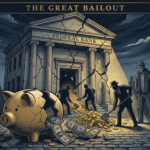
When a major bank collapses, the financial world holds its breath. Will the government step in to save it, or will it be allowed to fail? When governments do intervene — as they did during the 2008 Global Financial Crisis and again during the regional banking crisis of 2023 — the justification is always the same: a bailout is necessary to prevent a broader economic catastrophe.
But when billions of dollars are mobilized over a weekend to rescue a failing institution, a critical question remains largely unanswered in public debate: who actually pays for it?
The answer is rarely as simple as “the taxpayer.” Depending on how the rescue is structured, the true cost of a bank bailout is often quietly distributed across consumers through higher fees, lower savings yields, increased national debt, and the hidden tax of inflation. And as regulators in 2025 began rolling back the very safeguards put in place after 2008, the likelihood of the next bailout is rising, not falling.
What Is a Bank Bailout?
A bank bailout occurs when a government, central bank, or consortium of larger financial institutions provides emergency financial support to a failing bank to prevent it from collapsing and triggering “economic contagion” — a domino effect where panic spreads and freezes the broader financial system.
Bailouts typically take one of four forms:
| Form | How It Works | Real-World Example |
|---|---|---|
| Direct Cash Injection | Government buys shares in the failing bank to inject capital | TARP, 2008 |
| Government-Backed Loans | Central bank provides emergency, low-interest loans | Federal Reserve lending, 2023 |
| Deposit Guarantees | Government promises to cover all depositor losses, even above the legal insurance limit | SVB, 2023 |
| Forced Acquisition | Regulators broker a deal for a larger bank to buy the failing one | First Republic → JPMorgan, 2023 |
A Recurring Pattern — Not a Rare Exception
Before diving into who pays, it is worth establishing just how routine bank bailouts actually are. In the roughly 200 years between 1800 and 2008, banking crises and state bailouts took place precisely a dozen times in the UK, thirteen times in the US, and fifteen times in France. No other industry in the world can claim a similar record of recurring crises and government backing.
This is not a bug in the system — it is a feature of how banking works. Because banks borrow short and lend long, they are structurally vulnerable to runs. And because bank deposits function as the currency of everyday commerce, governments face an impossible choice when a major bank fails: let it collapse and risk economic paralysis, or intervene and absorb the cost.
The 2023 Banking Crisis: A Modern Case Study
In March 2023, the U.S. experienced the second, third, and fourth-largest bank failures in its history: Silicon Valley Bank (SVB), Signature Bank, and First Republic Bank. When SVB collapsed, regulators invoked a “systemic risk exception” to guarantee all deposits — even those far above the standard $250,000 FDIC insurance limit, belonging to wealthy tech startups and venture capital firms.
Politicians assured the public that “no taxpayer money” was being used. Technically, this was true — the funds came from the FDIC’s Deposit Insurance Fund (DIF). But SVB’s failure alone cost the DIF an estimated $16.1 billion, Signature Bank cost $2.5 billion, and First Republic cost roughly $13 billion. As Better Markets noted, the failures, contagion, costs, and bailouts of SVB, Signature, and First Republic did not have to happen, should not have happened, and would not have happened if those banks had current, workable recovery plans reviewed promptly by regulators.
The DIF is funded by fees charged to all banks — costs that are ultimately passed on to consumers across the entire banking system.
Who Really Bears the Cost?
1. Consumers — Through Higher Fees and Worse Rates
When the FDIC’s insurance fund is depleted, it levies “special assessments” on surviving banks to replenish it. Banks pass these costs down through higher loan interest rates, lower savings yields, and increased banking fees. Every customer of every bank pays a small, invisible share of the bailout — spread across years of slightly worse financial terms.
2. Taxpayers — Through National Debt, Stimulus, and Inflation
In systemic crises like 2008, direct taxpayer funds are deployed at scale. Congress initially authorized $700 billion for TARP, later reduced to $475 billion by the Dodd-Frank Act, with approximately $250 billion committed to stabilizing banking institutions.
The good news: in total, U.S. government economic bailouts related to the 2008 financial crisis had federal outflows of $633.6 billion and inflows of $754.8 billion — for a net profit of $121 billion. However, this headline figure obscures the broader economic cost. The same crisis triggered mass unemployment, millions of foreclosures, and trillions in emergency stimulus spending — losses that were never recovered and never appear on the TARP balance sheet.
3. The “Doom Loop” — When Bailouts Bankrupt Countries
The most extreme version of bailout cost is visible in Ireland. The failure to impose losses on unsecured creditors in a bank rescue that cost Irish taxpayers €64 billion effectively bankrupted the country — leading to years of devastating austerity that disproportionately harmed ordinary citizens who had no role in the crisis.
In a “doom loop,” government borrowing to fund bailouts raises the country’s own borrowing costs, which then squeezes public spending on healthcare, education, and infrastructure — spreading the damage far beyond the financial sector.
4. Responsible Banks and Their Customers
Well-managed banks are forced to pay into insurance funds that cover the losses of reckless competitors. Strong capital rules reduce moral hazard by forcing banks to absorb more of their own risks — but when those rules are weakened, the risks don’t just impact shareholders. When a giant, interconnected institution fails, policymakers face a grim choice: allow a collapse that devastates the economy, or step in with public support.
The Historical Scorecard
| Crisis | Country | Cost | Who Paid |
|---|---|---|---|
| Savings & Loan Crisis | USA | ~$132 billion | Taxpayers directly |
| 2008 Financial Crisis (TARP) | USA | $475B authorized; net profit of $121B on bank portion | Taxpayers; mostly repaid — broader economic cost never recovered |
| RBS & Lloyds Bailout | UK | £137 billion | Taxpayers; partial recovery over a decade |
| Anglo-Irish Bank | Ireland | €64 billion | Taxpayers; led to national bankruptcy and years of austerity |
| SVB + Signature + First Republic | USA | ~$31.6 billion to FDIC fund | All U.S. bank customers via special assessments |
The Moral Hazard Problem
The most significant long-term cost of bank bailouts is moral hazard — the incentive for banks to take excessive risks because they know the government will intervene if things go wrong. If executives keep the profits during good times but pass losses to the FDIC or taxpayers during bad times, they have no reason to manage risk responsibly. This “heads I win, tails you lose” dynamic is widely recognized by economists as a near-guarantee of future crises.
Paul Volcker, former Federal Reserve Chairman, summarized it precisely: the danger is that the spread of moral hazard could make the next crisis much bigger.
The 2025 Deregulation Risk: Are We Setting Up the Next Bailout?
Rather than strengthening safeguards after 2023, regulators under the Trump administration began rolling them back in 2025. The administration and Republican Congress removed guardrails that had served well over the past fifteen years — gutting stress tests, undermining the Financial Stability Oversight Council, and weakening the leverage ratio — with the combination of these deregulatory moves being much more dangerous than the sum of its parts.
In November 2025, federal bank regulatory agencies issued a final rule modifying capital standards for the largest banks, taking effect April 1, 2026 — reducing the capital buffers that major banks are required to hold. Critics argue this directly increases the probability of the next taxpayer-funded bailout.
Are There Alternatives to Bailouts?
| Alternative | How It Works | The Trade-Off |
|---|---|---|
| Bail-Ins | Bank uses its own assets; large depositors have funds converted to equity | Protects taxpayers but can trigger depositor panic |
| Stricter Capital Requirements | Banks hold larger reserves to survive runs without help | Creates a safer system, but banks argue it restricts lending |
| Letting Them Fail | Allow bankruptcy, wiping out shareholders and uninsured depositors | Eliminates moral hazard but risks severe recession |
| The Swedish Model | Government takes over, fires management, cleans up assets, then re-privatizes | Protects depositors and taxpayers while punishing shareholders — most effective historical example |
The Swedish approach to its 1990s banking crisis is widely regarded by economists as the gold standard: the government absorbed the losses, restructured the banks, fired the executives, and ultimately recovered most of the public funds when the cleaned-up institutions were sold back to the private sector.
How This Impacts You
Even if you have never heard of Silicon Valley Bank, the banking system’s instability directly shapes your financial life in ways that are easy to miss but impossible to escape.
Your savings rate is affected. When banks pay special FDIC assessments to replenish the insurance fund after a crisis, they reduce what they pay depositors. The bailout cost flows directly into the spread between what banks earn on loans and what they pay on deposits — and you are on the losing end.
Your loan costs are affected. Higher compliance costs, insurance assessments, and risk management requirements after crises get passed through to borrowers via slightly higher interest rates on mortgages, car loans, and credit cards.
Your retirement account is affected. Major banking crises trigger stock market crashes that can wipe out years of retirement savings. The 2008 crisis cut the average 401(k) balance by nearly a third. Understanding the fragility of the banking system is part of understanding your investment risk.
Your tax dollars are affected. Even when a bailout is “repaid,” the broader economic fallout — lost tax revenues from unemployment, emergency stimulus spending, increased national debt — represents a permanent transfer of public wealth to private financial institutions.
What you can do right now:
- Keep no more than $250,000 in any single account ownership category at any single FDIC-insured institution
- Spread larger balances across multiple banks to ensure full FDIC coverage
- When choosing a bank, research its capital ratio — well-capitalized banks are less likely to fail
- Stay informed about banking deregulation; the rules being changed today determine the risk you carry tomorrow
- Consider credit unions as an alternative — they are member-owned and have a strong track record of conservative lending
Frequently Asked Questions
1. Did taxpayers make money on the 2008 bank bailouts?
On the narrow TARP bank program, technically yes — the U.S. government’s bailout-related financial interventions ultimately generated a net profit of $121 billion when all repayments and interest were accounted for. However, this ignores the trillions in broader economic damage — lost jobs, foreclosed homes, and stimulus spending — that represent costs never recovered and never reflected on the TARP ledger.
2. Why did the government guarantee all deposits at Silicon Valley Bank?
Regulators feared that if SVB’s uninsured depositors — mostly tech companies with payrolls to meet — lost their money, it would trigger a nationwide panic causing businesses to pull funds from other regional banks, creating a cascading series of failures far more costly than the bailout itself.
3. What is the FDIC insurance limit and how does it work?
The FDIC insures deposits up to $250,000 per depositor, per insured bank, per account ownership category. A married couple can effectively insure up to $500,000 at a single bank by using joint accounts correctly. Amounts above the insured limits are at risk in a bank failure — as SVB’s uninsured depositors discovered.
4. What is a “systemic risk exception”?
A legal mechanism that allows the government to bypass standard FDIC insurance limits and guarantee all deposits at a failing bank if regulators determine its collapse would threaten the stability of the entire financial system. Its use at SVB in 2023 was controversial precisely because it extended protection to wealthy, sophisticated investors — not just ordinary depositors.
5. Is the banking system safer now than before 2008?
It was — significantly so, following the Dodd-Frank reforms and post-2008 capital requirements. However, the Trump administration’s 2025 rollback of capital rules, stress tests, and oversight mechanisms has reversed a meaningful portion of those gains. Many financial analysts believe the probability of the next major bank bailout has increased as a direct result of these deregulatory moves.
How to Pay Off Multiple Loans Faster with Debt Consolidation

Managing several loans at once—credit cards, personal loans, medical bills, or student loans—can feel like a never-ending cycle of payments. Each loan comes with its due date, balance, and interest rate, making it difficult to track progress. By consolidating several obligations into a single monthly payment, debt consolidation reduces financial instability and frequently results in cheaper interest rates. When done right, it can help you pay off debt faster, save money, and reduce financial stress.
In this guide, we’ll explore what debt consolidation is, its major benefits, the mistakes you should avoid, smart strategies to accelerate repayment, and how to know if it’s the right fit for you.
Knowing Debt Consolidation: How It Operates and Why It Is Important
At its core, debt consolidation is about simplification. Instead of tracking five different creditors and interest rates, you roll all of your balances into one new loan or account with a single payment schedule. While it doesn’t eliminate your debt, it makes repayment more manageable and can help you save on interest.
There are multiple ways to consolidate debt:
- Personal loan consolidation – You borrow a fixed-term loan and use the funds to pay off all your other loans. You’re then left with one repayment schedule, often with a fixed interest rate.
- Credit card balance transfer – This option allows you to move multiple high-interest credit card balances onto one card with a promotional 0% APR period (often 12–18 months). If managed well, this can help you save significantly on interest.
- Home equity loan or line of credit (HELOC) – If you own a home, you can borrow against your equity at relatively low interest rates. However, your home becomes collateral, meaning you risk foreclosure if you default.
- Debt management plan (DMP) – On your behalf, nonprofit credit counseling organizations can bargain with creditors to lower interest rates and combine payments into a single monthly schedule.
Why Debt Consolidation Matters
Carrying multiple loans not only costs you more in interest but also creates confusion that may lead to missed payments. For instance, managing three credit cards at 22% APR, a personal loan at 11%, and medical debt at 9% can make it feel overwhelming to keep track of balances and payments. Consolidating your debts eliminates this balancing act and lets you concentrate on making a single monthly payment.
Additionally, consolidation can improve your credit score over time. When you pay off revolving debts (like credit cards), your credit utilization ratio decreases—a key factor in credit scoring. Fewer missed payments also contribute positively to your score.
Example Table: Debt Consolidation Options
| Method | Best For | Risks/Considerations | Typical Interest Rate Range |
| Personal Loan | Those with decent credit & steady income | Origination fees, fixed monthly obligation | 6%–15% |
| Balance Transfer Card | Short-term payoff for credit cards | Balance transfer fees, high post-APR rates | 0% (intro) → 18%–25% |
| Home Equity Loan / HELOC | Homeowners with equity | Risk of losing home, closing costs | 4%–9% |
| Debt Management Plan (DMP) | Those with poor credit or heavy debt | Limited to unsecured debt, setup fees | Negotiated (often <10%) |
Key Takeaway: Debt consolidation simplifies your repayment journey and can save money, but choosing the right option depends on your financial profile, goals, and discipline:
The Biggest Advantages of Debt Consolidation for Multiple Loans
People are often drawn to debt consolidation because it promises relief from the constant stress of multiple payments. But beyond simplicity, consolidation can offer substantial financial advantages—if used wisely.
Major Benefits of Debt Consolidation
- Lower interest rates
The biggest appeal of consolidation is reducing high-interest debt. For example, consolidating credit card debt (20%+ APR) into a personal loan at 9% can save you thousands in interest over time — see real savings examples.
- Streamlined payments
Having one monthly due date reduces the chances of missed or late payments. It also makes budgeting easier since you know exactly how much to set aside each month.
- Faster debt repayment
With a lower rate, more of your payment goes toward principal instead of interest. This allows you to pay down debt faster—even without increasing your monthly payment.
- Potential credit score improvement
Paying off revolving credit (like cards) improves your utilization ratio. As long as you don’t run up balances again, your score may rise over time.
- Reduced financial stress
The psychological benefit of consolidation cannot be overstated. Instead of juggling multiple payments, you can focus on just one, which reduces anxiety and helps you stay consistent.
Example Scenario
Imagine you owe:
- $8,000 across three credit cards at 22% APR
- $5,000 personal loan at 12% APR
- $2,000 medical debt at 9% APR
Your average interest rate is around 17%. If you consolidate into one $15,000 loan at 8% over 5 years, your monthly payment might drop from $430 to $305. Over the life of the loan, you could save more than $9,000 in interest and be debt-free years sooner.
Other Benefits
- Easier goal-setting since progress is easier to track
- Option to move from variable-rate to fixed-rate repayment
- Opens the door to structured repayment habits
Key Takeaway: Debt consolidation provides financial and psychological relief by lowering costs, simplifying payments, and accelerating payoff, but its true value comes from disciplined use of the opportunity:
Common Mistakes to Avoid When Consolidating Debt
Although it isn’t always a good idea, debt consolidation can be a wise choice. Many borrowers fail to maximize the benefits because they make avoidable mistakes. Awareness of these pitfalls helps you avoid setbacks on your repayment journey.
Common Mistakes
- Using credit cards again after consolidation
Paying off cards through consolidation creates available credit. If you start spending again, you’ll double your debt load.
- Ignoring fees and costs
- Balance transfer cards often charge a 3–5% transfer fee.
- Personal loans may include origination fees (1–8%).
- HELOCs and home equity loans may involve closing costs.
- These costs can eat into the savings consolidation promises.
- Choosing the wrong loan term
- Shorter terms result in reduced interest rates overall, but higher monthly payments.
- Longer terms = smaller monthly payments but higher total interest.
- Many borrowers pick long terms for affordability, only to pay far more in the long run.
- Not checking the credit score before applying.
If your credit score is low, you may only qualify for high-interest consolidation loans that don’t improve your situation.
- Failing to budget post-consolidation
Consolidation alone doesn’t solve the spending habits that led to debt. Without a solid budget, you risk falling back into debt.
Pro Tips to Avoid Mistakes
- Run the numbers with a debt consolidation calculator before committing.
- Compare offers from at least three lenders.
- Close or lock credit cards after paying them off (unless you need them for credit history).
- Seek advice from nonprofit credit counselors before making a decision.
Key Takeaway: Debt consolidation only works if paired with responsible financial habits—avoiding fees, curbing spending, and choosing the right repayment structure are crucial for success:
Smart Strategies to Pay Off Consolidated Debt Faster
Consolidating debt is only the beginning. The real progress happens when you commit to aggressive repayment strategies that help you become debt-free sooner.
Strategies to Speed Up Repayment
- Make extra payments whenever possible.
Even small contributions beyond the minimum can significantly reduce your principal and shorten your repayment timeline.
- Round up payments
If your payment is $305, pay $350 instead. Over time, this adds up significantly.
- Use windfalls wisely
Allocate tax refunds, bonuses, or side hustle earnings toward debt before discretionary spending.
- Automate your payments
Setting up automatic transfers prevents late fees and helps you stay consistent.
- Cut expenses strategically
Review monthly expenses and redirect savings toward debt repayment.
- Track milestones
Create small checkpoints (25%, 50%, 75%) to celebrate progress and maintain motivation.
Example of Extra Payments in Action
Let’s say you consolidate $15,000 at 8% APR into a 5-year loan with a $305 monthly payment.
- By paying just $50 extra each month, you’ll finish in about 4.3 years.
- By paying $100 extra each month, you’ll be debt-free in 3.5 years—saving nearly $2,000 in interest.
Tools That Help
- Debt payoff calculators – Show how extra payments change your timeline.
- Budgeting apps – Help you identify areas to cut spending.
- Automatic transfer setup – Ensures consistent payments without forgetting.
Key Takeaway: Consolidation gives you structure, but aggressive repayment habits—like making extra payments, cutting costs, and using windfalls—are the real drivers of faster debt freedom:
Is Debt Consolidation Right for You? Key Questions to Ask Before Deciding
Debt consolidation isn’t one-size-fits-all. For some, it’s a game-changer; for others, it’s not worth the cost. You can determine whether it’s a good fit by asking the correct questions.
Questions to Consider
- Do I have a steady income to handle fixed monthly payments?
- Is my credit score strong enough to qualify for a lower interest rate?
- Am I committed to avoiding new debt after consolidating?
- Can I afford a shorter loan term (even if monthly payments are higher)?
- Do the savings outweigh the fees and risks?
Who Benefits Most
- Borrowers with multiple high-interest debts (like credit cards).
- People with decent credit scores can secure lower interest rates.
- Those seeking simplicity and structured repayment.
Who Should Avoid It
- Borrowers with small debts that can be managed with the debt snowball/avalanche method.
- Those with low credit ratings might not be eligible for advantageous rates.
- Individuals without a stable income, as consolidation requires consistent repayment.
Alternatives to Consider
- Debt Snowball Method – For fast wins, settle the smallest sums first.
- Debt Avalanche Method – To save the most money, pay off the debts with the highest interest rates first.
- Credit Counseling/DMP – If credit is poor, a counselor may negotiate lower rates.
Key Takeaway: Debt consolidation works best for disciplined borrowers with steady income and moderate-to-good credit; if these conditions aren’t met, other debt repayment strategies may be more effective:
Conclusion
Paying off multiple loans can be stressful, but debt consolidation offers a clear path forward. By combining payments, lowering interest rates, and following disciplined repayment strategies, you can eliminate debt faster and regain financial freedom. The key is to use consolidation as a tool—not a shortcut—and stay committed to long-term financial stability.
FAQs
Does debt consolidation hurt my credit score?
Initially, your score may dip slightly due to a credit inquiry, but over time, consolidation often improves your credit by lowering utilization and reducing missed payments.
Can school loans be combined with other debt?
Typically, federal student loans have their consolidation options. Mixing them with other debts usually requires a personal loan.
What distinguishes debt consolidation
from debt settlement?
Negotiating to pay less than what you owe is known as debt settlement, and it frequently results in credit damage. Debt consolidation combines loans without reducing the total owed.
Is it possible to be denied a consolidation loan?
Yes. Lenders consider credit score, income, and debt-to-income ratio. Improving these factors increases approval chances.
How long does debt consolidation stay on your credit report?
The loan itself appears like any other installment loan and remains for the duration of repayment. It’s not a negative mark unless you default.
Before you begin the application process, reviewing your credit report is a smart first step. Errors or outdated information can affect the interest rate you are offered. Access all three bureau reports for free through our guide: How to Get Your Free Annual Credit Report.
Home Equity Loans for Debt Consolidation: Benefits and Risks

Managing multiple high-interest debts can feel overwhelming, especially when minimum payments barely chip away at balances. For homeowners, one solution often considered is a home equity loan (a type of debt consolidation loan)—a way to borrow against the value of your home to consolidate debts into one fixed monthly payment. While this strategy can reduce interest costs and simplify finances, it also comes with serious risks. In this article, we’ll explore the benefits, drawbacks, comparisons, and decision-making factors surrounding home equity loans for debt consolidation.
What Is a Home Equity Loan and How Does It Work?
A home equity loan is a type of secured loan that enables homeowners to borrow against the equity they have accrued in their home. Equity is the amount that separates your home’s current market value from the remaining mortgage balance. For example, if you still owe $200,000 on your mortgage and your house is worth $300,000, you have $100,000 in equity.
Lenders usually permit you to borrow 80 to 85 percent of such equity, though terms may differ. This makes a home equity loan a popular choice for large expenses, such as debt consolidation, home improvements, or medical bills.
How Home Equity Loans Work
- Application Process: A credit check, financial papers, and sometimes an appraisal of your house are all required.
- Loan Disbursement: Approved borrowers receive a lump sum upfront. This makes it different from a Home Equity Line of Credit (HELOC), which functions more like a revolving credit line.
- Fixed Terms: Home equity loans typically feature fixed interest rates, repayment schedules ranging from 5 to 30 years, and predictable monthly payments.
- Repayment: Payments consist of both principal and interest, structured to fully pay off the loan by the end of the term.
Common Uses for Home Equity Loans
- Debt Consolidation: Rolling multiple high-interest debts into one lower-interest loan.
- Home Renovations: Using funds for projects that may increase property value.
- Education Costs: Covering tuition or other education-related expenses.
- Emergency Expenses: Handling unexpected financial needs without high-interest credit.
Example
Suppose you have $40,000 in credit card debt spread across five accounts with average rates of 20%. By taking a $40,000 home equity loan at 7% interest over 10 years, you could replace multiple unpredictable payments with one fixed monthly payment—saving potentially thousands in interest.
Key takeaway: A home equity loan is essentially a way to leverage the value of your home to access funds at lower interest rates, often making it attractive for consolidating debt:
The Main Advantages of Consolidation
ng Debt with Home Equity Loans
The financial benefit of combining high-interest debt into a single, lower-interest loan is one of the main reasons people use home equity loans. When used responsibly, these loans can provide significant relief.
Main Benefits
- Lower Interest Rates: Since your property secures the loan, lenders view it as less risky, often resulting in much lower rates than credit cards or personal loans.
- Fixed Repayment Plan: Unlike credit cards with fluctuating balances, a home equity loan provides stability with fixed monthly payments. This predictability helps in budgeting and planning long-term.
- Debt Simplification: Instead of tracking multiple payments across different lenders, you only have one payment to worry about. This reduces stress and decreases the likelihood of missing due dates.
- Higher Borrowing Limits: Home equity loans typically offer greater loan amounts than unsecured personal loans, which makes them appropriate for borrowers with significant debt.
- Potential Tax Advantages: Interest paid on a home equity loan may occasionally be tax-deductible, though this usually only applies if the money is spent for upgrades to the house. Always consult a tax professional before relying on this benefit.
Example Scenario
Imagine a borrower juggling four credit cards totaling $25,000 in debt, each with an interest rate of 18–22%. The combined monthly payments exceed $700, with most going toward interest. By consolidating into a $25,000 home equity loan at 6% over 10 years, their monthly payment might drop to around $280, with a much larger portion applied to principal. This accelerates debt payoff and frees up cash flow.
Long-Term Financial Benefits
- Reduced stress from financial complexity.
- A clearer path toward debt freedom.
- Lower monthly obligations, freeing funds for savings or investments.
However, these benefits rely heavily on financial discipline. Without it, borrowers may pay off old debts only to create new ones, leading to a cycle of borrowing.
Key takeaway: The main advantages of home equity loans are lower rates, higher loan limits, and simplified repayment, but they only work if borrowers avoid accumulating new debt:
The Hidden Risks and Potential Downsides You Need to Know
Although home equity loans offer appealing benefits, they also come with serious drawbacks that can outweigh the advantages if not carefully considered.
Major Risks
- Foreclosure Risk: Your home serves as collateral. If you default on the loan, the lender has the right to foreclose, putting your property at risk.
- Closing Costs and Fees: Like a traditional mortgage, these loans often carry upfront costs ranging from 2–5% of the loan amount. For a $40,000 loan, that’s $800 to $2,000 in fees.
- Longer Repayment Terms: Deferring debt for decades may result in reduced monthly payments, but the overall amount of interest paid may rise dramatically.
- Negative Equity Potential: Taking out large loans reduces the equity in your home, which could be problematic if housing values decline.
- Temptation to Overspend: Some borrowers feel “freed” after consolidating debt and begin racking up new balances, creating a bigger financial burden.
Example Scenario
A homeowner consolidates $50,000 in debt with a 20-year home equity loan at 6%. While the monthly payments may be affordable, the total repayment over two decades could exceed $86,000, including interest. Compare this to paying off the debt in 5 years with higher monthly payments—although more challenging, the shorter payoff would save tens of thousands in interest.
Situations Where Risks Are Higher
- Unstable income or job uncertainty.
- Low home equity that limits flexibility.
- Borrowers with poor spending habits risk accumulating more debt.
Key takeaway: The risks of home equity loans include foreclosure, costly fees, and the danger of increasing debt if spending habits don’t change:
Comparing Home Equity Loans with Other Debt Consolidation Options
Home equity loans are just one option among several debt consolidation tools. Before deciding, it’s important to weigh them against alternatives.
Comparison Table
| Option | Interest Rates | Repayment Terms | Collateral Required | Best For |
| Home Equity Loan | 5–9% (fixed) | 5–30 years | Yes (home) | Homeowners with equity and stable income |
| Personal Loan | 7–15% (fixed/variable) | 2–7 years | No | Borrowers with good credit and moderate debt |
| Balance Transfer Credit Card | 0–5% (intro APR) | 12–18 months | No | Small to medium debt with disciplined payoff |
| Debt Management Plan | Varies | 3–5 years | No | Borrowers seeking professional guidance |
| HELOC (Home Equity Line of Credit) | Variable, 6–10% | Flexible | Yes (home) | Borrowers needing flexible access to funds |
Key Observations
- Home equity loans are best suited for large amounts of debt with stable repayment ability.
- Personal loans work well for smaller debts and shorter repayment horizons.
- Balance transfers can save significantly if you repay debt within the promotional period, but high penalty rates apply if balances remain afterward.
- Debt management plans provide structure but may impact your credit report.
- HELOCs are more flexible but come with variable interest rates, which can make payments unpredictable.
Key takeaway: While home equity loans offer stability and lower rates, alternatives such as personal loans or balance transfers may be safer for those unwilling to risk their home.
Is a Home Equity Loan Right for You? Key Factors to Consider Before Deciding
It’s crucial to carefully consider your financial circumstances before choosing to use a home equity loan for debt consolidation.
Questions to Ask Yourself
- Do I have at least 15–20% equity in my home to qualify?
- Is my income steady enough to handle long-term payments?
- Am I confident I won’t accumulate new debt after consolidation?
- Would a shorter-term loan (like a personal loan) be safer?
- How long do I plan to stay in my home? Borrowing against equity may reduce your profit if you sell soon.
Who Should Consider It
- Homeowners with stable jobs and reliable income.
- Those with large amounts of high-interest debt.
- Borrowers are disciplined enough to avoid new credit card debt after consolidation.
Who Should Avoid It
- People with unstable income or uncertain employment.
- Homeowners who plan to sell in the near future.
- Borrowers with poor credit or low equity.
Alternatives to Explore First
- Negotiate lower rates with creditors.
- Explore personal loans with shorter repayment terms.
- Try a balance transfer card for smaller amounts of debt.
- Work with a credit counseling agency for structured debt management.
Key takeaway: If you have substantial equity, steady income, and the self-control to resist taking on more debt, a home equity loan might be the best option. However, it’s not appropriate for everyone.
Conclusion
Home equity loans can provide a lifeline for homeowners drowning in high-interest debt. With lower rates, fixed payments, and higher borrowing limits, they offer clear advantages for debt consolidation. But the risks—particularly the threat of foreclosure—are significant. The key is to weigh benefits against downsides, compare alternatives, and honestly assess your financial habits before committing.
Frequently Asked Questions (FAQs)
Is it smart to use a home equity loan for credit card debt?
Securing a lower interest rate and avoiding new debt can be smart, but it carries foreclosure risk.
What credit score (see: How Debt Consolidation Can Improve Your Credit Score) is needed for a home equity loan?
Most lenders require a credit score of at least 620–680, while individuals with scores above 700 are eligible for better rates.
Can I lose my home with a home equity loan?
Yes. Since your home is collateral, missed payments could result in foreclosure.
What is the maximum amount I can borrow using a home equity loan?
Typically, up to 80–85% of your home’s value minus your existing mortgage balance.
What’s the difference between a home equity loan and a HELOC?
A HELOC functions similarly to a revolving line of credit with variable rates, whereas a home equity loan offers a flat payment with set terms.
If you believe a lender has acted improperly or violated your rights during the home equity loan process, you have the right to submit a formal complaint to the Consumer Financial Protection Bureau (CFPB). The CFPB investigates complaints against mortgage lenders and can take enforcement action where warranted.
Top 10 Mistakes to Avoid When Consolidating Debt

Debt consolidation is often marketed as a smart financial move for people juggling multiple loans or credit cards. At its core, it simplifies payments by rolling them into one monthly bill, ideally with a lower interest rate. But while consolidation can help you breathe easier, many borrowers make avoidable mistakes that end up costing more in the long run.
This article explores the top 10 mistakes people make when consolidating debt, why they matter, and how to avoid them.
Affiliate & Editorial Disclosure: The Money Question may earn a commission if you click through certain links on this page and are approved for a financial product. This does not influence our editorial content or rankings. We are committed to providing accurate, unbiased information to help you make informed financial decisions. For full details, please review our Affiliate Disclosure Policy.
Ignoring the True Cost of Debt Consolidation
When people think of debt consolidation, they often focus on the most immediate benefit: lowering their monthly payment. And while it’s true that combining debts into one loan can reduce financial pressure, it’s a mistake to focus only on the monthly figure.
Many consolidation loans extend the repayment period. For example, if you were paying $500 across multiple credit cards and now you’re paying $300 through a consolidated loan, you may feel more financially stable. However, if your repayment timeline stretches from three years to seven, the total interest you pay over time could be much higher.
Why the true cost matters
- Extended terms = more interest: Even with a lower rate, a longer term increases total costs.
- False sense of relief: Lower monthly payments may feel like progress, but the overall debt burden may grow.
- Misleading offers: Some lenders highlight “affordable” payments without explaining total costs.
How to calculate your real costs
- Use our free Debt Consolidation Savings Calculator to compare total repayment amounts.
- Request an amortization schedule from your lenders that breaks down the percentage of each payment that goes toward principal vs interest.
- Compare consolidation with your current repayment plan side by side.
For instance:
|
Scenario |
Monthly Payment |
Loan Term |
Total Interest Paid |
|
Current Debts |
$500 |
3 years |
$3,000 |
|
Consolidated Loan |
$300 |
7 years |
$6,800 |
This shows how deceptive a lower monthly payment can be without context.
Key takeaway: Don’t be fooled by smaller monthly payments—calculate the total cost to understand the real impact of consolidation.
Overlooking Hidden fees
Another costly mistake borrowers make is failing to account for the hidden costs that come with consolidation. While lenders promote the simplicity of a single monthly payment, many loans and balance transfers come with fees that can eat into or eliminate your savings.
Common hidden costs
- Balance transfer fees: Credit cards that offer 0% APR for balance transfers typically charge 3–5% of the transferred balance upfront.
- Origination fees: Personal loans often include fees ranging from 1% to 8% of the loan amount.
- Prepayment penalties: Some lenders charge you for paying the loan off early.
- Late fees: Penalties for late payments might be severe and may reset promotional rates.
Why fees matter
You will immediately incur $400 in fees if you move $10,000 in credit card debt to a balance transfer card that has a 4% fee. That’s before you’ve even started paying down the balance. Similarly, a $20,000 personal loan with a 6% origination fee would cost $1,200 upfront.
How to avoid this mistake
- Request full disclosure: Always ask the lender to explain every potential fee in writing.
- Compare APR, not just interest rate: APR includes fees, making it a more accurate measure of cost.
- Read fine print carefully: Many surprises hide in the terms and conditions.
Key takeaway: Don’t ignore hidden fees—calculate their impact before deciding if consolidation really saves you money.
Not Checking Your Credit Score Before Applying
One of the main determinants of whether consolidation will benefit or harm you is your credit score. Yet many people rush into applying without knowing their score, only to face rejection or high interest rates that negate the purpose of consolidating in the first place. Our Annual Credit Report Guide shows you how to access your free report.
Why your score matters
- Approval chances: Many consolidation options require a fair-to-good credit score.
- Interest rate eligibility: A higher score typically means a lower interest rate.
- Potential harm: Multiple rejected applications can lead to repeated hard inquiries, further lowering your score.
Steps to take before applying
- Get your credit report at AnnualCreditReport.com.
- Review your score through free monitoring services or your bank.
- Correct any errors or dispute inaccurate information.
- Consider improving your score first if it’s below 650 by paying down existing debts and avoiding new credit applications.
Example: Impact of score on loan offers
|
Credit Score |
Estimated Interest Rate |
Loan Amount |
Monthly Payment (5 yrs) |
|
750+ (Excellent) |
7% |
$10,000 |
$198 |
|
650 (Fair) |
15% |
$10,000 |
$238 |
|
580 (Poor) |
25% |
$10,000 |
$294 |
As the table shows, a higher score not only saves you on interest but also lowers monthly costs significantly.
Key takeaway: Always know your credit score before applying for consolidation—it can make or break the deal.
Consolidating Without Fixing Spending Habits
One of the most common traps people fall into when consolidating debt is assuming the loan itself will solve their financial problems. While consolidation can simplify payments and sometimes reduce interest rates, it doesn’t address the root cause of debt: overspending or poor money management. You run the risk of accruing more debt on top of the consolidation loan if you don’t alter your behavior.
Why spending habits matter
- Debt cycle danger: Without new habits, people often pay off their credit cards with a loan, then start using the cards again.
- Psychological relief: A consolidated loan can create a false sense of accomplishment that leads to complacency.
- Debt pile-up: Combining old debts into a loan while racking up new ones leads to an even bigger financial mess.
How to break the cycle
- Create a budget: Use programs like Mint or YNAB (You Need a Budget) to keep track of your earnings and outlays.
- Use cash or debit: Avoid relying on credit cards to cover shortfalls.
- Identify spending triggers: Emotional shopping, lifestyle inflation, or lack of planning often fuel debt.
- Build an emergency fund: Even a small savings buffer prevents unexpected costs from being charged to credit cards.
Practical example
Imagine you consolidate $15,000 of credit card debt into a personal loan. You feel relieved and start spending on credit cards again. Within two years, you now owe $10,000 on cards plus $15,000 on the loan—a worse situation than before.
By contrast, if you had created a budget, avoided new credit card use, and built an emergency fund, you’d be steadily paying down the consolidation loan and moving toward financial freedom.
Key takeaway: Debt consolidation works only if you pair it with healthier spending habits—otherwise, you risk doubling your debt.
Choosing the Wrong Type of Consolidation Loan
Not all debt consolidation strategies are created equal. One of the biggest mistakes borrowers make is selecting a loan or program that doesn’t align with their financial situation. The wrong choice can leave you with higher risks, greater costs, or even less flexibility. Compare your options on our Best Debt Consolidation Loans of 2026 page.
Common types of consolidation loans
- If you can pay off high-interest credit card debt in 12 to 18 months, balance transfer credit cards are a great option. However, they usually come with transfer fees and require good credit to qualify.
- Personal loans: Fixed interest and predictable payments make them popular, but rates vary based on your credit score.
- Home equity loans/HELOCs: These often have lower rates but use your house as collateral, risking foreclosure if you default.
- Debt management plans (through nonprofits): Structured repayment with lower interest, but requires working with a credit counseling agency.
Risks of choosing poorly
- Using secured debt for unsecured balances: Turning credit card debt into home equity debt puts your property at risk.
- Not accounting for payoff ability: A balance transfer card is risky if you can’t pay it off before the promo period ends.
- Misunderstanding loan terms: Variable rates may start low but increase later, raising costs.
How to choose the right option
- Evaluate your repayment timeline (short-term vs. long-term).
- Consider your tolerance for risk (secured vs. unsecured loans).
- Compare APRs, not just rates.
- Match the method to your goals—fast payoff, predictability, or lowest possible rate.
Key takeaway: Choose a consolidation method that fits your needs—selecting the wrong one can increase risks and costs.
Falling for Debt Relief Scams
Desperation makes borrowers vulnerable to scams, and the debt relief industry is unfortunately full of them. Fraudulent companies promise quick fixes, “instant debt forgiveness,” or “government programs” that don’t exist. Many charge hefty upfront fees without ever delivering results. Read our full guide: How to Spot Debt Consolidation Scams Before It’s Too Late.
Common scam tactics
- Upfront fees: Legitimate credit counselors (find one through the National Foundation for Credit Counseling) won’t demand large payments before helping you.
- Guarantees: No company can promise to “erase” your debt overnight.
- Pressure tactics: Scammers often push you to sign immediately.
- Fake government programs: Fraudsters use official-sounding names to appear credible.
How to protect yourself
- Research companies on the Better Business Bureau.
- Look for nonprofit credit counseling agencies accredited by the National Foundation for Credit Counseling.
- Check the Federal Trade Commission’s debt relief guidance.
- Never give personal information or payment details over the phone without verifying legitimacy.
Real-life example
A borrower in debt may see an ad claiming “cut your debt by 70% instantly.” They pay $1,000 upfront, only to discover the company does nothing—or worse, instructs them to stop paying creditors, leading to late fees and lawsuits.
Key takeaway: Stay vigilant—if a company promises instant results or charges upfront fees, it’s likely a scam.
Closing Old Accounts Too Soon
After consolidating, many people close their old credit card accounts to avoid temptation. While this may feel like a clean break, it can actually hurt your credit score.
Why keeping accounts matters
- Credit utilization ratio: This measures how much credit you’re using compared to what’s available. Closing cards reduces available credit, increasing utilization and lowering your score.
- Length of credit history: Old accounts help establish a longer credit history, a key factor in your score.
- Score mix: Having different types of credit (cards, loans) strengthens your profile.
Better alternatives
- Keep accounts open but avoid using them.
- Set up small recurring payments (like subscriptions) and pay them off immediately to keep the account active.
- Cut up physical cards if temptation is an issue, while leaving accounts open.
Example
If you consolidate $8,000 of credit card debt and then close the accounts, your available credit may drop from $15,000 to $5,000. Even if you owe nothing, your utilization ratio spikes if you later use a small amount of credit, hurting your score.
Key takeaway: Don’t close accounts right away—keeping them open can boost your credit score long term.
Extending Loan Terms Just for Lower Payments
It’s tempting to stretch out your consolidation loan over the longest period possible to minimize monthly payments. While this helps short-term affordability, it can add years to repayment and thousands in interest costs.
Why are long-termcosts more
- Interest accumulation: More months mean more interest charges.
- False affordability: A smaller payment doesn’t mean a cheaper loan.
- Debt fatigue: Staying in debt for a decade or more can reduce motivation to stay disciplined.
Example comparison
|
Loan Amount |
Rate |
Term |
Monthly Payment |
Total Interest |
|
$20,000 |
8% |
5 years |
$405 |
$4,300 |
|
$20,000 |
8% |
10 years |
$242 |
$9,000 |
The longer loan feels easier, but costs twice the interest.
When longer terms make sense
- If your budget is extremely tight.
- If you plan to make extra payments anyway (and the loan has no prepayment penalties).
Key takeaway: Don’t automatically choose the longest loan term—lower payments often mean much higher costs over time.
Not Comparing Multiple Lenders and Offers
Another mistake is accepting the first consolidation offer without comparing it to other options. Interest rates, fees, and repayment terms vary widely between lenders, so failing to shop around could cost thousands. Start with our Best Debt Consolidation Loans of 2026 comparison.
Why comparison matters
- Wide rate differences: One lender might offer 8%, while another charges 15% for the same loan.
- Fees vary: Origination and transfer fees can differ significantly.
- Hidden terms: Some lenders may include prepayment penalties or variable rates.
How to shop effectively
- Use loan comparison websites to see multiple offers.
- Focus on APR, which includes interest and fees.
- Read customer reviews to check the lender’s reputation.
- Apply for prequalification where possible, which uses a soft credit pull.
Example scenario
Borrower A accepts the first offer at 14% interest on a $15,000 loan. Borrower B shops around and secures a loan at 9%. Over five years, Borrower B saves nearly $4,000 in interest compared to Borrower A.
Key takeaway: Always compare multiple offers—shopping around can save you thousands.
Skipping Professional Guidance When Needed
Many borrowers attempt to manage debt consolidation on their own, but in complex situations, skipping professional help can backfire. Debt can be overwhelming, and making the wrong choice could cost more than asking for guidance. If you are just starting out, our Beginner’s Guide to How Debt Consolidation Loans Work is a great place to start.
When to seek help
- You have multiple types of debt (credit cards, medical bills, business loans).
- You’re considering bankruptcy as a last resort.
- You don’t understand loan terms or the impacts on your credit.
- You’re struggling emotionally with financial stress.
Who to turn to
- Nonprofit credit counselors: Certified professionals who can help you budget, negotiate with creditors, and enroll in debt management plans.
- Financial advisors: Experts who can evaluate how consolidation fits into your long-term financial goals.
- Legal professionals: Bankruptcy attorneys can provide advice if consolidation isn’t viable.
Benefits of professional advice
- Avoiding scams.
- Choosing the best debt solution for your circumstances.
- Peace of mind knowing you’re on the right track.
Key takeaway: If your situation is complex, professional help can prevent costly mistakes and give you clarity.
Conclusion
Debt consolidation can simplify repayment and reduce interest costs, but only if handled carefully. By avoiding these common mistakes, you’ll increase your chances of not just consolidating debt but actually becoming debt-free. Remember, consolidation is only part of the journey—the real progress comes from building healthier money habits. Unfamiliar with any terms? Our Complete Debt Consolidation Glossary has you covered.
FAQs
Will debt consolidation hurt my credit score?
It may cause a small dip at first, but over time, responsible repayment can improve your score.
What distinguishes debt settlement from debt consolidation
Consolidation combines debts into one payment. Settlement involves paying less than owed, which can often damage credit.
Can I consolidate debt with bad credit?
Yes, however, prices might be higher, and alternatives might be more limited. A secured loan or co-signer could be beneficial.
How long does debt consolidation stay on my credit report?
The loan appears as a new account, but a positive repayment history strengthens your credit over time.
Is debt consolidation always the best choice?
Not always. If you can manage payments individually, consolidation may not be necessary. It’s ideal for individuals struggling with multiple payments.
Banking Regulations Explained: How New Policies Affect Your Money
AFFILIATE DISCLOSURE:
This article contains affiliate links. We may receive a commission for purchases made through these links, at no extra cost to you. We only recommend products and services we believe will genuinely help you achieve your financial goals.
Learn how 2024 banking regulations—from overdraft fees to open banking—affect your money and what you can do to adapt.
Introduction
Banking regulations are crucial in maintaining financial stability, ensuring consumer protection and promoting fair practices in the financial sector. However, frequent policy changes can leave consumers confused about how these rules impact their money.
This comprehensive guide will explain the latest banking regulations and their implications for your finances Here is a clearer version of the text:
“and offer practical insights to help you adapt to these changes.”
Why Banking Regulations Matter
Banking regulations are laws and guidelines government agencies impose to oversee financial institutions. These rules aim to:
- Protect consumers from unfair practices.
- Ensure financial stability by preventing bank failures.
- Promote transparency in banking operations.
- Combat fraud and money laundering.
Key regulatory bodies include:
- Federal Reserve (Fed) – Oversees monetary policy and bank stability.
- Federal Deposit Insurance Corporation (FDIC) – insures deposits and supervises banks.
- Consumer Financial Protection Bureau (CFPB) – Protects consumers from predatory financial practices.
- Office of the Comptroller of the Currency (OCC) – Regulates national banks.
Recent Changes in Banking Regulations
- Stricter Capital Requirements (Basel III Endgame)
The Basel III reforms, implemented globally, require banks to hold more capital to absorb losses during economic downturns. The U.S. Federal Reserve’s “Basel III Endgame” proposal further tightens these rules for large banks.
How It Affects You:
- Banks may offer lower interest rates on deposits to maintain higher capital reserves.
- Tighter lending standards could make obtaining loans (mortgages, personal loans) harder.
- Overdraft Fee Restrictions (CFPB Rules)
The Consumer Financial Protection Bureau (CFPB) has proposed capping overdraft fees at 3−3−14, down from the current average of $35 per transaction.
How It Affects You:
- Fewer surprise fees, saving consumers billions annually.
- Banks may increase other fees (monthly maintenance, ATM charges) to compensate.
- Open Banking & Data Sharing (CFPB’s Section 1033)
The CFPB’s Section 1033 rule promotes open banking, allowing consumers to share all of their financial data securely with third-party apps (e.g., budgeting tools lenders).
How It Affects You:
- More control over financial data.
- Better access to fintech services (e.g., personalized loan offers, automated savings).
- Stronger data privacy protections are required.
- Climate Risk Disclosures (SEC Rules)
The Securities and Exchange Commission (SEC) now requires large banks to disclose climate-related risks in their operations.
How It Affects You:
- Banks may adjust lending policies (e.g., fewer loans to fossil fuel projects).
- Potential higher costs for certain services as banks adapt.
- CBDCs & Digital Dollar Exploration
The Federal Reserve is researching a Central Bank Digital Currency (CBDC), a government-backed digital dollar.
How It Affects You:
- Faster, cheaper transactions if implemented.
- Privacy concerns over government tracking of spending.
How to Adapt to These Changes
- Shop Around for Better Banking Services
With banks adjusting fees and interest rates, compare options:
- High-yield savings accounts (e.g., Ally, Marcus by Goldman Sachs).
- Credit unions (often have lower fees).
- Monitor Your Credit & Loan Eligibility
If lending standards tighten:
- Improve your credit score (pay bills on time, reduce debt).
- Pre-approve loans before significant purchases.
- Use Fintech Tools for Better Money Management
With open banking, leverage apps like:
- Mint (budgeting).
- Credit Karma (credit monitoring).
- Stay Informed About Regulatory Updates
Follow:
- Federal Reserve announcements.
- CFPB consumer alerts.
FAQs: Banking Regulations & Your Money
- How do banking regulations protect my money?
Regulations ensure banks follow safe practices, provide deposit insurance (FDIC), and prevent fraud.
- Will new rules make loans harder to get?
Possibly—stricter capital requirements may lead to tighter lending standards.
- Are overdraft fees going away completely?
Not entirely, but the CFPB’s proposed caps will significantly reduce them.
- What is open banking?
A system allowing secure sharing of your financial data with approved third-party apps.
- How does climate risk affect my bank?
Banks may avoid risky loans (e.g., coastal real estate), impacting loan availability.
- What is a CBDC?
A digital dollar issued by the Federal Reserve, potentially replacing some cash transactions.
- Can regulations cause banks to raise fees?
Yes—Banks may increase other fees if they lose revenue from overdrafts.
- Should I switch banks due to new regulations?
Compare fees, interest rates, and services—some banks adapt better than others.
- How can I avoid being affected by tighter lending rules?
By maintaining a strong credit score and stable income.
- Where can I check for updates on banking laws?
Follow the FDIC, CFPB, and Federal Reserve websites.
Conclusion
Banking regulations constantly evolve, impacting everything from overdraft fees to loan accessibility. By staying informed and adapting your financial strategy, you can minimize disruptions and even benefit from new policies like open banking.
What banking changes have you noticed recently? Share your thoughts in the comments!
TheMoneyQuestion.org may earn a commission if you use affiliate links in this article (e.g., for banking products and credit monitoring services). We only recommend trusted providers that align with our readers’ financial goals. Read our full disclosure policy for details.