
Bruce Creighton
How Government Policy Shapes the Prices You Pay Every Day

AFFILIATE DISCLOSURE:
This article contains affiliate links. We may receive a commission for purchases made through these links, at no extra cost to you. We only recommend products and services we believe will genuinely help you achieve your financial goals.
Learn how government policies influence the prices of everyday goods and services. Understand the economic forces shaping your spending.
Introduction
Do you ever wonder why the prices of everyday items, from groceries to gas, seem to fluctuate unexpectedly? It may seem like these price changes happen randomly, but they are often the direct result of government policies. Whether it’s through taxation, regulations, or monetary decisions, policies made at the national and global level significantly impact the prices you pay for goods and services.
Understanding the interplay between government policies and prices is crucial to managing your personal finances. It helps you become a more informed consumer and empowers you to make decisions that protect your purchasing power. In this article, we’ll dive deep into how different policies—both economic and monetary—shape the costs of goods and services. We’ll explore how fiscal and monetary policies, trade regulations, and other governmental decisions affect everything from the cost of your morning coffee to the price of your monthly rent. By the end, you’ll have a clearer picture of why things cost what they do and how you can navigate these changes effectively.
How Government Policy Impacts Prices
Government policies play a critical role in determining the prices you pay for almost everything. From taxes to trade tariffs, regulations to subsidies, the actions of policymakers can either drive prices up or keep them lower than they might otherwise be.
1. Fiscal Policy and Its Role in Prices
Fiscal policy refers to the use of government spending and taxation to influence the economy. When the government spends more money, it typically increases the demand for goods and services, which can drive up prices. This increase in demand is particularly noticeable when the economy is already running at or near full capacity. Similarly, higher taxes can reduce consumers’ disposable income and decrease demand, potentially reducing inflationary pressure.
Example:
When governments enact stimulus packages, like the ones seen during the COVID-19 pandemic, they inject more money into the economy. While this helps people and businesses weather economic downturns, it can also drive up the cost of goods and services as demand outpaces supply. For instance, the government sent direct payments to individuals, which resulted in people spending more on consumer goods, thus raising prices in some sectors.
Impact on Everyday Consumers:
If the government increases its spending on infrastructure or social programs, businesses may raise prices to keep up with increased demand for their products or services. This could be reflected in higher costs for everyday items, such as food, gas, and even housing.
2. Monetary Policy and Inflation
Monetary policy is managed by a country’s central bank (e.g., the U.S. Federal Reserve), and it affects the prices of goods and services by controlling the money supply and interest rates. Central banks use monetary policy to achieve stable prices, full employment, and moderate long-term interest rates. They do this by adjusting interest rates, which in turn affects the cost of borrowing.
How It Works:
-
Lowering interest rates makes borrowing cheaper for businesses and consumers, which encourages spending and investment. This increased demand can cause inflation, or rising prices, especially in industries like housing and automobiles.
-
Raising interest rates makes borrowing more expensive and slows down consumer spending. This can help control inflation but might also slow economic growth.
Example:
In 2020, the Federal Reserve slashed interest rates to near-zero levels to stimulate spending and help the economy recover from the pandemic’s impact. While this decision was critical for economic recovery, it also contributed to rising prices in certain sectors, like real estate, as more people took advantage of low mortgage rates.
Impact on Everyday Consumers:
When interest rates are low, many people may take out loans to buy homes, cars, or even invest in businesses. Increased demand from these activities leads to higher prices in the housing market and automotive industries. If you’re looking to make a large purchase or refinance debt, understanding the state of monetary policy can help you time your financial decisions effectively.
3. Trade Policies and Their Effect on Prices
Government trade policies—such as tariffs, quotas, and trade agreements—also have a significant effect on the prices of imported goods. When a country imposes tariffs or taxes on foreign products, it raises the price of those goods for consumers. The cost increases as manufacturers pass along the tariff charges, and this often affects the availability and affordability of products.
Example:
The U.S. implemented a series of tariffs on goods imported from China, particularly on consumer electronics and machinery. These tariffs made products like smartphones, computers, and clothing more expensive. As a result, consumers felt the impact of these price hikes in their daily purchases.
Trade Agreements and Price Stability:
Trade agreements such as NAFTA (now USMCA) and the European Union have helped reduce tariffs and increase the flow of goods, helping keep prices lower than they might otherwise be. These agreements create a competitive environment, which tends to push prices downward and offers consumers a greater variety of goods at lower costs.
Impact on Everyday Consumers:
If you rely on imported goods, any changes to trade policies can directly affect the prices you pay for items such as electronics, clothing, and even food products. Staying informed about changes in trade agreements can help you anticipate price shifts and make more informed buying decisions.
4. Regulatory Policies and Their Impact on Prices
Regulations—ranging from environmental standards to labor laws—can increase the cost of producing goods and services. Companies often pass these costs on to consumers in the form of higher prices. These regulatory changes are designed to protect consumers, workers, and the environment, but they can also have unintended consequences for the prices you pay for everyday items.
Example:
Environmental regulations, such as those requiring companies to reduce carbon emissions, often force businesses to invest in new technology or processes. While this is beneficial for the planet, it may increase production costs, especially in industries like energy, transportation, and manufacturing. The increased costs are then reflected in the prices consumers pay for goods that rely on these industries.
Similarly, labor laws like raising the minimum wage can result in higher operating costs for businesses. To cover these costs, employers may raise the prices of goods and services, particularly in labor-intensive sectors like food service and retail.
Impact on Everyday Consumers:
When businesses face increased regulatory costs, the prices for many common items—like energy, food, and household products—may rise. As a consumer, understanding the regulatory environment can help you prepare for price increases in industries affected by these policies.
The Question: Does Government Spending Drive Inflation?
One common debate in economics is whether government spending is a primary driver of inflation. Many believe that large increases in government spending, especially during economic downturns, can spark inflationary pressures. However, others argue that it’s not the amount of spending itself but the way it’s financed and the economic context in which it occurs.
Government spending can influence inflation, but it depends on factors like the existing level of economic activity, the method of financing, and how much slack there is in the economy. For example, if the economy is operating at full capacity, increased spending is more likely to lead to higher prices. However, if there’s unused capacity (like during a recession), increased government spending might boost economic activity without causing immediate inflationary pressure.
Actionable Tips: How You Can Manage Price Changes
While government policies shape the prices you pay every day, there are several steps you can take to minimize their impact on your budget.
1. Track Price Trends and Adjust Your Budget
Understanding how fiscal and monetary policies affect prices can help you anticipate price hikes and adjust your budget accordingly. Regularly tracking inflation data and price trends can give you a head start in making adjustments to your spending habits.
2. Look for Substitutes and Alternatives
When prices rise on certain goods due to regulatory changes or tariffs, consider switching to less expensive alternatives. For example, if tariffs increase the price of imported electronics, look for domestically manufactured products that may offer similar features at a lower price.
3. Leverage Low-Interest Rates
When interest rates are low, consider refinancing high-interest debt or making large purchases, such as a home or car, while borrowing costs are more affordable. By locking in low rates, you can save money in the long term.
Internal Links:
-
Modern Monetary Theory: Rethinking Economics and Monetary Reform
Link to an article that explains Modern Monetary Theory (MMT), which discusses how fiscal policy impacts the economy and prices. -
Who Really Controls the Money? A Look at Central Banks
This post can tie into how central banks manage monetary policy, including how it impacts inflation and interest rates.
External Links:
-
Federal Reserve – Monetary Policy
This is a trusted government source where readers can learn more about how the Federal Reserve manages monetary policy and its effect on the economy. -
U.S. Department of Commerce – Economic Data
A government site that provides official economic data, including inflation statistics and trends that help explain price changes related to government policies.
Conclusion: Empowering Yourself Against Price Increases
The prices you pay every day are influenced by a wide range of government policies—some of which you have little control over. However, by understanding how these policies work, you can better anticipate price changes, make smarter financial decisions, and protect your purchasing power. Being proactive about adjusting your budget, seeking out alternatives, and staying informed about economic trends can give you a significant advantage in managing the costs that impact your life.
FAQs:
-
How does fiscal policy affect prices?
Fiscal policy, such as government spending and taxation, can either drive demand for goods and services up or down, influencing prices. -
What is the role of monetary policy in shaping prices?
Monetary policy affects interest rates, which influence borrowing and spending. Lower interest rates tend to increase demand and push prices up. -
How do trade tariffs affect consumer prices?
Trade tariffs raise the cost of imported goods, which can lead to higher prices for consumers who buy these items. -
Do regulatory policies always increase prices?
Not always. While some regulations, like environmental laws, can increase production costs, others may lead to innovation that reduces costs over time. -
Can government spending cause inflation?
Increased government spending can lead to inflation, especially when the economy is near full capacity. However, its impact depends on how the spending is financed and the current state of the economy. -
How can I manage price increases in my budget?
Track price trends, adjust your spending, and seek out less expensive alternatives to keep your budget in balance. -
Why do prices change after a government policy is enacted?
Government policies affect supply and demand dynamics, and when demand increases or supply decreases due to new policies, prices are often affected. -
What are some common examples of price increases due to government policy?
Examples include higher gas prices after tax hikes, more expensive consumer goods due to tariffs, and increased healthcare costs due to regulatory changes. -
How does inflation relate to government policy?
Inflation is often driven by fiscal and monetary policies, which can increase the money supply and demand for goods and services. -
Are there ways to protect my money from inflation?
Investing in inflation-resistant assets like real estate or stocks can help protect your wealth from inflationary pressures.
Affiliate Disclosure:
This post may contain affiliate links, meaning we may earn a commission if you make a purchase using our links, at no extra cost to you. We only recommend products and services that we trust.
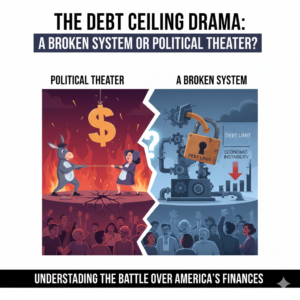
The Debt Ceiling Drama: A Broken System or Political Theater?
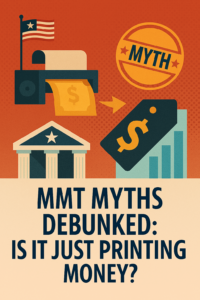
MMT Myths Debunked: Is It Just Printing Money?
AFFILIATE DISCLOSURE:
This article contains affiliate links. We may receive a commission for purchases made through these links, at no extra cost to you. We only recommend products and services we believe will genuinely help you achieve your financial goals.
Discover the truth behind Modern Monetary Theory (MMT) and its misconceptions. Learn how MMT really works and whether it’s truly about printing money. Continue reading as we clarify MMT myths.
Introduction: The Truth About MMT
In recent years, Modern Monetary Theory (MMT) has captured the attention of economists, politicians, and financial experts alike. This economic framework, which challenges traditional views about money creation, government spending, and taxation, has sparked a heated debate. Despite its growing popularity, MMT is often misunderstood, with many people believing that it’s merely a way for governments to print unlimited amounts of money and inflate the economy.
If you’ve ever wondered if MMT really is just a ploy to print money or if it offers a more sustainable way to manage the economy, this post will help you separate fact from fiction. By the end of this article, you’ll have a better understanding of what MMT actually entails and how it might impact both the economy and your personal finances.
Let’s dig into the myths and uncover the truth behind MMT!
What Is Modern Monetary Theory (MMT)?
To understand the myths surrounding MMT, it’s important to first define what it is. MMT is a school of economic thought that argues sovereign governments with their own currency can never run out of money. Unlike households or businesses, which rely on revenue or borrowing, a nation that issues its own currency can create more money to meet its needs.
The key idea behind MMT is that government spending doesn’t have to be constrained by taxes or borrowing. Instead, the government can issue money to finance public projects, programs, or even social safety nets. The theory suggests that the real limit to government spending is inflation—not the availability of funds. MMT argues that as long as inflation is under control, there is no need to worry about budget deficits.
However, this unconventional approach to fiscal policy has sparked intense controversy. Critics claim that MMT could lead to uncontrollable inflation, excessive government intervention, and reckless monetary policies. So, let’s address the myths and see what MMT really advocates.
Myth #1: MMT Is Just About Printing Money
One of the most pervasive myths surrounding MMT is that it’s all about printing money. Critics often claim that MMT advocates for governments to simply create money at will, leading to runaway inflation.
The Truth:
While MMT allows governments to create money, it doesn’t advocate for printing money without limits. Instead, MMT emphasizes that governments can issue money to fund public projects and services, but only if it’s done in a way that doesn’t disrupt the balance of supply and demand in the economy.
In other words, the government can spend to fund programs like infrastructure, education, or healthcare, but it must do so in a way that avoids creating excess demand that exceeds the economy’s capacity to produce goods and services. If too much money is pumped into the economy without a corresponding increase in production, inflation can occur.
Inflation Control in MMT
MMT proponents argue that inflation can be controlled through fiscal tools such as taxation, savings bonds, or other mechanisms to remove money from the economy when necessary. In this way, MMT doesn’t promote endless money printing but instead focuses on using the right mix of monetary and fiscal policies to ensure economic stability.
Takeaway: MMT is not about reckless money printing. It’s about understanding how money is created in a sovereign economy and using fiscal policies to control inflation.
Myth #2: MMT Will Lead to Hyperinflation
The fear of hyperinflation is often invoked when discussing MMT. Critics argue that if governments start printing money freely, it will inevitably lead to uncontrollable inflation, similar to the hyperinflationary crises experienced by countries like Zimbabwe or Venezuela.
The Truth:
While hyperinflation can occur if money is issued without control, MMT doesn’t advocate for unlimited money creation. MMT focuses on managing the economy’s capacity to handle additional spending. Inflation becomes a concern only when the economy reaches full capacity and more money is created without corresponding increases in production. At that point, the central government must step in and use tools like taxes and bonds to control inflation.
In fact, history provides examples of successful government spending without causing hyperinflation. For example, during World War II, the U.S. government issued large amounts of money to finance the war effort, yet inflation remained relatively stable. This was achieved by managing the money supply in a way that was aligned with the productive capacity of the economy.
Takeaway: Hyperinflation is not an automatic consequence of MMT. Inflation can be controlled with proper fiscal management and economic oversight.
Myth #3: MMT Ignores Debt and Deficits
A common criticism of MMT is that it ignores the importance of government debt and budget deficits. Traditional economic thought holds that governments should aim to balance their budgets and avoid accumulating excessive debt. Critics of MMT argue that the theory promotes irresponsible spending and borrowing.
The Truth:
MMT doesn’t ignore debt or deficits. Instead, it offers a different perspective on how we view them. In MMT, national debt is seen more as a tool for managing the economy than something to be feared. According to MMT, the government is the issuer of currency, so it can always repay its debt in its own money. The real constraint on government spending isn’t debt but inflation.
MMT proponents argue that deficits are only problematic when they lead to inflationary pressures. As long as inflation remains under control, government debt is not an immediate concern. In fact, some MMT proponents suggest that deficits can be used strategically to stimulate the economy, especially during times of recession or economic downturn.
Takeaway: MMT redefines the role of debt and deficits, focusing on managing inflation rather than eliminating debt altogether.
Myth #4: MMT Means Unlimited Government Spending
Another widespread myth is that MMT would result in unlimited government spending without any consequences. This misconception arises from the idea that MMT enables governments to spend without having to worry about deficits or debt. Critics argue that this would lead to excessive government intervention and a bloated public sector.
The Truth:
MMT doesn’t suggest unlimited government spending. It stresses that government spending should be aligned with the economy’s capacity to absorb that spending. If the economy is already operating at full capacity, further government spending would lead to inflation, which could undermine the value of money. The real goal of MMT is to ensure that the economy remains in balance, with spending focused on productive investments that improve long-term economic growth.
Furthermore, MMT advocates for the use of fiscal tools like taxation and bond issuance to manage inflation and ensure that the economy does not overheat. This means that while MMT supports increased government spending, it is not without limits.
Takeaway: MMT does not advocate for unlimited spending. It calls for responsible fiscal policies to manage inflation and ensure sustainable economic growth.
Myth #5: MMT Is a Radical or Unproven Theory
Some critics argue that MMT is a radical theory that has never been tested in the real world. They point to the lack of widespread implementation and the theoretical nature of the approach as reasons to dismiss it.
The Truth:
While MMT is relatively new in mainstream economic discourse, its principles are not entirely without precedent. For example, the U.S. government used deficit spending and money creation during World War II to finance the war effort, resulting in significant economic growth without triggering runaway inflation.
Moreover, MMT draws on ideas that have been explored by economists like John Maynard Keynes, who also emphasized the role of government spending in boosting economic activity. MMT proponents argue that the theory provides a modern framework for adapting these ideas to the current economic landscape.
Takeaway: MMT is based on historical examples of government spending and draws on existing economic principles, making it less radical than it may initially seem.
Real-World Applications of MMT
Let’s explore some practical applications of MMT in the real world. How could this theory be implemented to address contemporary issues like income inequality, infrastructure needs, and social safety nets?
-
Infrastructure Investment:
MMT could be used to finance large-scale infrastructure projects, such as rebuilding roads, bridges, and public transportation systems. By issuing money to fund these projects, the government could stimulate economic growth and create jobs without relying on traditional tax revenue. -
Universal Basic Income (UBI):
MMT provides a framework for funding programs like Universal Basic Income (UBI), which guarantees every citizen a certain amount of money each month. By issuing money, the government could provide a safety net for those in need while avoiding the need for traditional taxation. -
Healthcare and Education:
Under MMT, the government could expand access to healthcare and education by issuing money to finance these services. This would allow the government to meet the needs of its citizens without raising taxes or borrowing excessively. -
Full Employment:
MMT advocates for the concept of a “job guarantee,” where the government acts as an employer of last resort, providing jobs to those who are willing and able to work. This would reduce unemployment and create economic stability.
Conclusion: Is MMT the Key to Financial Freedom?
Modern Monetary Theory challenges many of the traditional economic principles that govern how we think about government spending, taxes, and money creation. While MMT has been criticized as a reckless way to print money and create debt, the reality is more nuanced. MMT emphasizes the importance of managing inflation and aligning government spending with the economy’s productive capacity.
Whether or not MMT will become a cornerstone of future economic policy remains to be seen. However, understanding the myths and facts behind this theory is crucial for anyone who wants to make informed decisions about their finances and understand the broader economic context in which these policies are debated.
Takeaway: MMT isn’t about printing money without limits; it’s about using fiscal policies to ensure that government spending promotes economic growth without triggering inflation. Understanding MMT can give you deeper insights into the financial policies that affect your life.
FAQ: Common Questions About MMT
-
What is Modern Monetary Theory (MMT)?
MMT is an economic theory that suggests governments with their own currency can create money to finance spending without relying on taxes or borrowing, as long as inflation is controlled. -
Does MMT mean the government can print unlimited money?
No, MMT advocates for money creation in line with the economy’s productive capacity and inflation control, not unchecked money printing. -
Will MMT lead to hyperinflation?
Hyperinflation can occur if money creation exceeds economic capacity. MMT emphasizes managing inflation through fiscal tools like taxes and savings bonds. -
How does MMT affect taxes?
MMT suggests that taxes are not primarily for revenue but for controlling inflation and ensuring the economy does not overheat. -
Can MMT work in real life?
MMT is based on historical examples of government spending and deficit financing, making it more feasible than critics suggest. -
Does MMT eliminate the need for a balanced budget?
MMT redefines the role of a balanced budget, focusing on inflation control rather than eliminating deficits. -
Could MMT fund universal healthcare or UBI?
Yes, MMT provides a framework for funding social programs like Universal Basic Income or universal healthcare. -
How does MMT relate to the national debt?
In MMT, debt is seen as a tool for managing the economy, not as a source of concern in and of itself. -
Is MMT radical or untested?
While MMT is relatively new, it builds on existing economic principles and has been used successfully in past economic crises. -
How can MMT help with economic recovery?
MMT provides a framework for funding recovery efforts without the usual concerns about budget deficits or debt.
References and Links:
-
Modern Monetary Theory (MMT) – A Primer – Brookings Institution
-
Understanding the Basics of Modern Monetary Theory – Investopedia
Affiliate Disclosure:
Some of the links in this article may be affiliate links, meaning we may earn a small commission at no extra cost to you. We only recommend products and services that we trust and believe will add value to your financial journey.
Recession Warnings and What You Can Actually Do About It

Understand recession warnings, what they mean for you, and actionable steps to protect your finances in uncertain economic times.
Introduction: Recession Warnings – Should You Be Worried?
In today’s economy, the word “recession” often causes panic. Whether it’s the latest news reports about inflation, unemployment rates, or government debt, it’s easy to feel overwhelmed by the idea of an economic downturn. However, while a recession can be a serious concern, there’s a lot you can do to safeguard your financial future.
In this post, we’ll break down the warning signs of a recession, what they mean for your finances, and, most importantly, what practical steps you can take to not just survive but thrive—regardless of what the economy is doing.
What Is a Recession? Understanding the Basics
Before diving into recession warnings, let’s first define what a recession is. A recession is generally characterized as a period of economic decline, often measured by two consecutive quarters of negative GDP growth. Other signs may include rising unemployment, a slowdown in consumer spending, and a drop in business investment.
Common Causes of Recessions
-
High Inflation: When prices rise too quickly, central banks might raise interest rates to curb inflation, which can slow down the economy.
-
Financial Crises: Bank failures or a stock market crash can trigger a recession.
-
Global Events: Natural disasters, pandemics, and geopolitical tensions can all cause economic disruption.
-
Debt Levels: When debt becomes unsustainable, it can lead to an economic collapse.
Recession Warnings: How to Identify Economic Trouble Ahead
Knowing the signs of a recession can give you an edge when it comes to preparing for potential financial challenges. Here are some key recession warnings to keep an eye on:
1. Inverted Yield Curve
The yield curve, which plots the interest rates of bonds of various maturities, is one of the most reliable recession indicators. An inverted yield curve occurs when short-term interest rates are higher than long-term rates, which often signals that investors are pessimistic about the future.
Action Tip: Stay informed by monitoring the yield curve, which is regularly reported in financial news outlets. It can be a signal to reassess your investments.
2. Rising Unemployment Rates
When companies begin to slow hiring or lay off workers, it’s a warning sign that the economy might be in trouble. Rising unemployment typically occurs as companies adjust to slower consumer demand.
Action Tip: If you’re concerned about job security, focus on improving your skills, building a solid professional network, and diversifying your income streams.
3. Declining Consumer Confidence
Consumer confidence is a measure of how optimistic people feel about the economy. A drop in consumer confidence often leads to reduced spending, which can contribute to a recession.
Action Tip: Be mindful of your own spending habits. If you notice that you’re cutting back on discretionary purchases, others may be doing the same.
4. Falling Stock Market
While the stock market is volatile by nature, a prolonged downturn can be a warning that economic conditions are deteriorating.
Action Tip: Consider adjusting your investment strategy. Avoid panic selling and focus on long-term goals, especially if you’re investing for retirement.
5. Declining Business Investment
If companies are cutting back on capital expenditures or postponing expansion plans, it can be a sign that they’re preparing for a slowdown.
Action Tip: Watch the news for reports on corporate earnings and spending trends. If businesses are tightening their belts, it may be wise to review your financial plan.
What Can You Do About It? Practical Steps to Protect Your Finances
While economic downturns are beyond our control, there are proactive steps you can take to protect your finances and even come out stronger. Here’s how:
1. Build an Emergency Fund
One of the most important things you can do during uncertain times is to have cash set aside for emergencies. An emergency fund can cover unexpected expenses like medical bills, car repairs, or job loss.
Actionable Tip: Aim to save at least three to six months’ worth of living expenses in a high-yield savings account. The peace of mind this provides is invaluable.
2. Reduce High-Interest Debt
High-interest debt, such as credit card debt, can quickly spiral out of control during a recession. Focus on paying down high-interest loans to reduce financial stress.
Actionable Tip: Use the debt snowball or debt avalanche method to pay off your debts. Prioritize the highest-interest debts first to save money in the long run.
3. Diversify Your Investments
Diversifying your investments helps minimize risk during economic downturns. A well-balanced portfolio can cushion you against market volatility and help you stay on track with your financial goals.
Actionable Tip: Review your investment portfolio to ensure it’s well-diversified across asset classes (stocks, bonds, real estate, etc.). Consider low-cost index funds or ETFs for broad exposure.
4. Stay Employed – Or Diversify Your Income Streams
If you’re worried about job security, think about ways to make your income more resilient. Whether it’s starting a side hustle, freelancing, or learning new skills, having more than one source of income can protect you during tough times.
Actionable Tip: Identify your strengths and explore freelance opportunities or online businesses that align with your skillset.
5. Cut Back on Unnecessary Spending
When the economy slows down, it’s essential to evaluate your spending habits. Cutting back on unnecessary purchases will help you conserve cash for more important needs.
Actionable Tip: Use budgeting tools like Mint or YNAB to track your expenses and identify areas to reduce spending.
The Controversial Question: Should You Prepare for a Recession?
You may have heard people say that preparing for a recession is just “overreacting” or “paranoid.” But considering the uncertainty of the global economy, it’s better to be prepared than to panic when the signs of a recession become more apparent. By taking proactive steps, you can build financial resilience, regardless of what the economy does.
Conclusion: Taking Charge of Your Financial Future
While it’s easy to feel powerless in the face of economic downturns, the truth is that you have far more control over your financial destiny than you think. By building a solid financial foundation, reducing your debt, diversifying your investments, and focusing on what you can control, you can navigate a recession—or any economic storm—successfully.
FAQs About Recession Warnings and Financial Preparedness
-
What are the signs of a recession?
Recession signs include an inverted yield curve, rising unemployment rates, declining consumer confidence, and falling stock market performance. -
How can I prepare financially for a recession?
Build an emergency fund, reduce high-interest debt, diversify investments, and monitor spending to protect yourself financially. -
Is it better to invest during a recession?
Yes, investing during a recession can offer opportunities to buy assets at lower prices. Focus on long-term growth and diversification. -
Should I pull my money out of the stock market during a recession?
Unless you’re nearing retirement or need immediate cash, it’s generally advisable to stay invested for the long-term and avoid panic selling. -
How does a recession impact my job?
During a recession, layoffs and hiring freezes may occur. To protect yourself, enhance your skills and consider diversifying income streams. -
Is it a good idea to start a business during a recession?
Starting a business can be challenging during a recession, but it can also create opportunities for innovative services and products. -
How do recessions affect interest rates?
During a recession, central banks may lower interest rates to stimulate spending and investment. -
Can I use credit cards during a recession?
You can use credit cards, but it’s essential to pay them off quickly to avoid high-interest charges and build your emergency fund. -
How does a recession affect housing markets?
Recessions may lead to reduced demand in housing, lower property prices, and mortgage rate changes. -
Is it safe to invest in real estate during a recession?
Real estate can still be a good investment during a recession, but it’s important to evaluate the market and location carefully.
Affiliate Disclosure:
Some of the links in this article may be affiliate links, meaning we may earn a small commission at no extra cost to you. We only recommend products and services that we trust and believe will add value to your financial journey.
This comprehensive guide empowers readers to understand recession warnings and take actionable steps to protect their finances.
Credit Cards: Tools or Traps? Here’s What You Need to Know

AFFILIATE DISCLOSURE:
This article contains affiliate links. We may receive a commission for purchases made through these links, at no extra cost to you. We only recommend products and services we believe will genuinely help you achieve your financial goals.
Are credit cards a tool for financial empowerment or a dangerous trap? Learn how to use credit wisely, avoid common pitfalls, and make the most of your credit cards.
Introduction
Credit cards: they’re often seen as an essential tool for managing personal finances, but they can also be a slippery slope if not handled properly. For many people, credit cards represent a powerful way to build credit, gain rewards, and increase purchasing flexibility. However, for others, they’re a source of financial stress, spiraling debt, and high-interest payments.
This article is designed to help you navigate the world of credit cards, separating fact from fiction and offering you the knowledge you need to decide if credit cards are a tool for financial empowerment or a trap to avoid. We’ll dive into the pros and cons, how to use them wisely, and provide practical tips that will make credit cards work for you—not against you.
By the end, you’ll have the tools to take control of your credit cards, avoid common pitfalls, and use them strategically to improve your financial situation.
What Are Credit Cards and How Do They Work?
Before we dive into the pros and cons, let’s first define what credit cards are and how they work. A credit card is essentially a line of credit offered by financial institutions that allows you to borrow funds to make purchases or withdraw cash up to a specified limit. You are required to repay the borrowed amount over time, typically with interest, if you don’t pay off your balance in full each month.
Key Terms to Know:
- Credit Limit: The maximum amount you can charge to your card.
- APR (Annual Percentage Rate): The interest rate applied to your outstanding balance. If you don’t pay off the balance in full, you’ll be charged interest on the remaining amount.
- Grace Period: A period (usually 20-25 days) where you can pay your bill without incurring interest charges, as long as the balance is paid in full.
Credit cards are one of the most common ways to borrow money, with both advantages and risks. Understanding how they work is crucial for making them a useful tool in your financial toolkit rather than a trap.
The Pros of Credit Cards: Tools for Building Financial Power
Credit cards can serve as powerful tools if used responsibly. Here are some of the benefits that come with using credit cards:
- Building Your Credit Score
One of the most significant benefits of credit cards is their ability to help you build and maintain a good credit score. Your credit score plays a key role in many financial decisions, including loan approval, rental agreements, and even job offers. By using your credit card responsibly—making payments on time, keeping your balance low, and maintaining a positive credit history—you can improve your score over time.
Pro Tip: The average age of your credit accounts and the credit utilization ratio (the amount of credit used vs. the available credit) make up a significant portion of your score. The more you manage these factors, the better your credit score will be.
- Convenience and Flexibility
Credit cards provide unmatched flexibility. They make it easy to make purchases both online and in-store without worrying about carrying cash. You can pay for items ranging from everyday essentials to larger purchases—such as electronics or vacation bookings—and then pay off your balance over time (ideally in full to avoid interest).
Moreover, most credit cards offer emergency purchasing power, allowing you to cover unexpected expenses when cash flow is tight. This could include medical emergencies, car repairs, or urgent travel needs.
- Rewards Programs and Cash Back
Credit cards often come with rewards programs that allow you to earn points, miles, or cash back for every purchase you make. Over time, these rewards can add up to significant savings or perks, such as free flights, hotel stays, or even gift cards. By choosing a card that aligns with your spending habits, you can maximize the rewards you earn.
For example, if you travel frequently, a rewards card that offers travel points might be more beneficial. If you spend a lot on groceries, a card that offers cashback on groceries can be a good fit.
- Purchase Protection and Travel Insurance
Another valuable feature of credit cards is the protection they offer. Many credit cards come with purchase protection, which covers you if an item is lost, damaged, or stolen within a certain time frame after purchase. Some cards also provide extended warranties, meaning the card issuer will extend the manufacturer’s warranty on eligible purchases.
Additionally, some credit cards offer travel insurance benefits, including coverage for trip cancellations, lost luggage, rental car accidents, and emergency medical expenses. This can be especially beneficial if you’re planning a trip and want extra peace of mind.
The Cons of Credit Cards: Traps That Can Lead to Debt
While credit cards have undeniable advantages, they also come with significant risks if not managed properly. Here are some common pitfalls:
- High-Interest Rates
Credit cards come with steep interest rates. If you don’t pay off your balance in full each month, you’ll be charged interest on the remaining balance. These interest rates can range from 15% to 25% or even higher, which means that any unpaid balance will quickly accumulate, making it harder to pay off the debt.
For example, if you carry a $1,000 balance at a 20% APR and make only the minimum payment, it could take years to pay off the debt—and you’ll end up paying far more than the original amount borrowed.
- Temptation to Overspend
One of the major dangers of credit cards is the temptation to overspend. With credit readily available, it’s easy to justify purchases that you can’t actually afford, especially with enticing credit card promotions that promise discounts or bonuses for spending. This mindset can lead to living beyond your means, creating a cycle of debt that’s hard to break.
- Negative Impact on Your Credit Score
Failure to pay your credit card bill on time or carrying high balances can damage your credit score. Late payments (especially those over 30 days) can stay on your credit report for up to seven years, negatively affecting your creditworthiness and your ability to secure future loans or credit.
Furthermore, carrying a high balance relative to your credit limit (a high credit utilization ratio) can lower your credit score. Experts recommend keeping your credit utilization under 30% to maintain a healthy score.
- Fees and Penalties
Credit cards come with various fees, some of which can be avoided and others that are difficult to escape. Common fees include annual fees, late payment fees, over-the-limit fees, and foreign transaction fees. If you’re not careful, these fees can quickly add up, adding to your financial burden.
Are Credit Cards Right for You?
Given both the benefits and risks, how do you determine whether credit cards are a good fit for your financial situation?
Consider Your Spending Habits
If you are disciplined and can pay off your balance in full each month, credit cards can be a great tool for building credit and earning rewards. On the other hand, if you tend to overspend or struggle to pay bills on time, credit cards might create more problems than solutions.
Do You Have a Budget?
Having a clear budget is essential if you plan to use credit cards effectively. A budget will help you monitor your spending, avoid excessive debt, and ensure that you’re living within your means. If you don’t have a budget yet, consider creating one before you start using credit cards extensively.
Trending Question: Should You Carry a Balance on Your Credit Card?
Answer: No, carrying a balance on your credit card is a costly habit. While credit cards allow you to borrow money, they’re designed for short-term borrowing. If you carry a balance from month to month, you’ll be charged interest, which can quickly add up. It’s always best to pay off your balance in full each month to avoid these extra costs.
Tips for Using Credit Cards Wisely
If you’re determined to use credit cards effectively, here are some tips to help you avoid common pitfalls and make the most of their benefits:
- Pay Off Your Balance Every Month
The best way to avoid paying interest on your purchases is to pay off your balance in full each month. This will help you keep costs down and maintain a positive credit score.
- Set Up Alerts and Reminders
Most credit card companies allow you to set up automatic reminders or alerts for due dates, spending limits, or payment confirmations. Use these features to stay on top of your payments and avoid missed deadlines.
- Monitor Your Spending
Credit cards can make it easy to forget about your spending habits. Keep track of your purchases by regularly reviewing your statements or using an app to help you stay within your budget.
- Choose the Right Card for Your Needs
When selecting a credit card, consider your spending habits. If you travel often, look for a card with travel rewards or benefits. If you want cash back, choose a card that offers cash-back rewards on your everyday purchases.
- Avoid Unnecessary Fees
Always read the fine print on your credit card agreement. Be aware of annual fees, foreign transaction fees, and other hidden charges that can sneak up on you. Opt for cards with no annual fees if you’re not looking for specific benefits.
Conclusion: Credit Cards — Tools or Traps?
Credit cards can be either tools for financial empowerment or traps that lead to debt if used recklessly. The key to making credit cards work for you is understanding their potential benefits and risks, and employing strategies to manage them responsibly. When used wisely, credit cards can help you build a strong credit score, earn rewards, and manage emergency expenses. However, failing to pay off your balance or overspending can result in high-interest debt that’s difficult to escape.
Ultimately, credit cards are a personal finance tool—how you use them determines whether they’re a helpful asset or a financial burden. With the right strategies, they can be a valuable ally in your financial journey.
Internal Link to Relevant Article from TheMoneyQuestion.org
- Understanding Money 101: Your Guide to Managing Finances With Confidence
This article covers the foundational knowledge of managing personal finances, including how to handle credit cards, savings, and budgeting, making it a great complement to understanding how to use credit cards wisely.
External References:
- Consumer Financial Protection Bureau (CFPB) – Managing Credit Cards
- National Foundation for Credit Counseling (NFCC) – Credit Card Debt Advice
Frequently Asked Questions
- What’s the best way to use a credit card without falling into debt?
Pay off your balance in full each month to avoid interest charges and stay within your credit limit. - How can I improve my credit score with a credit card?
Make timely payments, keep your credit utilization low, and avoid carrying a balance. - What happens if I miss a credit card payment?
Missing a payment can hurt your credit score and result in late fees and interest charges. - Is it better to use a credit card or debit card?
Credit cards offer better protection and can help build credit, but debit cards are safer for avoiding debt. - How can I avoid credit card debt?
Set a budget, monitor your spending, and pay off your balance in full each month. - Are rewards credit cards worth it?
If you can pay off your balance monthly, rewards credit cards can be beneficial, but avoid overspending just for rewards. - What’s the difference between a credit card and a charge card?
A charge card requires you to pay the full balance each month, while a credit card allows you to carry a balance and pay interest. - Can I transfer a balance from one credit card to another?
Yes, many cards offer balance transfers, which can help consolidate debt at a lower interest rate. - What should I do if I have high credit card debt?
Consider a balance transfer, seek financial advice, or create a repayment plan to tackle the debt. - How can I avoid credit card fees?
Pay on time, avoid going over your credit limit, and check for hidden fees in your card agreement.
Affiliate Disclosure
TheMoneyQuestion.org participates in affiliate marketing programs. This means that some of the links within this article may be affiliate links. If you click on these links and make a purchase, we may receive a small commission at no additional cost to you. We only recommend products or services that we believe will add value to our readers.
Authoritative Sources
Editorial Disclosure: This article is for informational purposes only and does not constitute financial advice. Some links on this page may be affiliate links — if you click through and make a purchase or apply for a product, The Money Question may receive a commission at no additional cost to you. We only recommend products and services we believe provide genuine value. Always consult a qualified financial professional before making major financial decisions.
Is Inflation Always Bad? What MMT Says About Price Stability
Central Banks 101: Why They’re More Powerful Than Presidents
AFFILIATE DISCLOSURE:
This article contains affiliate links. We may receive a commission for purchases made through these links, at no extra cost to you. We only recommend products and services we believe will genuinely help you achieve your financial goals.
Central banks wield more power than presidents in shaping the economy. Discover why their decisions influence your financial life more than you may realize.
Introduction
In the world of economics, the decisions made by central banks are often more impactful than those of elected political leaders like presidents. While the role of politicians in shaping fiscal policies is widely recognized, the subtle, yet far-reaching influence of central banks remains an enigma for many. So, what makes central banks so powerful? And why do they have such a profound effect on your financial life?
This post will take you through the ins and outs of central banking, exploring the role these institutions play in managing the economy, why their influence is often more powerful than that of presidents, and how their decisions impact everything from inflation to your interest rates. By the end, you’ll have a clearer understanding of how central banks operate and why their actions matter to you.
What Are Central Banks?
To understand why central banks hold more power than presidents, it’s essential to know what central banks are and how they function. Central banks are the primary financial institutions that oversee a country’s monetary system. These institutions regulate a nation’s money supply, set interest rates, and maintain economic stability. While each country has its own central bank (e.g., the Federal Reserve in the U.S., the European Central Bank in Europe, the Bank of England in the U.K.), these institutions generally have similar functions.
Here are the core functions of a central bank:
- Monetary Policy Management
Central banks control the country’s money supply and set interest rates. Their primary goal is to stabilize inflation and promote sustainable economic growth. They adjust the money supply by buying or selling government bonds, which influences the interest rates in the market. Lower interest rates can stimulate spending and investment, while higher interest rates can slow down an overheated economy.
- Lender of Last Resort
During times of financial crisis, central banks act as lenders of last resort. When banks face liquidity shortages (the inability to access cash to meet their obligations), the central bank can provide loans to these banks to prevent widespread panic and keep the financial system stable.
- Currency Issuance
Central banks are responsible for issuing the country’s currency. They control how much money is in circulation and have the authority to print new money when needed, thus directly influencing the money supply.
- Managing Government Debt
Central banks often act as bankers for the government. They manage the issuance and payment of government debt (such as bonds) and assist in managing the country’s overall fiscal health by influencing national debt levels.
Why Central Banks Hold More Power Than Presidents
Now that we understand what central banks do, let’s explore why these institutions wield more power than presidents when it comes to shaping the economy.
- Control Over Monetary Policy
While presidents can propose and influence fiscal policies such as taxation and government spending, central banks have exclusive control over monetary policy — arguably the more powerful tool for managing the economy.
Monetary policy influences the money supply, interest rates, and inflation, all of which directly impact economic activity. For example:
- Interest rates: When central banks adjust interest rates, they influence the cost of borrowing. Lower rates encourage borrowing and spending, while higher rates encourage saving and reduce borrowing. This can affect everything from mortgage rates to the cost of credit card debt.
- Money supply: Central banks control how much money is in circulation. By printing more money or reducing the supply, they can control inflation and stabilize the economy.
By adjusting these variables, central banks can help manage economic cycles, control inflation, and support employment. In contrast, a president’s influence over fiscal policy is less direct and often slower to take effect.
- Independence from Political Influence
One of the primary reasons central banks are more powerful than presidents is their independence. Most central banks operate independently from government influence, meaning they don’t have to answer to political pressures when making economic decisions.
For instance, the Federal Reserve in the U.S. has a mandate to make decisions based on economic data and long-term financial stability, rather than the political goals of the sitting president. This gives central banks the ability to take a longer-term view and make decisions that may not always be politically popular but are necessary for the stability of the economy.
This independence allows central banks to enact policies that may go against the short-term interests of elected officials, who are often focused on winning votes rather than managing long-term economic health. A president, on the other hand, is limited by the electoral cycle and the need to satisfy their constituents.
- Global Impact
Central banks don’t just affect domestic economies — they also have a profound impact on global markets. The decisions made by the Federal Reserve, for example, can influence currency values worldwide, affecting international trade, investment flows, and global financial markets.
When the Federal Reserve changes interest rates or takes other actions, it often causes ripple effects across the globe. A rate hike by the Fed, for example, can cause the U.S. dollar to strengthen, which can influence the exchange rates of other countries’ currencies, impacting trade relationships and the global supply chain.
Presidents, while they influence trade policy and international relations, do not have the same ability to directly manipulate global economic conditions through monetary policy.
- Long-Term Economic Stability
Central banks are primarily concerned with maintaining long-term economic stability. Their tools — such as interest rate adjustments, quantitative easing, and money supply regulation — are designed to influence the economy in a way that fosters long-term growth, job creation, and price stability.
Presidents, on the other hand, often face pressure to act quickly to address immediate concerns, such as high unemployment or economic downturns. While their policies can have a significant impact, they typically don’t have the same tools to directly influence macroeconomic stability as central banks do.
For example, during the 2008 financial crisis, the Federal Reserve took aggressive actions to stabilize the financial system, such as lowering interest rates and implementing quantitative easing. While the government provided fiscal stimulus, it was the Federal Reserve’s actions that ultimately helped restore stability to the financial markets.
The Impact of Central Bank Decisions on Your Daily Life
Given their extensive influence over the economy, central banks’ decisions can directly affect your personal finances. Here are a few ways their actions impact you:
- Interest Rates and Borrowing Costs
Central banks’ decisions about interest rates directly affect the cost of borrowing. When interest rates are low, it becomes cheaper to borrow money for things like mortgages, car loans, and student loans. On the other hand, when interest rates rise, the cost of borrowing increases, which can reduce consumer spending and slow down economic growth.
If you have a mortgage or other loans, it’s crucial to stay informed about interest rate changes. A decision by the central bank to raise rates can make your existing debt more expensive, while a rate cut can lower your monthly payments.
- Inflation and the Cost of Living
Central banks play a crucial role in controlling inflation — the rate at which prices for goods and services increase. If inflation is too high, the value of money decreases, which means you can buy less with the same amount. Central banks can raise interest rates or use other tools to slow inflation.
However, if inflation is too low, it can signal weak demand in the economy, which can lead to job losses and wage stagnation. Central banks aim to keep inflation at a manageable level to ensure the purchasing power of money remains stable.
- Asset Prices
The policies of central banks can significantly influence asset prices, including stocks, bonds, and real estate. For example, when interest rates are low, it can drive up the prices of stocks and real estate as investors seek higher returns in other markets. Conversely, when interest rates rise, asset prices may fall as investors seek safer, higher-yielding assets.
How to Protect Yourself from the Influence of Central Banks
Given their power, it’s important to understand how to protect yourself from the economic consequences of central bank decisions. Here are some tips:
- Diversify Your Investments
Since central bank policies can affect various asset classes differently, it’s essential to diversify your investments. By spreading your investments across different sectors, industries, and asset types, you can reduce the risk of significant losses due to changes in interest rates or inflation.
- Monitor Interest Rate Changes
Stay informed about central bank interest rate changes, as these will affect borrowing costs and the value of your investments. Keeping an eye on Federal Reserve announcements or those of your country’s central bank can help you adjust your financial strategies accordingly.
- Prepare for Inflation
Inflation erodes the purchasing power of your savings. To protect against inflation, consider investing in assets that tend to perform well when inflation rises, such as real estate, commodities, and Treasury Inflation-Protected Securities (TIPS).
Conclusion: The Undeniable Power of Central Banks
Central banks play a vital and often unseen role in shaping the global economy. Through their control of monetary policy, interest rates, and money supply, they wield more power than elected officials like presidents. Their ability to stabilize financial markets, control inflation, and influence global trade makes them key players in maintaining economic stability.
While the average person may not fully understand the intricate workings of central banks, it’s important to recognize their influence and how their decisions affect your financial life. By staying informed and understanding their power, you can make better financial decisions and protect your wealth in an ever-changing economic environment.
Frequently Asked Questions (FAQ)
- What is the main function of central banks?
Central banks manage the country’s money supply, interest rates, and inflation to ensure economic stability. - Why are central banks more powerful than presidents?
Central banks control monetary policy, which has a more direct and lasting impact on the economy than fiscal policies set by presidents. - How do central banks affect inflation?
Central banks regulate inflation by adjusting interest rates and controlling the money supply. - How do central banks impact interest rates?
Central banks raise or lower interest rates to influence borrowing costs and economic activity. - Can presidents control central banks?
No, central banks are typically independent institutions designed to operate free from political pressures. - How do central banks influence the global economy?
Central banks, such as the Federal Reserve, can affect global currency values, trade, and investment flows through their monetary policies. - What is quantitative easing?
Quantitative easing is a policy where a central bank buys government bonds or other financial assets to increase the money supply and stimulate economic activity. - How can central banks prevent a financial crisis?
Central banks can inject liquidity into the financial system and lower interest rates to prevent or mitigate financial crises. - Why is central bank independence important?
Independence ensures that central banks can make long-term decisions based on economic data, not political pressures. - How can I protect my finances from central bank decisions?
Stay informed about interest rates, diversify your investments, and consider assets that perform well during inflationary periods.
Affiliate Disclosure
Some of the links in this article may be affiliate links, which means I may earn a commission if you click through and make a purchase. This comes at no additional cost to you, and it helps support the maintenance of this website. Please note that I only recommend products or services that I believe will add value to my readers.
How Governments Create Money — And Why It’s Not Like Your Budget
AFFILIATE DISCLOSURE:
This article contains affiliate links. We may receive a commission for purchases made through these links, at no extra cost to you. We only recommend products and services we believe will genuinely help you achieve your financial goals.
Explore how governments create money and why it differs from managing a household budget. Understand the mechanics behind modern monetary systems in this easy-to-follow guide.
Introduction
When you hear the phrase “money doesn’t grow on trees,” it’s easy to assume that money is limited in all its forms. The idea of scarcity is woven deeply into our personal finance habits—after all, if you don’t earn money, you can’t spend it. But what if I told you that governments don’t operate the same way? What if I told you that they have the ability to create money without needing to “earn” it first? This is a concept that confuses many people because it’s so different from how we think about money on an individual level.
In this article, we’ll explore how governments create money, why it’s not like managing your personal budget, and what this means for both the economy and your financial life. Understanding the dynamics behind government money creation can help you navigate the world of personal finance with greater confidence. You’ll also gain insight into why governments run deficits, how they control inflation, and why sovereign Debt is not as straightforward as household debt. Ready to dive into the mechanics of money creation? Let’s go!
How Governments Create Money: The Basics
What is Money Creation?
At the most basic level, money creation refers to the process by which a government, typically through its central bank, issues new money to support its spending. This money can take many forms, including physical cash (like bills and coins) or digital money that flows through the banking system.
You may be familiar with the concept of money being tied to valuable assets like gold, but in today’s world, most money is fiat, meaning it’s not backed by anything tangible like gold or silver. Instead, its value comes from the trust that people and institutions place in the government that issues it. For example, the U.S. dollar is considered valuable not because it’s backed by gold but because people believe in the U.S. government’s ability to repay debts and manage the economy.
In short, money creation today is more about authority and policy than physical resources.
The Central Bank’s Role in Money Creation
The central bank is a key player in the money creation process. For instance, in the U.S., the Federal Reserve (or “Fed”) is responsible for managing the money supply. The central bank controls how much money is available in the economy and uses various tools to influence the economy, such as adjusting interest rates and purchasing government bonds.
While the central bank doesn’t physically print cash (this is done by the U.S. Treasury), it has the power to create money through electronic means, essentially increasing the money supply. This is an important distinction: while individuals or businesses need to earn money, the government, through its central bank, can create more money when needed.
Government Spending and the Money Supply
When the government spends money, it doesn’t need to rely solely on taxes or borrowing to fund its expenses. Instead, the central bank can increase the money supply, which can then be used for public spending. This is especially crucial in times of economic downturn, when the government may need to stimulate the economy by increasing spending.
In simpler terms, the government can create money in a way that allows it to spend more without first collecting taxes or taking on Debt. However, this doesn’t mean that governments are free to print money endlessly without consequences. Inflation is a key factor to consider when creating more money, and central banks manage inflation through various policy measures.
Why Government Money Creation Is Not Like Your Household Budget
- Governments Don’t Need to “Earn” Money
As individuals, we understand the need to budget because we are limited by the income we generate. If you earn $3,000 a month, your spending is constrained by that amount. If you want to spend more, you need to find ways to earn more or borrow. For governments, however, the situation is vastly different.
Governments can essentially create money at will, allowing them to spend on projects, social programs, and infrastructure without worrying about balancing the budget in the same way individuals do. While taxes and borrowing are still part of the equation, the government doesn’t have to “earn” money before it can spend. The money supply itself is flexible, and the central bank can create new money to meet the government’s spending needs.
- The Concept of Deficits and National Debt
In personal finance, a deficit is a bad thing because it means you’re spending more than you’re earning. This can lead to Debt, which must eventually be paid off with interest. But when it comes to governments, running a deficit isn’t necessarily a problem.
Governments operate in a different way. They can run budget deficits year after year without necessarily experiencing financial trouble. For example, the U.S. government has run a budget deficit almost every year since the 1970s, yet it hasn’t caused a collapse. This is because the government can manage its deficit by creating money and adjusting fiscal policies. The concept of national Debt is different from personal Debt. While it’s true that the government issues bonds to finance its spending, this is often done by creating money rather than relying purely on revenue.
- Managing Inflation and Economic Growth
Inflation becomes a concern when too much money is created without a corresponding increase in goods and services. If people have more money to spend, but the supply of goods doesn’t increase, prices will rise. However, the government and central banks can control inflation using various tools, such as raising interest rates or reducing government spending.
For individuals, inflation is a constant worry. As prices rise, the purchasing power of your income decreases, which means you can buy less with the same amount of money. This is a significant challenge for personal budgets. However, for governments, inflation can be controlled by adjusting fiscal policies and regulating the money supply through the central bank.
The Mechanics of Money Creation: How Central Banks and Governments Work Together
Monetary Policy vs. Fiscal Policy
Governments and central banks work together to manage the economy. Here’s how:
- Monetary Policy: The central bank, such as the Federal Reserve in the U.S., uses monetary policy to control the money supply and influence inflation. This includes tools like open market operations (buying or selling government bonds) and setting interest rates.
- Fiscal Policy: Fiscal policy is set by the government, which determines how much it spends and how much it collects in taxes. Governments can decide to spend more or raise taxes based on economic conditions.
When the government spends money, it often borrows from the central bank or financial institutions. The government can issue bonds, which are essentially promises to repay borrowed money with interest. These bonds are bought by institutions like banks or pension funds, which are often part of the larger financial ecosystem.
One key point to remember is that the central bank and government are often independent entities, but they work closely to ensure economic stability. The government sets the broad policies, and the central bank ensures that there’s enough money in circulation to keep the economy running smoothly.
Modern Monetary Theory (MMT): A New Way to Think About Money Creation
Modern Monetary Theory (MMT) is a relatively new framework for understanding how money works in sovereign economies. According to MMT, a government that issues its own currency (like the U.S. dollar or British pound) doesn’t need to rely on taxes or borrowing to fund its spending. Instead, it can simply create more money.
This doesn’t mean that inflation will automatically follow. MMT advocates argue that inflation can be controlled by adjusting fiscal policy, regulating the money supply, and ensuring that the economy doesn’t overheat.
Critics of MMT argue that it could lead to inflation or undermine the value of currency, but proponents believe it offers a way to fund programs like universal healthcare or education without relying on traditional budget constraints.
Why This Matters for Your Personal Finances
Now that we’ve covered how governments create money, you may be wondering how this all relates to your personal finances. The truth is, understanding money creation and government economic policy can help you make more informed decisions about your own money.
Impact on Interest Rates and Investments
The government’s ability to create money impacts interest rates, which directly affect your investments and borrowing decisions. For example, when the central bank lowers interest rates, borrowing becomes cheaper, which can lead to more spending and investment. On the other hand, higher interest rates can make borrowing more expensive and slow down economic activity.
As an individual, understanding how interest rates work and how they are influenced by government policies can help you make smarter decisions about mortgages, loans, and investments.
Managing Inflation and Purchasing Power
Inflation, caused by an increase in the money supply, is something that can affect your day-to-day life. When prices rise faster than your income, your purchasing power decreases. Knowing how inflation is tied to government spending and central bank actions can help you plan for future expenses.
For example, investing in assets that tend to perform well during inflationary periods, such as real estate or stocks, can help you protect your wealth against inflation.
Debt Management
If you understand that government debt isn’t the same as personal Debt, you can better manage your finances. Government debt can be a tool to finance investments in the economy, whereas personal Debt requires careful management to avoid financial strain.
Actionable Tips for Personal Finance
- Stay Informed About Economic Policies: Keep track of government spending and central bank actions. This can give you insights into how inflation and interest rates might change, helping you make better financial decisions.
- Diversify Your Investments: Protect yourself from economic uncertainty by diversifying your investments. Spread your money across stocks, bonds, real estate, and commodities to reduce risk.
- Plan for Inflation: Consider inflation when making long-term financial plans. Assets like real estate, stocks, or inflation-protected securities (TIPS) can help protect your wealth.
- Use Debt Wisely: Just as governments manage Debt, use credit responsibly. Debt can be a useful tool if managed correctly, but it can also become a financial burden if used irresponsibly.
Conclusion
Understanding how governments create money and why it’s different from managing your personal budget is a critical aspect of financial literacy. While individuals must earn, save, and budget to manage their finances, governments have the unique ability to create money to fund their spending. This power comes with risks, including inflation, but when managed correctly, it can be used to foster economic growth and stability.
By understanding these principles, you can make more informed decisions about your personal finances, whether it’s investing, saving, or managing Debt. The next time you hear about government deficits or monetary policy, you’ll have the knowledge to understand how these decisions impact the economy and your financial future.
Internal References (from TheMoneyQuestion.org)
-
Who Really Controls the Money? A Look at Central Banks
-
This article will give readers more insight into how central banks operate and their role in money creation. It will deepen the understanding of the Federal Reserve or similar institutions that govern monetary policy in other countries.
-
-
Modern Monetary Theory: Rethinking Economics and Monetary Reform
-
This article will expand on Modern Monetary Theory (MMT), discussing its principles and how it relates to government money creation and deficits. It’s particularly relevant for those looking to understand the theoretical foundations of money creation discussed in the post.
-
-
Understanding Money 101: Your Guide to Managing Finances With Confidence
-
This article will provide a foundation for readers who are just beginning their financial journey. By linking this piece, readers can get actionable personal finance tips while helping them connect the dots between macroeconomic policy and their everyday finances.
-
External References
-
Federal Reserve’s Economic Research page will provide more context on how central banks control money supply and influence economic conditions.
-
The Bank of England’s Money Creation in the Modern Economy reference will be helpful in explaining how central banks create money, emphasizing the similarities between different countries’ approaches.
-
The Investopedia page on MMT is a great resource when diving into the topic of Modern Monetary Theory, especially for readers who want to explore MMT’s controversial aspects in greater detail.
-
The U.S. Treasury’s Debt and Deficit Overview could be referenced when explaining government deficits and national debt, providing an authoritative look at how the U.S. government manages its finances.
Frequently Asked Questions
1.How does the government create money?
-
- The government creates money through the central bank, which can issue currency or digitally increase the money supply.
2.Why can’t governments just print unlimited money?
-
- Printing too much money can lead to inflation, which reduces the value of money and increases the cost of living.
3.What is Modern Monetary Theory (MMT)?
-
- MMT suggests that a government that controls its own currency can create money to fund its spending, as long as inflation is managed.
4.How is government debt different from personal Debt?
-
- Government debt is often managed through the central bank’s control of the money supply, whereas personal Debt must be paid back with earnings or savings.
5.Does inflation always happen when governments create money?
-
- Not always. Inflation occurs when the money supply grows faster than the economy, but it can be controlled through central bank policies.
6.What role does the central bank play in money creation?
-
- The central bank manages the money supply by setting interest rates, buying government bonds, and using other tools to influence economic activity.
7.Why do governments run deficits?
-
- Governments run deficits to finance public programs, especially during economic downturns. The central bank can manage the deficit through monetary policy.
8.What impact does government money creation have on interest rates?
-
- When the central bank creates money, it can influence interest rates by either raising or lowering them, affecting borrowing and investment.
9.How does understanding money creation help me with personal finance?
-
- It helps you understand the economic forces at play, so you can make more informed decisions about investing, saving, and managing Debt.
10.Can governments use money creation to fund social programs?
-
- Yes, Modern Monetary Theory argues that governments can create money to finance social programs like healthcare and education, as long as inflation is controlled.
Affiliate Disclosure: This post may contain affiliate links to trusted financial products or services. If you click through and make a purchase, we may earn a small commission at no extra cost to you.
How to Build an Emergency Fund — Even If You Are Struggling

AFFILIATE DISCLOSURE:
This article contains affiliate links. We may receive a commission for purchases made through these links, at no extra cost to you. We only recommend products and services we believe will genuinely help you achieve your financial goals.
Struggling to build an emergency fund? Learn practical strategies to create financial security, even on a tight budget, and protect yourself from unexpected expenses.
Introduction: Why You Need an Emergency Fund — and How to Start, Even If Money Is Tight
When life throws you an unexpected curveball—whether it’s a medical emergency, a job loss, or an urgent home repair—having an emergency fund can be the difference between financial security and stress, yet many people feel they are too financially strained to start one.
The good news is that even if you’re struggling financially, it’s possible to build an emergency fund step by step. This guide will walk you through actionable strategies to create a safety net, no matter where you are in your financial journey.
What is an Emergency Fund, and Why Is It So Important?
An emergency fund is a savings buffer that you can dip into during unforeseen circumstances. The purpose is to cover expenses that are unexpected and urgent—things like:
- Medical bills
- Car repairs
- Emergency travel for family matters
- Job loss or a temporary reduction in income
Why you need one: Without an emergency fund, you may be forced to rely on credit cards, loans, or even worse, the financial help of others. This can quickly lead to debt accumulation and stress, making it harder to regain control of your financial life.
How it helps: An emergency fund offers a sense of financial security and peace of mind. You can face life’s challenges with confidence, knowing that you have a financial cushion to lean on.
How Much Should You Save in Your Emergency Fund?
The ideal emergency fund amount varies based on your unique financial situation. However, many financial experts suggest aiming for:
- 3 to 6 months’ worth of living expenses if you have a stable income and no significant financial hardships.
- 1 to 3 months’ worth of living expenses if you have an unstable income, like a gig economy job, or if you’re in a particularly tight financial situation.
If you are struggling to meet even basic living expenses, it’s okay to start small and gradually increase your savings over time. Every little bit counts!
Actionable Strategies to Build Your Emergency Fund, Even When Money is Tight
- Start With a Realistic Goal
A common mistake when building an emergency fund is setting an unrealistic goal. If you’re barely making ends meet, it’s going to be discouraging to aim for a large sum right away. Instead:
- Set small, attainable goals (e.g., saving $100 or $200 each month).
- Break your goal into chunks, such as saving $10 per week. This makes it easier to get started.
Example:
Sarah, a freelance graphic designer, earns an inconsistent income. Her first goal is to save $500 in 6 months, starting with just $10 a week. After reaching $500, she’ll aim for a 3-month emergency fund.
- Cut Unnecessary Expenses
You don’t need to eliminate every luxury in your life, but cutting back on unnecessary expenses can free up money for savings. Here’s how:
- Track your spending using an app or a simple spreadsheet to see where your money goes.
- Identify areas to cut back, such as subscription services, dining out, or non-essential shopping.
- Switch to lower-cost alternatives (e.g., cooking at home instead of eating out, or finding cheaper phone plans).
- Automate Your Savings
One of the easiest ways to build your emergency fund is to make it automatic. By automating your savings, you remove the temptation to spend the money. Here’s how:
- Set up automatic transfers from your checking account to your emergency fund account each payday. Even $20 a week can add up over time.
- Use apps that round up your purchases and deposit the difference into a savings account. These “round-up” savings apps are great for building up a small emergency fund without even thinking about it.
- Earn Extra Income
Sometimes, the best way to build an emergency fund quickly is by increasing your income. You don’t need to quit your job to do this. Here are some ways to earn extra money:
- Freelancing: Websites like Fiverr, Upwork, and Freelancer allow you to offer your skills in exchange for pay.
- Side hustles: Consider ridesharing, delivery driving, or babysitting to earn additional cash.
- Sell unused items: Look around your home for items you no longer use. Sell them online to generate quick cash.
- Reduce Your Debt
While building an emergency fund is essential, it’s also critical to reduce your high-interest debt. A significant chunk of your income could be going towards credit card or payday loan payments. As you work on your emergency fund, take these steps to minimize debt:
- Focus on high-interest debt first, like credit cards, while maintaining minimum payments on other debts.
- Consider debt consolidation if you’re paying multiple high-interest rates.
The more you can reduce your debt, the more you’ll be able to put toward your emergency savings.
The Emergency Fund Myth: Do You Need a “Fully” Funded Emergency Fund?
There’s a common misconception that you need to have your emergency fund “fully” funded before you can stop worrying. However, a small emergency fund is better than none. You don’t have to wait until you reach 3–6 months’ worth of living expenses to begin using your emergency fund for emergencies.
Can I still build my emergency fund if I’m paying off debt?
Yes! While it’s essential to focus on paying down high-interest debt, you can simultaneously work on building a small emergency fund. Start with just $500, then shift your focus to paying off debt once that goal is met. This balanced approach allows you to tackle both challenges at once.
Free Resource: Emergency Fund Tracker
To help you stay on track with your savings goals, download our Emergency Fund Tracker. This free tool will guide you through your progress and keep you motivated. [Download it now!]
Internal Links
- Understanding Money 101: Your Guide to Managing Finances With Confidence
- Financial Empowerment: Strategies For Success -(Coming Soon)
Conclusion: Start Building Your Emergency Fund Today
Building an emergency fund, even when money is tight, is entirely possible. By taking small steps, cutting unnecessary expenses, earning extra income, and automating your savings, you can create the financial cushion you need to weather life’s storms. The key is starting small and being consistent.
Remember, every little bit helps, and over time, your emergency fund will grow into a solid safety net that provides peace of mind and security.
Frequently Asked Questions (FAQs)
1.How much should I save in my emergency fund if I’m struggling?
-
- Start with a small, realistic goal, like $500 or $1,000, and build up over time.
2.Can I build an emergency fund if I’m already in debt?
-
- Yes! Focus on building a small emergency fund while paying off high-interest debt.
3.How can I save for an emergency fund on a low income?
-
- Cut back on non-essential expenses, automate small savings, and find ways to earn extra income.
4.Should I focus on debt or my emergency fund first?
-
- Start with a small emergency fund for peace of mind, then focus on debt reduction.
5.Is it worth using apps to round up purchases to save?
-
- Yes! These apps can be a simple and effective way to grow your savings without thinking about it.
6.Can I use my emergency fund for non-emergency situations?
-
- Ideally, only use your emergency fund for unexpected, urgent expenses. Replenish it after use.
7.How do I stay motivated to keep saving?
-
- Track your progress, celebrate small wins, and remind yourself of the security an emergency fund provides.
8.How fast can I build an emergency fund on a tight budget?
-
- It depends on your income and expenses, but consistent savings, even if small, will add up over time.
9.What’s the best type of account for an emergency fund?
-
- A high-yield savings account or money market account is ideal, as it offers safety and some interest growth.
10.Should I keep my emergency fund in cash or invest it?
- It’s best to keep your emergency fund in a liquid, easily accessible account. Avoid high-risk investments.
Affiliate Disclosure
This post may contain affiliate links, which means we may earn a commission if you make a purchase through these links, at no additional cost to you. This helps support the work we do here at TheMoneyQuestion.org.
Authoritative Sources
Editorial Disclosure: This article is for informational purposes only and does not constitute financial advice. Some links on this page may be affiliate links — if you click through and make a purchase or apply for a product, The Money Question may receive a commission at no additional cost to you. We only recommend products and services we believe provide genuine value. Always consult a qualified financial professional before making major financial decisions.
Why Inflation Feels Worse Than the Numbers Say

AFFILIATE DISCLOSURE:
This article contains affiliate links. We may receive a commission for purchases made through these links, at no extra cost to you. We only recommend products and services we believe will genuinely help you achieve your financial goals.
Explore the hidden factors, personal impacts, and practical tips for managing inflation.
Introduction
Inflation is often reported as a simple, quantified number—a percentage change in prices over time. However, for many of us, the reality of inflation can feel much worse than what the official numbers suggest. If you’ve ever felt like your paycheck doesn’t go as far as it used to or that the cost of living is rising faster than the inflation rate reports, you’re not alone. But why does it feel this way? Understanding the deeper, psychological, and practical reasons behind why inflation hits harder than the statistics can help you make smarter financial choices and regain control over your finances.
In this article, we’ll break down the reasons why inflation feels worse than it is, including factors like personal spending habits, lifestyle changes, and the limitations of the Consumer Price Index (CPI). By the end, you’ll not only understand the full scope of inflation but also learn actionable steps to minimize its impact on your personal finances.
What Is Inflation, Really?
Before diving into why inflation can feel worse than it is, let’s first define what inflation actually is.
Inflation is the rate at which the general level of prices for goods and services rises, eroding the purchasing power of currency. Typically, inflation is measured by the Consumer Price Index (CPI), which tracks the prices of a basket of goods and services that represent the typical consumer’s spending habits. These include food, housing, transportation, healthcare, and other common expenses.
But here’s where it gets tricky—while inflation is measured by an index, it doesn’t necessarily reflect your personal experience with rising prices.
Why Does Inflation Feel Worse Than It Is?
- The CPI Doesn’t Reflect Your Unique Spending Habits
The Consumer Price Index is a broad measure that includes a variety of goods and services that might not apply to you. For example, if you don’t drive much, the rising cost of gas may not affect you as much as it does someone who commutes long distances. If you rent, rather than own a home, changes in housing prices may be more noticeable to you than the average person.
Moreover, the CPI assumes that everyone buys the same things in the same amounts, but we all have different lifestyles, needs, and preferences. As a result, your personal inflation rate—what you experience as rising costs—may be much higher than the national average.
- Rising Costs of Everyday Necessities
While the CPI may suggest that inflation is moderate, many of the expenses that hit hardest for everyday people—such as food, housing, and healthcare—have been rising at a faster pace. These essential items make up a large portion of most people’s budgets, and when their prices increase, it has a significant impact on your finances.
- Food: In recent years, the cost of groceries has been rising faster than the general inflation rate. Prices for meat, dairy, and produce are some of the most significant contributors to this.
- Healthcare: Medical expenses, especially insurance premiums and out-of-pocket costs, have been growing well beyond the inflation rate for decades.
- Housing: Home prices and rents have surged in many areas, creating additional pressure on household budgets.
For example, a 2023 survey from the Bureau of Labor Statistics revealed that food prices alone increased by over 10%, far outpacing the general inflation rate.
- The Impact of Supply Chain Disruptions
In the wake of the COVID-19 pandemic, global supply chains were disrupted in unprecedented ways. These disruptions caused shortages of goods and services, leading to price hikes that went beyond what would normally be expected in an inflationary environment. Whether it’s electronics, furniture, or basic raw materials, many industries faced significant delays and cost increases, which, in turn, affected consumer prices.
The Psychological Impact of Inflation
- Perception of Inflation Is Influenced by Your Personal Situation
Even if official inflation figures aren’t as high as they seem, our perception of inflation can be heavily influenced by our personal circumstances. For instance, if you’re living paycheck to paycheck, even a small increase in the cost of essentials like gas or groceries can feel like a significant financial burden.
Psychologists call this the “perception bias,” where individuals are more likely to focus on negative experiences (like a sudden increase in gas prices) rather than the more neutral or positive aspects of their financial lives. This makes inflation feel more oppressive than the raw numbers suggest.
- Inflation Creates Financial Anxiety
Seeing prices rise continuously can create an ongoing sense of financial anxiety. Even if inflation numbers are within a normal range, the constant feeling of “losing ground” can wear on individuals. This psychological pressure often results in a tightening of household budgets, cutting back on discretionary spending, and increasing worry about the future.
Can Inflation Be Controlled? What Can You Do?
- Government Measures to Tackle Inflation
Governments and central banks play a key role in controlling inflation, often by adjusting interest rates or implementing monetary policies. However, these measures take time to filter through the economy and may not immediately ease the pressure that consumers feel in their day-to-day lives.
The Federal Reserve, for instance, may raise interest rates to combat inflation, which in turn increases borrowing costs. This can reduce demand in the economy, slowing down price increases. But it also means higher costs for loans, credit cards, and mortgages, which can add to the financial strain for households.
- How You Can Combat Inflation in Your Personal Finances
There are several practical ways to manage inflation’s impact on your life. Here are a few steps you can take:
- Create a Budget: Focus on tracking your spending and cutting back on non-essential items. A good budget helps you understand where your money is going and how you can prioritize your expenses.
- Diversify Your Investments: Inflation erodes the value of cash, so consider investing in assets that can keep up with or outpace inflation, such as stocks, bonds, or real estate.
- Build an Emergency Fund: Having a cash buffer will give you peace of mind during times of financial stress. Aim for at least three to six months’ worth of living expenses saved in an easily accessible account.
- Explore Alternative Income Streams: Look for ways to earn extra money, such as starting a side business or investing in skills that increase your earning potential.
You can learn more about these strategies in our guide to building an emergency fund.
How to Survive High Inflation: Real-Life Case Study
Take Sarah, a 35-year-old single mom who works full-time as a teacher. Sarah has seen a rise in her grocery bills, gas prices, and child care costs. In addition to this, her rent has gone up by 8% over the past year. Despite these increases, her salary hasn’t changed.
To cope with these inflationary pressures, Sarah has adopted several strategies:
- Cutting Unnecessary Expenses: She stopped dining out as frequently and switched to budget-friendly grocery stores.
- Energy Savings: She invested in energy-efficient appliances to cut her utility bills.
- Flexible Work: She began tutoring on weekends to bring in extra income.
- Debt Management: Sarah refinanced her student loans to lower her monthly payments.
By taking these steps, Sarah managed to maintain her standard of living despite inflation’s impact on her budget.
Conclusion: Inflation May Be Unpredictable, But You Can Control How You Respond
While inflation may feel worse than the numbers suggest, there are strategies you can implement to reduce its impact on your finances. By staying informed, budgeting smartly, and investing wisely, you can take control of your financial future even in times of economic uncertainty.
Remember, inflation is just one piece of the financial puzzle. The real key to financial empowerment is understanding how economic forces work—and how to protect yourself from them. So, the next time you feel the squeeze of inflation, you’ll know that with the right tools, you can stay ahead.
References from Authoritative Sites
- Bureau of Labor Statistics – Consumer Price Index
The U.S. Bureau of Labor Statistics regularly updates the official inflation rate, providing the methodology and data behind the CPI measurement. This official source is critical for understanding how inflation is tracked and reported.
Bureau of Labor Statistics – CPI - Federal Reserve – Understanding Inflation
The Federal Reserve provides detailed explanations on how inflation impacts the economy, what drives inflation, and the role of central banks in managing inflation through monetary policy.
Federal Reserve – Understanding Inflation
Relevant Articles from TheMoneyQuestion.org
- How the Federal Reserve Controls Inflation
A deeper look into the Federal Reserve’s role in managing inflation, interest rates, and monetary policy. This article breaks down how these economic levers work to keep inflation in check and what you can do to navigate the environment. - The Debt Myth: Why Government Borrowing Isn’t Like a Household Budget
Learn why government borrowing and debt don’t follow the same principles as household budgets, and how this relates to inflation and national economic health.
FAQs
- How is inflation measured?
Inflation is typically measured by the Consumer Price Index (CPI), which tracks the average change in prices of a basket of goods and services. - Why does inflation feel worse than it is?
Personal circumstances, rising prices of essential goods, and perception biases all contribute to why inflation can feel more severe than reported figures suggest. - How can I protect my finances from inflation?
Diversify investments, track your budget, and consider building an emergency fund to mitigate the effects of rising prices. - What’s the relationship between inflation and interest rates?
Central banks raise interest rates to combat inflation, which can increase borrowing costs but may also slow down price increases. - Can inflation be controlled?
Governments and central banks take steps, such as adjusting interest rates, to try and control inflation, but these measures take time to be effective. - How does inflation affect my savings?
Inflation erodes the value of money over time, meaning your savings may lose purchasing power if they are not invested in inflation-protected assets. - What is the inflation rate?
The inflation rate is the percentage change in the cost of living over a specific period, typically measured annually. - Why are food prices rising faster than other goods?
Food prices have been rising due to supply chain disruptions, higher labor costs, and increased demand. - Does inflation affect everyone equally?
No, inflation affects individuals differently based on their personal spending habits and income levels. - Is there any way to predict inflation?
While inflation forecasts are available, predicting exact rates is difficult due to the many factors influencing the economy.
Affiliate Disclosure
This article may contain affiliate links to products or services we recommend. If you make a purchase through one of these links, we may earn a small commission at no additional cost to you.
Disclosure: This post may contain affiliate links. If you click through and make a purchase, The Money Question may earn a small commission at no additional cost to you. We only recommend products and services we genuinely believe in. See our full disclaimer for details.