
Bruce Creighton
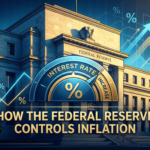
How the Federal Reserve Controls Inflation
AFFILIATE DISCLOSURE:
This article contains affiliate links. We may receive a commission for purchases made through these links, at no extra cost to you. We only recommend products and services we believe will genuinely help you achieve your financial goals.
Discover how the Federal Reserve controls inflation through its monetary policies. Learn how interest rates and other tools influence your financial life.
Introduction
Inflation—the increase in the general price level of goods and services—can have a profound impact on your purchasing power. Inflation affects nearly every aspect of your financial life, whether it’s your grocery bill, gas, or housing costs. For many people, inflation seems like an inevitable force beyond their control. However, one entity has significant power to manage it: the Federal Reserve.
In this blog post, we’ll explore how the Federal Reserve (the Fed) controls inflation. We’ll break down the tools it uses to stabilize the economy, explain its critical role, and give you actionable tips on how to navigate inflation. By the end of this article, you’ll have a deeper understanding of inflation and how the Fed’s actions directly affect your finances.
Understanding Inflation: Why It Matters to You
Before diving into how the Federal Reserve controls inflation, let’s first define what inflation is and why it matters.
Inflation is the rate at which the general level of prices for goods and services rises, leading to a decrease in purchasing power. If your wages stay the same while prices increase, your money buys less than it did before. This erodes your savings and can make everyday life more expensive.
For example, if inflation is at 3%, an item that costs $100 today will cost $103 next year, all else being equal.
Why does inflation matter?
- High inflation can reduce the purchasing power of your money and lead to economic instability.
- Low inflation or deflation can signal a slowing economy, often accompanied by job losses or wage stagnation.
The Federal Reserve works to maintain a stable inflation rate, ideally around 2%, to support a healthy, growing economy.
The Federal Reserve’s Role in Managing Inflation
The Federal Reserve (often referred to as the Fed) is the central bank of the United States. Its mission is to promote a stable financial system. Among its various responsibilities, controlling inflation is a top priority.
But how does the Fed achieve this? The Federal Reserve uses several key monetary policy tools to influence the economy and manage inflation.
The Federal Reserve’s Tools for Controlling Inflation
- The Federal Funds Rate
The federal funds rate is the interest rate at which banks lend money to each other overnight. When the Fed adjusts this rate, it has a ripple effect on interest rates throughout the economy, affecting everything from mortgages to credit cards.
How Does the Fed Use This Tool to Control Inflation?
- Raising the federal funds rate makes borrowing more expensive, which slows down consumer spending and business investment. This can help reduce inflation.
- Lowering the federal funds rate makes borrowing cheaper, which can stimulate the economy when inflation is too low or the economy is sluggish.
For example, if inflation is rising too quickly, the Fed might raise interest rates to encourage people to spend less, helping cool down the economy.
- Open Market Operations (OMO)
In open market operations, the Fed buys or sells government securities (like U.S. Treasury bonds) in the open market. These transactions directly influence the money supply.
How Does This Tool Control Inflation?
- Buying securities increases the money supply by injecting cash into the economy, which can lead to more spending and potentially higher inflation.
- Selling securities reduces the money supply, which can help curb inflation by making money less accessible.
- Reserve Requirements
The Fed sets reserve requirements, which dictate the percentage of deposits that banks must hold in reserve rather than lend out. When reserve requirements are adjusted, it affects how much money is available for lending.
How Does This Tool Control Inflation?
- Lowering reserve requirements allows banks to lend more, which increases the money supply and can contribute to higher inflation.
- Raising reserve requirements reduces the amount banks can lend, which can help lower inflation by restricting the money supply.
- Discount Rate
The discount rate is the interest rate at which commercial banks can borrow money directly from the Fed. A change in the discount rate influences how much money is circulating in the economy.
How Does This Tool Control Inflation?
- Raising the discount rate makes borrowing more expensive, which reduces lending and spending, helping to lower inflation.
- Lowering the discount rate encourages borrowing and spending, which can be useful if inflation is too low.
Why the Fed’s Actions Matter to You
The Fed’s decisions affect you in several ways, including the following:
- Interest Rates and Loans
When the Fed raises interest rates, borrowing becomes more expensive. For example, mortgages and car loans may carry higher interest rates. Conversely, when the Fed lowers interest rates, loans become cheaper, potentially stimulating more spending and investment.
- Savings and Investments
Interest rates also impact the returns on savings accounts, certificates of deposit (CDs), and other investments. When the Fed raises rates, the return on savings tends to increase, helping savers combat inflation. On the other hand, when the Fed lowers rates, the return on savings may decrease.
- Employment and Wages
The Fed’s decisions also impact employment. If the Fed raises interest rates and slows economic growth, companies may cut back on hiring. If the Fed lowers rates to stimulate the economy, businesses may increase hiring and wages.
A Trending Question: Can the Federal Reserve Really Stop Inflation?
A common question is whether the Fed can completely stop inflation. While the Fed can influence inflation, it doesn’t have full control over all the factors that drive price increases. For example, inflation can be caused by external factors, such as rising oil prices or supply chain disruptions, which the Fed can’t directly control.
However, the Fed is still a powerful tool in managing inflation, and its actions can help curb excessive price increases over time.
How You Can Prepare for Inflation
While the Fed can influence inflation, you can also take steps to protect yourself financially:
- Invest in Assets that Outpace Inflation
- Stocks: Historically, stocks have provided returns that beat inflation over the long term.
- Real Estate: Property values tend to rise with inflation, making real estate a potential hedge.
- Inflation-Protected Securities: Consider investing in Treasury Inflation-Protected Securities (TIPS) to safeguard against rising prices.
- Minimize High-Interest Debt
With higher interest rates, your credit card debt, car loans, and mortgages become more expensive. Paying down high-interest debt can help reduce your vulnerability to interest rate hikes.
- Build an Emergency Fund
An emergency fund can help you manage unexpected expenses during inflationary periods, especially when prices for goods and services rise.
Conclusion
The Federal Reserve plays an essential role in managing inflation by adjusting key monetary policy tools like interest rates, open market operations, reserve requirements, and the discount rate. While the Fed cannot control every aspect of inflation, it works hard to keep price increases within a moderate range to ensure economic stability.
Understanding how the Fed controls inflation is crucial for making informed financial decisions. By keeping an eye on the Fed’s actions, you can better prepare for economic shifts and safeguard your personal finances.
Frequently Asked Questions (FAQs)
1.What is inflation, and why does it matter?
- Inflation is the rate at which the general level of prices rises, eroding purchasing power. It affects everything from the cost of goods to wages.
2.How does the Federal Reserve control inflation?
- The Fed uses tools like interest rates, open market operations, and reserve requirements to influence the money supply and inflation.
3.What happens when the Fed raises interest rates?
- Higher interest rates make borrowing more expensive, which can reduce consumer spending and business investment, helping to control inflation.
4.Can the Federal Reserve stop inflation completely?
- While the Fed can manage inflation, it cannot eliminate all external factors, like supply chain disruptions, that contribute to rising prices.
5.How does inflation affect my personal finances?
- Inflation erodes purchasing power, meaning your money buys less. It also impacts interest rates, loan costs, and wages.
6.What are the tools the Federal Reserve uses to control inflation?
- The Fed uses the federal funds rate, open market operations, reserve requirements, and the discount rate to manage inflation.
7.How do higher interest rates impact consumers?
- Higher rates make loans and credit more expensive, which can reduce consumer spending and slow down economic activity.
8.Can I protect my savings from inflation?
- Investing in assets like stocks, real estate, or inflation-protected securities can help your money grow faster than inflation.
9.How does the Federal Reserve decide on the right interest rate?
- The Fed sets interest rates based on factors like inflation, economic growth, and employment rates to balance economic stability.
10.What should I do if inflation is high?
- Focus on paying down high-interest debt, saving more, and investing in assets that typically outpace inflation.
Internal References:
- How to Build an Emergency Fund — Even If You Are Struggling (Coming Soon)
- The Debt Myth: Why Government Borrowing Isn’t Like a Household Budget
External References:
Affiliate Disclosure
Some of the links in this post are affiliate links, meaning I may earn a commission if you make a purchase through them. However, I only recommend products and services that I believe will benefit you.
Disclosure: This post may contain affiliate links. If you click through and make a purchase, The Money Question may earn a small commission at no additional cost to you. We only recommend products and services we genuinely believe in. See our full disclaimer for details.
What the Fed’s Move Means for Your Wallet
AFFILIATE DISCLOSURE:
This article contains affiliate links. We may receive a commission for purchases made through these links, at no extra cost to you. We only recommend products and services we believe will genuinely help you achieve your financial goals.
Learn how the Federal Reserve’s moves impact your finances. Understand the effects of rate changes, inflation, and more on your wallet.
Introduction: What Does the Fed’s Move Mean for Your Wallet?
If you’ve ever wondered how decisions made by the Federal Reserve (the Fed) affect your day-to-day finances, you’re not alone. The Fed’s actions, particularly interest rate changes, can have far-reaching consequences for everything from the cost of borrowing money to your savings account’s interest rate. In this article, we’ll break down the latest developments from the Fed and explain how these decisions could directly impact your wallet.
Understanding what the Fed does and how it affects the economy is crucial for anyone wanting to make informed financial decisions. Whether you’re saving for the future, buying a house, or managing debt, the Fed’s moves can play a significant role in your financial journey. We’ll explore what the Fed’s moves mean for your wallet, how they affect you in real terms, and offer practical tips to navigate these changes.
What Exactly Does the Federal Reserve Do?
Before diving into the specifics of how the Fed’s actions affect you, it’s important to understand what the Federal Reserve does. The Fed is the central bank of the United States, and it plays a crucial role in managing the country’s monetary policy. Its primary objectives include:
- Controlling inflation
- Promoting maximum employment
- Stabilizing interest rates
The Fed influences the economy primarily through its control of interest rates. By adjusting the federal funds rate, the Fed can either make borrowing cheaper or more expensive, which in turn affects consumer spending, business investment, and even the value of the dollar. Further reading can be found at Federal Reserve – Monetary Policy
How the Fed’s Moves Affect Your Finances
Interest Rates and Borrowing Costs: The Most Immediate Impact
The most direct way the Fed’s actions affect your wallet is through interest rates. When the Fed changes interest rates, it impacts the cost of borrowing money. For example:
1.Rising Interest Rates
- If the Fed raises interest rates, it becomes more expensive to borrow money. This affects mortgages, car loans, credit cards, and personal loans. If you have an adjustable-rate mortgage or credit card debt, higher rates can lead to higher monthly payments.
2. Falling Interest Rates
- On the flip side, if the Fed cuts rates, borrowing becomes cheaper. This can be great news if you’re in the market for a new home or car loan. It also means lower interest payments on any existing debt that’s tied to variable rates.
The Impact on Savings and Investments
The Fed’s actions also affect how much you earn on savings and investments.
1. Higher Interest Rates
- With higher interest rates, you may earn more on savings accounts, CDs (Certificates of Deposit), and other fixed-income investments. If you’re relying on interest income from your savings, higher rates are a good thing. However, this often comes with the trade-off of higher borrowing costs.
2. Lower Interest Rates
- When the Fed lowers rates, savings accounts and CDs generally offer lower interest rates. This means you’ll earn less on your savings. While this may seem frustrating, it can also encourage people to invest in riskier assets like stocks, as they look for higher returns.
Inflation: How the Fed Tries to Keep Prices in Check
Inflation, the general rise in prices over time, is one of the Fed’s primary concerns. When inflation rises too quickly, it erodes purchasing power, meaning you get less for the same amount of money.
1.The Fed and Inflation
- To control inflation, the Fed may increase interest rates, which reduces consumer spending and investment, helping to slow down the economy and bring inflation back to a manageable level.
2. Inflation and Your Wallet
- When inflation is high, you might notice your grocery bill, gas prices, and even rent are creeping up. The Fed’s moves to counter inflation aim to stabilize the economy, but they can come at a cost, particularly if you’re on a tight budget.
Should You Adjust Your Financial Strategy Based on the Fed’s Moves?
With the Fed’s influence on interest rates and inflation, it’s important to be proactive about your personal finances. Here are some steps to consider:
- Refinance Your Loans If Rates Are Low
If the Fed lowers rates, it could be a good time to refinance your mortgage, auto loan, or student loans. Refinancing at a lower rate can save you money over the life of your loan. However, if the Fed is raising rates, it’s probably better to lock in your current rate rather than take on new debt at a higher interest rate.
- Be Strategic With Your Savings
When interest rates are low, traditional savings accounts aren’t going to provide the returns they once did. Consider alternatives like:
- High-yield savings accounts
- Certificates of Deposit (CDs)
- Bonds or bond funds
If rates are higher, you’ll see more return on your savings, which makes it a great time to park your cash in safe, interest-bearing accounts.
- Consider the Impact of Inflation on Your Budget
In times of rising inflation, you’ll feel the pinch when paying for everyday goods and services. To counter this, look for ways to cut back on non-essential spending, build a bigger emergency fund, and seek out investments that outpace inflation, like stocks, real estate, or precious metals.
What About the Stock Market and Your Investments?
The Fed’s decisions also affect the stock market. When the Fed raises interest rates, it can be bad news for stocks, particularly for growth stocks that rely on cheap borrowing. In contrast, when the Fed lowers rates, it often stimulates the stock market, making it more attractive to investors.
1.Fed Rate Hikes
- Higher rates can make stocks less attractive as borrowing costs rise for companies. This could lead to lower stock prices, particularly in sectors like technology and real estate.
2.Fed Rate Cuts
- Lower rates often boost stock prices as it reduces borrowing costs and stimulates spending. Investors may flock to the stock market, seeking better returns than what’s available in savings accounts or bonds.
A Quick Look at Recent Fed Moves and Their Impact
Let’s consider a recent example of the Fed’s moves:
1. 2022-2023 Interest Rate Hikes
- As inflation surged during 2022 and 2023, the Fed raised interest rates to combat rising prices. This caused mortgage rates to climb, making it more expensive to buy a home. At the same time, stock market volatility increased as investors reacted to the higher cost of borrowing.
2. Post-Pandemic Economic Recovery
- Following the pandemic, the Fed slashed interest rates to record lows to stimulate the economy. This led to a boom in the housing market and a surge in stock prices as borrowing became easier and cheaper.
Conclusion: Staying Ahead of the Fed’s Moves
The Federal Reserve has a profound influence on your financial life, whether it’s through the interest rates on your loans or the returns on your savings. By staying informed about the Fed’s moves, you can make strategic decisions about borrowing, saving, and investing.
As a consumer, being proactive is key. Keep an eye on the Fed’s decisions, assess how they impact your wallet, and adjust your financial strategy accordingly. Understanding these moves is an important part of mastering your money and ensuring a secure financial future.
Relevant links to other posts on themonequestion.org :
- The Debt Myth: Why Government Borrowing Isn’t Like a Household Budget
-
Modern Monetary Theory: Rethinking Economics and Monetary Reform
Frequently Asked Questions
1. What happens if the Fed raises interest rates?
- When the Fed raises interest rates, it typically makes borrowing more expensive. This can affect mortgages, car loans, and credit card debt. However, it can also lead to higher interest rates on savings accounts and CDs.
2. How do interest rates affect my credit card bill?
- If the Fed raises interest rates, the interest rate on your credit card may also increase, meaning you’ll pay more on any outstanding balances.
3. Can the Fed control inflation?
- Yes, the Fed uses interest rates to control inflation. By raising rates, the Fed slows down the economy and reduces consumer spending, which helps bring inflation under control.
4. What should I do if inflation is high?
- When inflation is high, consider cutting back on unnecessary expenses, increasing your savings rate, and investing in assets that tend to outpace inflation, like stocks or real estate.
5. How do Fed rate cuts affect my mortgage?
- If the Fed cuts rates, mortgage rates usually fall, which can make it cheaper to buy a home or refinance your existing mortgage.
6. Should I refinance my loans if the Fed raises rates?
- It may not be a good time to refinance if the Fed is raising rates, as new loans will likely come with higher interest rates.
7. Does the Fed’s move impact my retirement account?
- Yes, the Fed’s moves can affect the stock market and bond market, which can impact your retirement investments.
8. How often does the Fed change interest rates?
- The Fed meets regularly throughout the year to evaluate economic conditions and decide whether interest rates need to be adjusted. These meetings usually occur eight times a year.
9. What does the Fed do to reduce unemployment?
- By lowering interest rates, the Fed makes borrowing cheaper, which stimulates business investment and hiring, helping to reduce unemployment.
10. Can I prepare for a Fed rate hike?
- Yes, you can prepare by paying down high-interest debt, refinancing loans, and reviewing your investment portfolio to ensure it’s aligned with potential interest rate changes.
Affiliate Disclosure
This article may contain affiliate links. If you purchase through them, we may receive a small commission at no extra cost to you. Thank you for supporting TheMoneyQuestion.org!
Sovereign Money: The Reform That Could Change Everything
AFFILIATE DISCLOSURE:
This article contains affiliate links. We may receive a commission for purchases made through these links, at no extra cost to you. We only recommend products and services we believe will genuinely help you achieve your financial goals.
Sovereign money reform could reshape our economy for the better. Learn what it is, how it works, and why it might be the solution we’ve been waiting for.
Introduction: What If the Money System Itself Is the Problem?
Imagine waking up one day and finding out that the very system we use to create Money—something we all rely on—is deeply flawed. Now, imagine there’s a practical, tested alternative that could fix much of what’s wrong. Enter Sovereign Money.
For most people, Money is just what comes into their bank account and what goes out when bills are due. But few understand where Money comes from and who creates it. Spoiler: It’s not just governments. In fact, most of the Money in circulation is created by private banks as debt.
That’s where Sovereign Money reform comes in. This bold but surprisingly simple shift could drastically reduce public debt, stabilize the economy, and give democratically accountable governments—not profit-driven banks—control over the money supply.
Let’s break it down in a way that’s easy to understand and shows you why this reform could change everything—for the better.
What Is Sovereign Money?
Sovereign Money refers to Money that is created directly by the state (usually through its central bank) and not as debt by commercial banks. The core idea is simple:
Only the central bank (a public institution) should have the authority to create Money—not private banks.
Under this system:
- Banks still exist, but they only lend out Money that already exists.
- The state creates new Money free of debt and spends it directly on the economy (infrastructure, healthcare, education, etc.).
- This money creation is transparent, democratically accountable, and aimed at the public good.
Why Do We Need Sovereign Money Reform?
Let’s face it: The current financial system has failed to deliver stability, equality, or long-term sustainability. Here’s why Sovereign Money could be the upgrade we need:
- Most Money Is Created as Debt
- 90–95% of Money in circulation is created by private banks when they issue loans.
- This leads to ever-increasing debt—someone must always borrow for new Money to exist.
- The result? Boom-bust cycles, financial crises, and rising inequality.
- Public Spending Is Limited by “Budget Constraints”
- Governments are often told they can’t spend because they “don’t have the money.”
- But banks can create Money on a whim? That’s not fair—and it’s not working.
- It’s Not Transparent or Accountable
- Most people don’t realize banks create Money, and that process isn’t up for public debate.
- Sovereign Money reform would bring democratic oversight to money creation.
How Sovereign Money Works (A Quick Breakdown)
Let’s compare the two systems.
Current System Sovereign Money System
Banks create Money as loans Only the central bank creates Money
Money enters the economy via debt Money enters the economy via public spending
Creates boom-bust credit cycles Reduces speculation and stabilizes the economy
The public is dependent on bank lending Public investment can be debt-free
Money creation is profit-driven Money creation serves the public good
Trending Question: Would Sovereign Money End Government Debt?
Could sovereign money eliminate public debt?
Short answer: It could drastically reduce it, yes.
Here’s why:
- Governments wouldn’t need to borrow from financial markets to fund essential services.
- Instead, they could use debt-free sovereign Money for public investment.
- According to the Positive Money campaign and economists like Joseph Huber, sovereign Money could replace a large portion of government borrowing.
Important caveat: This doesn’t mean unlimited spending. Sovereign money creation would be guided by inflation targets and democratic checks—not political whims.
Authoritative Source:
Real-World Examples: Has Sovereign Money Ever Been Tried?
Yes! A few notable case studies:
The Swiss Vollgeld Initiative
- In 2018, Switzerland held a national referendum on Sovereign Money (called Vollgeld).
- Though the initiative didn’t pass, it sparked global conversation and showed widespread concern about private money creation.
The Reserve Bank of New Zealand (1930s–40s)
- Created Money to fund massive infrastructure projects during the Great Depression—without borrowing.
- Helped rebuild the country’s economy with publicly created Money.
How Sovereign Money Could Improve Your Life
Here’s how this big-picture reform could affect your everyday wallet:
✅ Lower Debt Pressures
- With less reliance on private bank loans, there could be fewer personal bankruptcies and more affordable credit.
✅ Better Public Services
- Schools, hospitals, and transit could be funded without massive government debt.
✅ Greater Economic Stability
- Less boom-and-bust = fewer recessions = more job security.
Action Steps: What You Can Do Today
You might not change the monetary system overnight—but you can start empowering yourself:
- Download our FREE Sovereign Money 101 Cheat Sheet
- Understand your bank’s role in money creation—ask questions!
- Talk to others—spark conversations about where Money comes from.
- Support reform campaigns like Positive Money.
Internal Links to Explore More
- Modern Monetary Theory: Rethinking Economics and Monetary Reform
- Parasistem and the Sovereign Money System: What You Need to Know
Downloadable Freebie: “Sovereign Money 101” Cheat Sheet
A simple one-pager that breaks down:
- How Money is created
- Key differences between systems
- How Sovereign Money could benefit you
✅ Conclusion: A Chance to Rewrite the Rules
The current money system isn’t set in stone. Sovereign Money reform gives us a rare opportunity to reclaim control, boost public investment, and build a system that works for people—not just profit.
This change won’t come from the top down—it will come from informed citizens like you. And it starts with asking the right question: Who should create our Money—and for whose benefit?
❓ FAQ: Sovereign Money Explained
1.What is sovereign Money in simple terms?
- It’s Money created by a country’s central bank, not private banks, and issued debt-free for public use.
2. Why do private banks create most of the Money?
- Because they create new deposits when issuing loans—this is called fractional reserve banking.
3. Could sovereign Money cause inflation?
- A well-regulated system would prevent this through oversight if too much is created too fast.
4. Is this the same as Modern Monetary Theory (MMT)?
- Not quite—MMT focuses on fiscal capacity in a fiat system, while Sovereign Money emphasizes changing who creates Money in the first place.
5. Would I still get loans under sovereign Money?
- Yes—but banks would lend existing Money, not create new Money through lending.
6. Who decides how much sovereign Money to create?
- An independent, transparent committee with oversight—often part of the central bank.
7. Has any country adopted this system?
- Not fully, but aspects have been tried in New Zealand and proposed in Switzerland.
8. Would this make taxes irrelevant?
- No—taxes would still regulate inflation and redistribute wealth, even if borrowing needs decreased.
9. How would it affect the national debt?
- It could reduce the need for borrowing significantly, especially for infrastructure or social investments.
10. Can I support this reform as an individual?
- Yes! Learn, talk, vote, and support advocacy organizations.
Affiliate Disclosure
This post may contain affiliate links. If you click and make a purchase, TheMoneyQuestion.org may earn a small commission at no extra cost to you. We only recommend tools and resources we trust. Read our full disclosure here.
“The End of Fractional Reserve Banking? Here’s What to Know”
AFFILIATE DISCLOSURE:
This article contains affiliate links. We may receive a commission for purchases made through these links, at no extra cost to you. We only recommend products and services we believe will genuinely help you achieve your financial goals.
Is fractional reserve banking ending? Learn what it means, what’s changing, and how it impacts your money and the financial system today.
Introduction: What If the Rules of Money Just Changed?
For over a century, fractional reserve banking has been at the heart of how money flows through the economy. However, recent changes by central banks and shifts in how money is created have led some experts to ask: Is fractional reserve banking over? And if so, what does that mean for your savings, the economy, and the future of money?
In this guide, we’ll break it all down in simple terms—no PhD in economics is required. You’ll learn:
- What fractional reserve banking is (and isn’t)
- What’s changing in the banking system
- How it affects your personal finances
- And why it could signal a new era in monetary policy
Let’s dig into the real story behind the headlines—and what it means for you.
What Is Fractional Reserve Banking, Really?
➤ A Simple Definition
Fractional reserve banking is a system where banks are required to keep only a portion (or “fraction”) of their depositors’ money in reserve while lending out the rest. For example:
- You deposit $1,000.
- The bank keeps $100 (10% reserve) and lends out $900.
- That $900 ends up in someone else’s bank account, and the process repeats.
This system creates money through lending—and it’s one of the main ways the money supply grows in a modern economy.
➤ Why It Matters
Fractional reserve banking:
- Fuels economic growth by making loans more available.
- Increases the money supply through “money multiplication.”
- It introduces systemic risks like bank runs if too many people withdraw at once.
Has the Fed Already Ended Fractional Reserve Banking?
The Big Change: 0% Reserve Requirement
In March 2020, the Federal Reserve dropped the reserve requirement for banks to 0%. That means U.S. banks are no longer required to hold any portion of deposits in reserve.
Federal Reserve Announcement (March 2020)
Wait, So Does That Mean It’s Over?
Technically, yes. But here’s the nuance:
- Banks still manage reserves because of other regulations and liquidity needs.
- The Fed now controls lending behavior more through interest rates and capital requirements, not reserve mandates.
- The mechanism of money creation has shifted more towards central banks, especially through Quantitative Easing (QE).
⚠️ Controversial Question: Is Fractional Reserve Banking Still Used, or Is It Outdated?
Some economists argue that fractional reserve banking is misunderstood—or even obsolete.
Critics say:
- The focus on reserves is misleading.
- Modern banks create money by issuing loans and then find reserves afterward.
- Central banks backstop the entire system, so reserve ratios are symbolic.
This has fueled calls for:
- A move toward 100% reserve banking or
- A Sovereign Money System where only central banks can create new money.
Bank of England Report (2014): Money Creation in the Modern Economy
How This Affects You: Real-World Impacts
1. Savings Are Less Protected by Reserve Requirements
With 0% required reserves:
- Your bank might not hold any of your deposit as cash.
- However, FDIC insurance still protects deposits up to $250,000 per account.
2. Banks Rely on Central Bank Liquidity
- Instead of reserves, banks now rely more on Federal Reserve liquidity tools (like the discount window).
- In crises, this could centralize risk even more.
3. Money Creation Has Shifted Upstream
- The Fed creates digital money directly to support the financial system (as seen in QE programs).
- This blurs the line between central bank money and private bank-created money.
✅ Actionable Tips: How to Navigate the Changing System
1. Understand Where Your Bank Stands
Not all banks are equally exposed. Ask:
- Is your bank conservative with its lending practices?
- Does it hold excess reserves or rely on overnight borrowing?
2. Diversify Your Money Holdings
Spread your funds across:
- High-liquidity accounts
- FDIC-insured savings
- Treasury-backed options like I-Bonds or TreasuryDirect accounts
3. Stay Informed About Central Bank Policy
Watch for:
- Interest rate decisions
- Liquidity programs
- Moves toward Central Bank Digital Currencies (CBDCs)
Read our article: “CBDCs vs. Crypto – What’s the Real Digital Currency Revolution?”
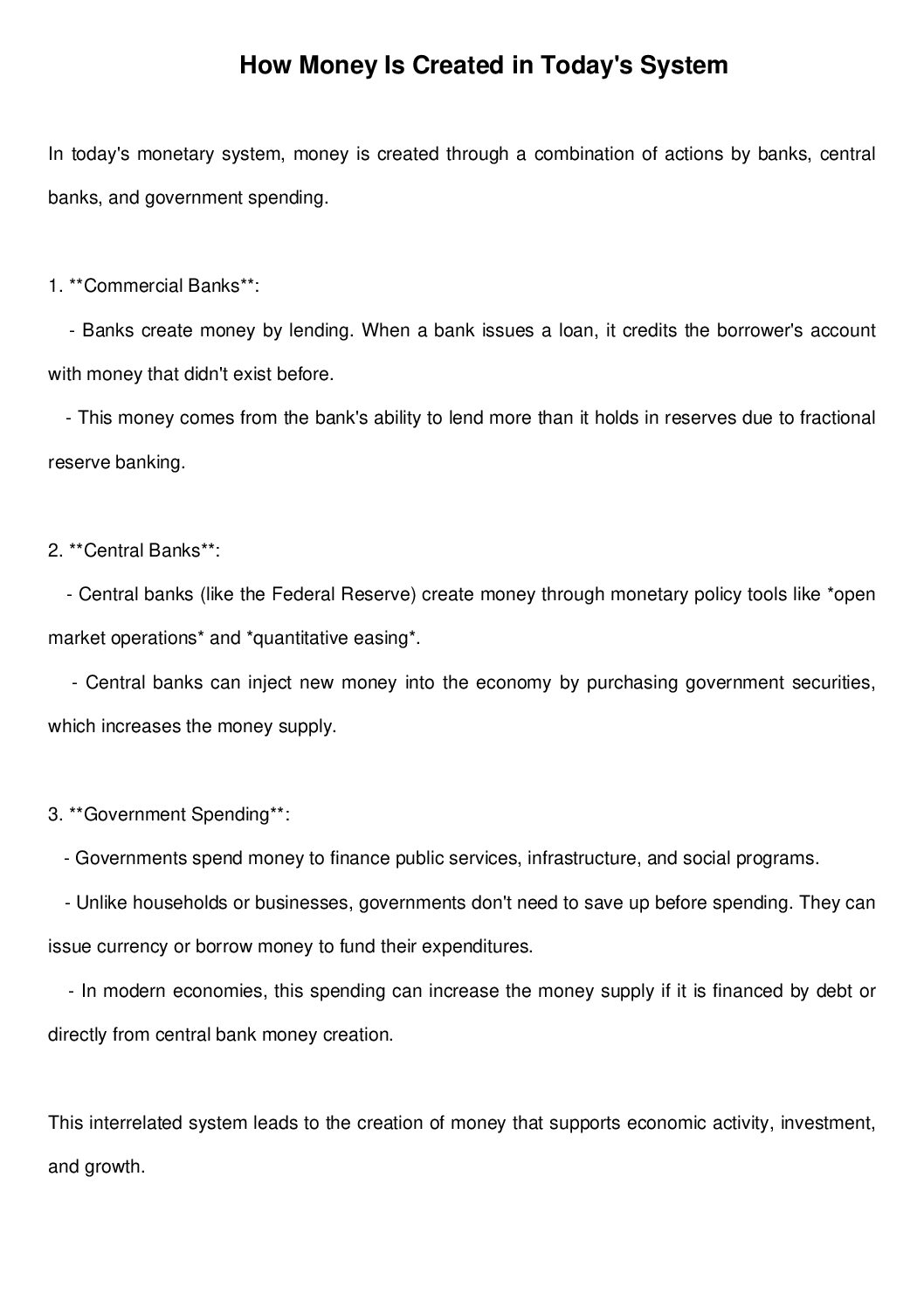
Get our downloadable PDF that shows how banks, central banks, and government spending create money in today’s system.
Free Download: “How Money is Really Created” – A Simple One-Page Visual Guide
Related Articles from TheMoneyQuestion.org
- Modern Monetary Theory: Rethinking Economics and Monetary Reform
- Parasistem and the Sovereign Money System: What You Need to Know
FAQs: Fractional Reserve Banking Explained
- What does a 0% reserve requirement mean for everyday people?
Banks are no longer required to keep a specific amount of your deposit in reserve, but protections like FDIC insurance still apply.
- Is fractional reserve banking still in use?
Functionally, yes—but without mandated reserves, it operates more as a lending-first system guided by capital constraints.
- Does fractional reserve banking create money out of thin air?
In a way, yes. Banks create new money by issuing loans, expanding the total money supply.
- Could we switch to a 100% reserve system?
Yes, but it would be a major overhaul requiring new laws and structures, potentially slowing credit availability.
- Are central banks taking over money creation?
Increasingly, yes—especially through quantitative easing and potentially through digital currencies.
- Can banks lend more money than they have?
They can lend beyond deposits as long as they meet capital adequacy and liquidity requirements.
- What are the risks of eliminating reserve requirements?
Potential over-lending, centralization of risk, and greater dependence on central bank oversight.
- How can I protect my money in a changing system?
Diversify your holdings, understand bank stability, and monitor policy trends.
- Why did the Fed eliminate reserve requirements?
To provide more liquidity during COVID-19 and shift focus to more effective tools like interest rates.
- What’s the difference between reserves and capital?
Reserves are liquid funds held at the central bank. Capital is the bank’s own cushion against losses.
✅ Affiliate Disclosure
This post may contain affiliate links. If you click and make a purchase, TheMoneyQuestion.org may earn a small commission at no extra cost to you. We only recommend tools and resources we trust. Read our full disclosure here.
CBDCs vs. Crypto — What’s the Real Digital Currency Revolution?
AFFILIATE DISCLOSURE:
This article contains affiliate links. We may receive a commission for purchases made through these links, at no extra cost to you. We only recommend products and services we believe will genuinely help you achieve your financial goals.
Explore the difference between CBDCs and crypto. Discover which digital currency really signals a financial revolution.
Introduction: The Digital Money Crossroads
We’re living through a monetary moment unlike anything in history. Cash is fading, payments are digitizing, and suddenly, terms like “CBDCs” and “crypto” are on everyone’s lips. But what’s really going on behind the buzz?
CBDCs vs. crypto isn’t just a tech battle — it’s a philosophical tug-of-war over who should control money, how it should work, and what that means for your financial future.
In this guide, we’ll break down what CBDCs and cryptocurrencies really are, what sets them apart, and why this isn’t just a debate for techies or economists — it’s a money revolution that affects all of us.
What Are CBDCs and Cryptocurrencies?
️ Central Bank Digital Currencies (CBDCs)
CBDCs are digital versions of government-backed fiat currencies issued by central banks. Think of them as digital cash — but programmable, traceable, and fully centralized.
Key features:
- Issued by central banks (e.g., Federal Reserve, ECB, People’s Bank of China)
- Pegged 1:1 with the national currency
- Designed to maintain monetary policy control
Example: The digital yuan (China), the digital euro (EU trials), and the Fed’s Project Hamilton (U.S.)
Cryptocurrencies
Cryptocurrencies are decentralized digital assets that operate on blockchain networks. Unlike CBDCs, no government controls them — they’re designed to be peer-to-peer and borderless.
Key features:
- Decentralized (no single authority)
- Limited or fixed supply (e.g., Bitcoin)
- Based on open-source, transparent code
Example: Bitcoin, Ethereum, Solana, and thousands of others.
Why Are Governments Pushing for CBDCs?
CBDCs offer governments several powerful advantages:
- Financial Inclusion: Bring unbanked populations into the system
- Faster Payments: Reduce settlement times in commerce and banking
- Better Control: Monitor money flows to detect illicit activities
- Monetary Policy Efficiency: Enable direct stimulus or programmable money
According to the Bank for International Settlements, over 130 countries are exploring or piloting CBDCs as of 2024.
Why Do Some People Prefer Crypto?
Cryptocurrency advocates argue that CBDCs pose a risk to privacy and freedom. Here’s why they champion decentralized alternatives:
- Privacy: Crypto doesn’t require identity verification
- Censorship Resistance: Governments can’t freeze or delete your wallet
- Supply Control: Cryptos like Bitcoin have hard-coded issuance rules
- Borderless Payments: Send money globally without middlemen
CBDCs vs. Crypto: What’s the Difference?
Feature CBDCs Cryptocurrencies
Issuer Central Bank Decentralized (e.g., miners, validators)
Control Centralized Decentralized
Backed By National currency Algorithm, code, community
Privacy Low Variable (Bitcoin = pseudonymous, Monero = private)
Transaction Speed High (in pilot trials) Varies (Bitcoin = slower, Solana = fast)
Traceability Full Partial to full anonymity
Programmability Yes Yes (esp. smart contract platforms like Ethereum)
Are CBDCs a Threat to Financial Freedom?
This is where the debate heats up. Some privacy experts argue that CBDCs are programmable money with surveillance built-in.
Concerns include:
- Governments could track every transaction
- Spending could be restricted or taxed in real-time
- Accounts could be frozen without due process
- This could lead to negative interest rates or expiry dates on money
Meanwhile, crypto offers:
- Self-custody wallets
- No central authority
- Permissionless transactions
A must-read: Harvard Kennedy School on Digital Currencies and Public Policy
Real-World Example: Nigeria’s CBDC vs. Crypto Use
Nigeria launched the eNaira, one of the first active CBDCs. But adoption was sluggish — less than 0.5% of Nigerians use it.
Meanwhile, Nigeria remains one of the highest crypto-using countries per capita, driven by distrust of the central bank and the need for alternative savings tools.
Lesson: People choose crypto when trust in institutions is low.
Actionable Tips: How to Prepare for the Digital Money Shift
- Learn self-custody: Understand how wallets like Ledger or MetaMask work
- Try a stablecoin: Use USDC or DAI to experience digital dollars
- Follow your country’s CBDC development: Be informed about future policies
- Diversify your holdings: Include crypto, fiat, and precious metals
- Bookmark trusted tools: Check out our upcoming Tools & Guides section for wallet comparisons, security tips, and more
Free Download: “Digital Money Checklist: Are You Ready for the Future of Currency?”
(Downloadable PDF – Coming Soon!)
Internal Links (To Keep Readers Exploring)
- Modern Monetary Theory: Rethinking Economics and Monetary Reform
- Lessons from Libra: Shaping the Future of Digital Currency
Conclusion: Choose Your Future with Eyes Wide Open
Whether you’re rooting for Bitcoin or cautiously watching your government test a CBDC, one thing is clear: digital money is here to stay.
This isn’t just about technology — it’s about power, privacy, and the future of how you earn, save and spend. Understanding the difference between CBDCs and crypto empowers you to make smarter financial decisions, prepare for what’s coming, and protect your financial autonomy.
FAQs
1. What is the difference between CBDCs and crypto?
- CBDCs are centralized digital currencies issued by governments, while crypto is decentralized and community-driven.
2. Is Bitcoin a CBDC?
- No. Bitcoin is decentralized and not controlled by any government.
3. Can CBDCs replace cash?
- Many governments plan to reduce cash use, but full replacement is still debated.
4. Are CBDCs safer than cryptocurrencies?
- They may be more stable but come with greater surveillance and fewer freedoms.
5. How do I buy cryptocurrency safely?
- Use regulated exchanges like Coinbase or Kraken and store assets in cold wallets.
6. What countries have launched CBDCs?
- China, Nigeria, and the Bahamas are leading the charge, with others in the pilot stages.
7. Can CBDCs be used offline?
- Some models, like China’s digital yuan, allow offline transactions.
8. Are CBDCs legal tender?
- When issued, CBDCs are recognized as legal currency by the issuing state.
9. Can governments control my money with CBDCs?
- Yes — features like spending restrictions or account freezes are technically possible.
10. What is a stablecoin, and how does it compare?
- Stablecoins like USDC are crypto tokens pegged to fiat currencies but not government-issued.
Affiliate Disclosure
This article may contain affiliate links. If you purchase through one of these links, we may earn a small commission at no additional cost. We only recommend tools and products that will genuinely benefit our readers.
What is Modern Monetary Theory — and Why It Matters
AFFILIATE DISCLOSURE:
This article contains affiliate links. We may receive a commission for purchases made through these links, at no extra cost to you. We only recommend products and services we believe will genuinely help you achieve your financial goals.
Discover what Modern Monetary Theory is, how it works, and why it matters for your money and the economy.
Introduction: Why This Economic Idea Could Change Everything
Ever heard the phrase “The government is spending money it doesn’t have”? Or maybe someone told you that “printing money causes inflation” — end of story. But what if those ideas weren’t the full picture?
Enter Modern Monetary Theory (MMT) — a fresh perspective that’s turning traditional economic thinking upside down.
This article will demystify MMT in simple, practical terms and show you why it’s more than just an academic debate. It’s a lens that could help you understand how government money really works — and how it impacts your financial life.
Whether you’re trying to manage your personal Budget or just make sense of national Debt and inflation headlines, understanding Modern Monetary Theory gives you the power to see through the noise.
What is Modern Monetary Theory (MMT)?
Understanding the Basics
Modern Monetary Theory is a macroeconomic framework that challenges conventional wisdom about government spending, taxation, and deficits.
In simple terms, MMT argues that a government that issues its own currency (like the US does with the dollar) can never “run out” of money in the same way a household or business can.
Key Principles of MMT:
- Sovereign currency issuers (like the US, UK, and Japan) don’t need to tax or borrow to spend — they can create money.
- Taxes and borrowing do not fund spending directly; they help regulate inflation and manage demand.
- The real constraint on spending is inflation, not deficits.
- Unemployment is a sign that the government is spending too little — not too much.
Why It Matters for You: From Policy to Pocketbook
You might be thinking: “Okay, but what does this have to do with me?”
Let’s break it down:
- Jobs and Unemployment
MMT supports full employment policies, such as a federal job guarantee. Instead of waiting for the private sector to create jobs, the government could directly fund work that benefits communities.
Real-life impact: Imagine recession-proof, publicly funded work options for anyone who wants a job — providing stability for families while boosting the economy.
- Social Programs and Affordability
Under MMT, the question isn’t “How will we pay for it?” but rather, “Do we have the resources (workers, materials, tech) to deliver it without causing inflation?”
Think Medicare for All, free college, or climate resilience programs — all potentially affordable under this lens.
- Rethinking Debt Fear
When the government borrows in its own currency, it’s not like household debt. Deficits can be a sign of economic support, not irresponsibility.
Next time you hear a politician panic about the national Debt, you’ll know to ask — “Debt to whom? And what are we getting for it?”
Does Printing Money Always Cause Inflation?
“Does printing money cause inflation in Modern Monetary Theory”
A common critique of MMT is: “Won’t all that money printing cause runaway inflation?”
Let’s unpack that with facts:
MMT’s Answer:
- Not necessarily. Inflation happens when demand outpaces the economy’s capacity to produce goods and services.
- Government spending should be targeted and responsive, increasing when the economy has slack (e.g., unemployment) and slowing when it overheats.
Case Study: During the pandemic, massive government spending didn’t initially lead to Inflation — until supply chains broke down and oil prices spiked. MMT doesn’t deny inflation risks; it simply says the cause isn’t always “too much money.”
Inflation is complex, and blindly cutting spending can actually make things worse by reducing income and growth.
Breaking the Household Budget Myth
Traditional economics often compares the government budget to a household. But here’s the truth:
Households vs. Currency-Issuing Governments:
Category Household Government (MMT View)
Can print money? No Yes
Must earn before spending? Yes No (can create money first)
Can it go bankrupt in its own currency? Yes No
MMT flips the script: Spending comes before taxing and borrowing. That changes how we think about policy choices — especially in times of crisis.
Authoritative Sources That Back This Up
Don’t just take our word for it. Check out:
- US Congressional Research Service: Modern Monetary Theory
- Brookings Institution: What is Modern Monetary Theory?
Actionable Insights — How You Can Use MMT Thinking
Even if you’re not in Congress, you can apply the mindset:
Stop blaming yourself for systemic issues
Unemployment or underfunded schools aren’t your fault — they’re choices made under outdated economic assumptions.
Advocate smarter
When someone says, “We can’t afford that,” ask: “Do we have the real resources? And who benefits from the current scarcity narrative?”
Budget personally, think nationally
Run your household like a household — but don’t let politicians pretend the government works the same way.
Downloadable Freebie — “MMT Mindset: 5 Questions to Challenge Economic Myths”
This quick worksheet helps you spot common myths in news headlines and political speeches — and how to reframe them using MMT.
Related Posts from TheMoneyQuestion.org
- ✅ Modern Monetary Theory: Rethinking Economics and Monetary Reform
- ✅ The Debt Myth: Why Government Borrowing Isn’t Like a Household Budget
FAQ – 10 Questions About Modern Monetary Theory
1. What is Modern Monetary Theory in simple terms?
- It’s the idea that governments that issue their own currency can create money to support the economy, and inflation — not debt — is the real fundamental constraint.
2. Does Modern Monetary Theory work in real life?
- Elements of MMT have been used during major crises (like COVID relief) when governments spent money without raising taxes first.
3. Who supports Modern Monetary Theory?
- Economists like Stephanie Kelton, Warren Mosler, and Pavlina Tcherneva are leading advocates.
4. Can MMT reduce poverty?
- Yes — through policies like job guarantees, better public services, and targeted investment.
5. Is MMT a left-wing idea?
- It’s often associated with progressive policies, but its framework can inform any economic agenda that values real resource use.
6. How does MMT affect inflation control?
- MMT suggests managing inflation through taxes, regulation, and strategic spending — not austerity.
7. Is Modern Monetary Theory dangerous?
- Only if misunderstood. Reckless spending without considering capacity can cause inflation — but so can cutting too much.
8. Does MMT apply globally?
- It works best for countries that issue Debt in their own floating currency (like the US, Japan, and the UK).
9. How does MMT view government debt?
- As private sector savings — not something to be feared, but a tool to manage demand.
10. How can I learn more about MMT?
- Start with “The Deficit Myth” by Stephanie Kelton, and follow educational sites like TheMoneyQuestion.org.
Affiliate Disclosure
Some of the links in this article may be affiliate links. If you choose to make a purchase through them, we may earn a small commission — at no extra cost to you. We only recommend tools and resources we trust. Thank you for supporting TheMoneyQuestion.org!
The Debt Myth: Why Government Borrowing Isn’t Like a Household Budget
AFFILIATE DISCLOSURE:
This article contains affiliate links. We may receive a commission for purchases made through these links, at no extra cost to you. We only recommend products and services we believe will genuinely help you achieve your financial goals.
Discover why comparing government borrowing to a household budget is misleading—and how understanding the truth can change your financial perspective.
Introduction: Are We Being Misled About Government Debt?
You’ve probably heard it a hundred times: “The government needs to balance its budget just like a household does.” It sounds reasonable—responsible even. But here’s the truth: this comparison is not just misleading—it’s harmful. It promotes fear-based policies, stifles investment in public services, and keeps everyday people in the dark about how money and debt really work.
In this article, we’ll pull back the curtain on the debt myth, reveal how government borrowing actually works, and explain why you don’t need to panic every time you hear about “trillions in debt.” You’ll walk away with greater confidence in navigating financial conversations—and a clearer picture of how money works on both the personal and national level.
Table of Contents
- The Debt Myth: A Popular but Flawed Analogy
- How Government Debt Really Works
- What Makes Sovereign Governments Different
- Long-Term Deficits and the Economy
- Trending Mythbuster: Will Printing Money Cause Hyperinflation?
- How Misinformation Shapes Public Policy
- What This Means For You
- Downloadable Resource: Government Debt vs. Household Budget Checklist
- Conclusion: Empowering Your Financial Lens
- FAQ: Real Questions, Real Answers
- SEO Keywords and Hashtags
- Quora Traffic Booster Q&A
- Pinterest Pin Copy Ideas
The Debt Myth: A Popular but Flawed Analogy
The idea that the government must “live within its means,” just like a family budget, is emotionally appealing. But it ignores one massive truth:
A household uses money. A government creates it.
Here’s why the analogy breaks down:
Household Budget Government Budget
Must earn or borrow income before spending Can issue currency before collecting taxes
Cannot create money Has a central bank that creates sovereign currency
Debt must be repaid or defaulted Can roll over debt indefinitely or monetize it
Runs out of money if overspent Cannot run out of its own currency
This doesn’t mean governments can spend infinitely—but it does mean the rules are different.
How Government Debt Really Works
Governments like the U.S., U.K., Japan, and Canada are monetary sovereigns, meaning they issue their own currencies. This gives them unique tools:
They Don’t Need to “Save” Before spending
When Congress approves spending, the Treasury instructs the Fed to credit bank accounts. The government creates money by keystroke—not by pulling coins from a vault.
Debt Is Issued for Other Reasons
U.S. Treasury bonds don’t fund spending—they manage interest rates and offer a safe asset. As economist Stephanie Kelton writes in The Deficit Myth, the government issues bonds not because it needs money, but because it chooses to offer a safe place for savings.
Authoritative Source: Congressional Budget Office (CBO): Budget Concepts and Budget Process
What Makes Sovereign Governments Different?
Here are three key reasons why sovereign debt isn’t like household debt:
- Sovereign Currency Issuers Can’t Go Broke
Countries like the U.S. can never “run out” of dollars. Unlike Greece (which uses the euro), America borrows in a currency it controls.
- Debt Is Someone Else’s Asset
Every government liability is a private sector asset. When the government “goes into debt,” the public ends up holding the money.
Case in point: U.S. Treasury bonds are among the safest savings vehicles in the world.
- Budget Deficits = Private Sector Surpluses
A deficit in government spending means someone else received that money. In macroeconomic terms:
Government Deficit + Private Surplus + Foreign Surplus = 0
This accounting identity is used in Modern Monetary Theory (MMT) to show that deficits are often necessary for healthy economies.
Long-Term Deficits and the Economy
Aren’t Large Deficits Bad for the Future?
Not necessarily. The question isn’t “How much is too much?”—it’s:
“Are we using the deficit to create real value?”
Good deficit spending:
- Improves infrastructure
- Funds education and healthcare
- Supports job creation
- Reduces inequality
Bad deficit spending:
- Inflates asset bubbles
- Supports corporate bailouts without accountability
Trusted Source: Federal Reserve Bank of St. Louis: Deficits and Debt
Trending Mythbuster: Will Printing Money Cause Hyperinflation?
Does government printing money lead to hyperinflation?
This is one of the most common fears. Let’s address it head-on.
The Truth:
- Hyperinflation is rare and tied to supply collapse, war, or loss of monetary control (e.g., Zimbabwe, Weimar Germany).
- In the U.S., trillions were created during COVID—and inflation rose later, due to supply chain disruptions and price gouging, not just money printing.
It’s not about the amount of money—it’s about what the economy can produce.
When the economy has unused capacity (like during a recession), more money can actually help.
How Misinformation Shapes Public Policy
By promoting the household analogy, leaders justify:
- Austerity cuts to public services
- Fear-driven policies that prevent investment
- Privatization of public assets
This fear-based approach hurts working families—especially during downturns.
We’ve Seen It Before:
- 2010s Austerity in Europe slowed growth and hurt employment.
- U.S. “Fiscal cliffs” and shutdown threats created unnecessary crises.
What This Means For You
Understanding the truth about government debt helps you:
✅ Cut through political spin
✅ Advocate for policies that support people—not panic
✅ Reframe your own financial strategies without internalizing false guilt from national debt fear
Free Download: Government Debt vs. Household Budget Checklist
Get a one-page printable guide that breaks down:
- Key differences between household and government budgets
- 3 questions to ask when you hear about the national debt
- How to explain this to friends or family
Click here to download the free checklist
Also explore: Understanding Money 101: Your Guide to Managing Finances With Confidence
Conclusion: Empowering Your Financial Lens
The national debt is not your credit card bill—and it shouldn’t control your financial peace of mind.
By understanding how sovereign money systems really work, you can see through fear-based narratives and advocate for smarter, people-focused policy.
Let’s reject the myths and embrace a more financially literate, empowered future—one where both public and personal budgets are tools for building value, not excuses for cuts.
FAQ: Real Questions, Real Answers
1. Is government debt ever a real problem?
- Yes—if it’s used wastefully or fuels inequality. But it’s not inherently dangerous.
2. Why can’t the government just print unlimited money?
- Because the limit is inflation, not bankruptcy.
3. What is Modern Monetary Theory?
- A framework that rethinks the role of deficits and shows how currency-issuing governments operate.
4. Didn’t money printing cause inflation recently?
- COVID-related inflation was more about supply chain disruptions and corporate pricing.
5. Can the U.S. default on its debt?
- Technically no, unless it chooses to—like during a political standoff.
6. What happens if the government runs a surplus?
- The private sector must run a deficit—losing income and savings.
7. Are taxes needed to fund spending?
- Not directly. Taxes help control inflation and manage demand.
8. Why do politicians push debt fear?
- Often to justify cutting social programs or promoting austerity.
9. Should I worry about the national debt for my retirement?
- No. Focus on personal finances, not myths about public debt.
10. How can I learn more?
- Start with Parasistem and the Sovereign Money System
Affiliate Disclosure
Some of the links in this article may be affiliate links. If you choose to make a purchase through them, we may earn a small commission — at no extra cost to you. We only recommend tools and resources we trust. Thank you for supporting TheMoneyQuestion.org!
Who Really Controls the Money? A Look at Central Banks
AFFILIATE DISCLOSURE:
This article contains affiliate links. We may receive a commission for purchases made through these links, at no extra cost to you. We only recommend products and services we believe will genuinely help you achieve your financial goals.
Discover who really controls the money, how central banks work, and why understanding them can help you take control of your financial future.
Introduction: The Power Behind the Curtain
Have you ever wondered who really pulls the strings in the global financial system? Who decides interest rates, influences inflation, and steers the economy during booms and busts?
The answer often points to one powerful institution: central banks.
From the Federal Reserve in the U.S. to the European Central Bank, these mysterious entities hold enormous influence over your money — whether you’re applying for a mortgage or paying off student loans. But how do they work? And more importantly, who really controls the money?
In this article, we’ll break down the truth about central banks in plain English — no PhD in economics required. You’ll walk away with not only a better understanding of monetary power but also the confidence to make smarter financial decisions in your life.
Table of Contents
- What Is a Central Bank, Really?
- Who Owns Central Banks?
- What Do Central Banks Actually Do?
- Controversial Topic: Do Central Banks Create Money Out of Thin Air?
- Who Holds Central Banks Accountable?
- How Central Bank Decisions Impact Your Everyday Life
- Case Study: The Fed and the 2008 Crisis
- How to Stay Empowered in a Central Bank World
- Free Download: “Your Central Bank Survival Guide”
- FAQs
- Conclusion
What Is a Central Bank, Really?
At its core, a central bank is a national institution responsible for managing a country’s currency, money supply, and interest rates. It’s like the engine behind the economy — often invisible but always running.
Common Roles of a Central Bank:
- Setting interest rates to control inflation
- Issuing and regulating the national currency
- Overseeing and stabilizing the banking system
- Acting as a lender of last resort in times of crisis
Two of the most well-known central banks are:
Others include the Bank of England, the Bank of Japan, and the People’s Bank of China.
Who Owns Central Banks?
This is where things get a bit murky — and controversial.
Most central banks are independent public institutions but may have private shareholders. The U.S. Federal Reserve, for example, is composed of 12 regional banks that member banks technically own. Yet, it operates independently of the federal government.
Meanwhile, the Bank of England was nationalized in 1946, meaning it’s fully owned by the government.
So, who owns them?
- In the U.S., Private banks hold shares in the regional Fed banks.
- In the UK: The government owns the Bank of England.
- In the EU: The European Central Bank is owned by member nations.
Learn more about this topic in our article: Who Really Owns the Central Banks? Let’s Clear Up the Confusion
What Do Central Banks Actually Do?
Here’s what central banks are responsible for in plain language:
Monetary Policy
They set interest rates to influence how much people and businesses borrow and spend. Lower rates = more borrowing and spending. Higher rates = less.
Inflation Targeting
Most aim to keep inflation around 2%. Too high, and money loses value. Too low, and the economy may stall.
Bank Regulation
They ensure commercial banks don’t take on too much risk and help prevent bank collapses.
Crisis Response
During financial crises (like 2008 or the pandemic), central banks flood the market with money to keep things running.
Controversial Topic: Do Central Banks Create Money Out of Thin Air?
This question is one of the internet’s most controversial — and the answer is yes, in a way.
When a central bank conducts quantitative easing (QE) or buys government bonds, it essentially creates digital money that didn’t exist before.
Here’s how it works:
- The central bank buys bonds from banks or institutions.
- It credits the seller’s account with newly created digital money.
- This adds liquidity into the system — often in the trillions.
According to the Bank of England:
“When banks make loans, they create new money.”
— Source: Bank of England’s “Money Creation in the Modern Economy”
So, while they don’t literally print cash, they digitally expand the money supply, shaping the entire economy — and your wallet.
Who Holds Central Banks Accountable?
Despite their influence, central banks aren’t completely unchecked.
Accountability mechanisms include:
- Regular reports to Congress or Parliament
- Transparency through meeting minutes and economic projections
- Media and academic scrutiny
- Internal audits
But they’re not elected. That means your vote doesn’t influence central bankers — something critics argue reduces democratic control over monetary policy.
How Central Bank Decisions Impact Your Everyday Life
This isn’t just abstract economics — it hits home. Here’s how:
| Central Bank Action | Personal Impact |
|---|---|
| Raises interest rates | Higher credit card & mortgage rates |
| Lowers interest rates | Easier borrowing, lower savings interest |
| Prints more money | Potential inflation, weaker currency |
| Tightens money supply | Can cause recession or job losses |
Example: In 2022–2023, the Federal Reserve raised rates to fight inflation. Mortgage rates jumped above 7%, pricing out many homebuyers and slowing the housing market.
️ Case Study: The Fed and the 2008 Financial Crisis
When the U.S. economy collapsed in 2008, the Federal Reserve took unprecedented steps:
- Slashed interest rates to near zero
- Injected over $3 trillion through QE
- Bailed out banks “too big to fail”
This arguably saved the financial system — but also widened inequality. Asset prices rose, helping the wealthy more than everyday workers.
For more, check out the Federal Reserve Crisis Response Archive.
✊ How to Stay Empowered in a Central Bank World
Even if you can’t vote out a central banker, you can still protect and grow your own financial power.
Here’s how:
- Track rate changes and adjust your credit card or loan strategies accordingly.
- Refinance debt when rates are low.
- Invest in assets like index funds or real estate to hedge inflation.
- Build emergency savings to stay independent during downturns.
- Educate yourself (you’re doing that now — go you!).
Also read: Understanding Money 101: Master The Basics And Take Control Of Your Financial Future
Free Download: Your Central Bank Survival Guide
Get our free checklist to confidently navigate rate hikes, inflation changes, and monetary shifts.
Download “Your Central Bank Survival Guide” (PDF)
❓ FAQs: Who Really Controls the Money?
- What is the primary purpose of a central bank?
To manage inflation and interest rates and ensure financial stability.
- Who controls the U.S. Federal Reserve?
It operates independently but reports to Congress. The Board of Governors is appointed by the President.
- Can central banks print unlimited money?
Technically, yes, but excessive printing leads to inflation and economic instability.
- Is the Federal Reserve a private company?
Partially — regional banks are owned by member banks but operate under federal oversight.
- How do central banks affect mortgage rates?
By setting benchmark rates that banks use to price loans.
- Can central banks go bankrupt?
Unlikely. They can create money, but too much can destroy credibility.
- Why do central banks raise interest rates?
To cool down inflation and control excessive economic growth.
- Who benefits from central bank policies?
Often investors and asset holders, not always everyday workers.
- Are there alternatives to central banks?
Some propose sovereign money systems or decentralized models.
- Can I influence central bank policy?
Directly, no — but staying informed helps you adapt.
Conclusion: Know the Game, Play it Better
Central banks may not be voted in, but their decisions shape your everyday financial reality. By understanding who controls the money and how it works, you can respond wisely — not react blindly.
The more we understand the system, the better we can thrive within it.
Want to take control of your finances in a world shaped by central banks?
Start with knowledge — and then use it.
Affiliate Disclosure
Some links in this post may be affiliate links. That means we may earn a small commission — at no cost to you — if you click and make a purchase. We only recommend resources we truly believe can empower your financial journey.
Understanding Money 101: Master the Basics and Take Control of Your Financial Future
AFFILIATE DISCLOSURE:
This article contains affiliate links. We may receive a commission for purchases made through these links, at no extra cost to you. We only recommend products and services we believe will genuinely help you achieve your financial goals.
Learn how money really works with this clear, beginner-friendly guide. Understanding money 101 starts here—empower your finances today.
Introduction: Why Understanding Money is the First Step to Financial Freedom
Money impacts everything—from where we live to how we eat, travel, and retire. But how many of us truly understand what money is, how it works, and how to make it work for us?
Understanding Money 101 isn’t just about balancing a budget or saving a few dollars. It’s about gaining financial confidence so you can build a life with less stress, more freedom, and greater purpose. Whether you’re just starting your financial journey or ready to level up, this guide will give you the knowledge you need to take control—once and for all.
What is Money, Really?
Understanding the True Nature of Money
At its core, money is a tool. It’s a medium of exchange, a store of value, and a unit of account. But it’s also a social agreement—its value exists because we collectively believe in it.
Functions of Money
- Medium of exchange: Used to buy goods and services
- Store of value: Retains worth over time
- Unit of account: Standardized way to measure value
Modern money is mostly digital. According to the Federal Reserve, over 90% of U.S. dollars exist not as cash, but as digits on a screen.
Authoritative Source: Federal Reserve – What is Money?
How Money is Created and Who Controls It
Money doesn’t come from thin air—but it doesn’t always come from the government either. Most money is created by commercial banks when they issue loans.
Two Types of Money
- Central bank money: Physical cash and reserves
- Bank money (credit money): Created by private banks through lending
Want to go deeper? Check out our article:
Who Really Owns the Central Banks? Let’s Clear Up the Confusion
The Big Question—Is Inflation Inevitable?
“Is inflation always bad, or is it a necessary part of a healthy economy?”
Inflation gets a bad rap, but not all inflation is harmful. A moderate amount is actually a sign of a growing economy. Problems arise when inflation outpaces wages or results from supply shocks and profit-seeking.
Quick Breakdown:
- Mild inflation (1–3%): Normal and manageable
- High inflation (>5%): Can hurt purchasing power
- Deflation: Often worse, leading to economic stagnation
Bureau of Labor Statistics: Understanding Inflation
Understanding Personal Money Management
Start Where You Are—Not Where You Think You Should Be
You don’t need to be rich to manage money well. You need a system. Let’s break it down into core pillars:
Budgeting Basics
- Use the 50/30/20 rule:
-
- 50% needs, 30% wants, 20% savings/debt payoff
- Use a budgeting tool like You Need A Budget (YNAB) or EveryDollar
Try YNAB today to take control of your spending.
H3: Building Savings
- Set up automatic transfers to savings
- Create a 3–6 month emergency fund
- Open a high-yield savings account (like with Ally or SoFi)
We recommend SoFi for high-yield savings with no fees.
Understanding Credit: How to Build and Use it Wisely
Credit isn’t just about loans—it’s your financial reputation.
How Credit Works
- Based on your credit score and credit report
- Used to determine loan eligibility and interest rates
Tips for Better Credit
- Pay bills on time
- Keep credit usage below 30%
- Don’t close old accounts
- Check reports regularly at AnnualCreditReport.com
Try Credit Karma to track your credit progress and get personalized tips.
Investing for Beginners
You Don’t Have to Be Rich to Start Investing
Start small. Start now. Let compound interest do the heavy lifting.
Beginner-Friendly Investment Types
- Index funds: Low-cost and diversified
- Robo-advisors: Tools like Betterment or Wealthfront automate everything
- Retirement accounts: Max out your 401(k) or IRA contributions
Open a Betterment account to start investing automatically with as little as $10.
How to Think About Debt
Not all debt is bad. The key is knowing the difference between helpful and harmful debt.
Types of Debt
- Good debt: Student loans, mortgages (if affordable)
- Bad debt: High-interest credit cards, payday loans
Action Tip: If you have high-interest debt, consider a balance transfer card or debt consolidation loan.
Check out Upgrade for affordable personal loans to help consolidate debt fast.
Build Your Own Financial System (Free Download)
Consistency beats complexity. Use our Free Money Management Checklist to build a weekly and monthly routine.
Download: Financial Empowerment Checklist (PDF)
Internal Resources to Go Deeper
Explore more from our site:
- Understanding Money 101: Your Guide to Managing Finances With Confidence
- Modern Monetary Theory: Rethinking Economics and Monetary Reform
Conclusion: You Don’t Need to Be an Expert—You Just Need a Plan
Understanding money isn’t about mastering complex formulas or becoming a Wall Street guru. It’s about having a clear picture of where you stand, where you want to go, and what tools can help you get there. With the knowledge in this guide, you’re already well ahead of the curve. Keep learning. Stay curious. And always remember—you are the best investment you can make.
FAQ: Understanding Money 101
- What is money in simple terms?
Money is a tool we use to buy things, save for later, and measure value.
- Why is understanding money important?
Because every decision you make in life has a financial impact—from careers to housing and health.
- How is money created?
Most money is created when banks make loans, not by printing bills.
- What’s the difference between credit and debit?
Credit lets you borrow money; debit uses your own money directly.
- How do I start budgeting if I live paycheck to paycheck?
Start with a simple plan like the 50/30/20 rule and track every expense for 30 days.
- Is it better to save or invest?
Do both. Save for short-term needs and emergencies; invest for long-term growth.
- What is compound interest?
It’s interest that earns interest—your money grows faster over time.
- How can I improve my credit score fast?
Pay on time, lower credit usage, and fix any errors on your credit report.
- Is all debt bad?
No. Good debt can help build wealth (like student loans or mortgages). Bad debt drains it.
- Where should I start if I want to learn more about money?
Right here. Bookmark this guide and explore other topics at TheMoneyQuestion.org.
The 2008 Financial Crisis vs Today: Are We Heading For Another Financial Meltdown?
AFFILIATE DISCLOSURE:
This article contains affiliate links. We may receive a commission for purchases made through these links, at no extra cost to you. We only recommend products and services we believe will genuinely help you achieve your financial goals.
Is another financial crisis looming? Compare the 2008 meltdown to today’s economic risks—rising debt, Inflation, and market volatility. Learn how to protect your finances and what warning signs to watch.
Introduction
The 2008 financial crisis was one of the worst economic disasters in modern history, triggered by reckless lending, a housing bubble, and the collapse of major financial institutions. Over a decade later, concerns are rising again—soaring Inflation, mounting debt, and geopolitical instability have many asking: Are we heading for another financial meltdown?
In this in-depth analysis, we’ll compare the 2008 crisis to today’s economic landscape, examine key risk factors, and explore how investors can safeguard their wealth.
The 2008 Financial Crisis: A Quick Recap
The 2008 crisis was primarily caused by:
- Subprime Mortgage Lending – Banks issued high-risk loans to borrowers with poor credit, betting on ever-rising home prices.
- Securitization & Derivatives – Toxic mortgage-backed securities (MBS) and credit default swaps (CDS) spread risk across the global financial system.
- Bank Failures & Bailouts – Lehman Brothers collapsed, while institutions like AIG and Citigroup required massive government rescues.
- Global Recession – Stock markets crashed, unemployment spiked, and economies worldwide entered prolonged downturns.
The aftermath led to stricter regulations like the Dodd-Frank Act and higher capital requirements for banks. But have these measures made the financial system safer today?
Today’s Economic Landscape: Key Risk Factors
- Soaring National & Consumer Debt
- U.S. National Debt: Over **34trillion∗∗(vs. 34trillion∗∗(vs. 10 trillion in 2008). (U.S. Treasury)
- Consumer Debt: Credit card debt hit $1.13 trillion in 2024, with rising delinquencies. (Federal Reserve)
- Inflation & Central Bank Policies
- Post-pandemic Inflation peaked at 9.1% in 2022, the highest in 40 years.
- The Federal Reserve raised interest rates aggressively, but cuts may come in 2024—will this reignite Inflation?
- Commercial Real Estate (CRE) Crisis
- Remote work has devastated office space demand.
- Over $1.5 trillion in CRE loans will mature by 2025—many at higher rates. (Moody’s Analytics)
- Banking Sector Vulnerabilities
- The 2023 collapse of Silicon Valley Bank (SVB) and Signature Bank exposed risks in regional banks.
- Rising loan defaults could trigger another liquidity crisis.
- Geopolitical Risks & Market Volatility
- Wars, trade tensions, and supply chain disruptions add uncertainty.
- Stock markets remain near all-time highs—could a correction be coming?
Key Differences Between 2008 and Today
Factor2008 CrisisToday’s Risks
Trigger housing collapse, subprime mortgages, Inflation, debt bubbles, and CRE weaknesses.
Banking Health Weak capital reserves, Lehman collapsed. Stronger, but regional banks were vulnerable.
Regulations Loose pre-2008, tightened after Some rollbacks, but stricter oversight.
Government Role Massive bailouts (TARP) Fed balance sheet still inflated
Are We Heading for Another Meltdown?
While today’s risks differ from 2008, warning signs exist:
✅ Debt levels are unsustainable (government, corporate, and consumer).
✅ Commercial real estate could spark bank failures.
✅ Inflation remains a threat if the Fed cuts rates prematurely.
However, banks are better capitalized, and regulators are more vigilant. A full-scale 2008-style crash seems less likely—but a severe recession or market correction is possible.
How to Protect Your Finances
- Diversify Investments – Avoid overexposure to stocks; consider bonds, gold, and real estate.
- Reduce High-Interest Debt – Pay down credit cards and refinance loans.
- Build an Emergency Fund – Aim for 3-6 months of living expenses.
- Monitor the Fed’s Moves – Interest rate changes will impact markets.
10 Related FAQs
- What caused the 2008 financial crisis?
The collapse of subprime mortgages, banks’ excessive risk-taking, and Lehman Brothers’ failure triggered the meltdown.
- Could a bank collapse like 2008 happen again?
While major banks are stronger, regional banks (like SVB in 2023) remain vulnerable.
- How does today’s Inflation compare to 2008?
Inflation was moderate in 2008 (~5.6% peak), while 2022 saw 9.1%—the highest since 1981.
- Is the housing market in a bubble now?
Home prices have surged, but stricter lending standards make a 2008-style crash unlikely.
- What’s the most significant financial risk today?
Soaring national debt, commercial real estate defaults, and geopolitical instability.
- Should I move my money to cash?
Holding some cash is wise, but long-term investors should stay diversified.
- Are stocks overvalued now?
Some analysts warn of high P/E ratios, but timing the market is risky.
- How can I prepare for a recession?
Reduce debt, increase savings, and avoid panic-selling investments.
- Will Bitcoin protect me in a crisis?
Crypto is volatile—gold and Treasury bonds are safer hedges.
- What’s the best investment during Inflation?
Real estate, commodities (gold, oil), and inflation-protected securities (TIPS).
SEO Keywords & Hashtags
Keywords:
- 2008 financial crisis vs today
- Are we in a financial bubble?
- Next economic crash prediction
- How to prepare for a recession
- Inflation and debt crisis
Hashtags:
#FinancialCrisis #EconomicCollapse #Inflation #StockMarket #Investing
Final Thoughts: While another 2008-style meltdown isn’t guaranteed, economic risks are rising. Stay informed, diversify your assets, and avoid panic-driven decisions.
Affiliate Marketing Disclosure
This post may contain affiliate links. If you make a purchase through these links, we may earn a commission at no extra cost to you. We only recommend products/services we believe in. Thank you for supporting our work!