The Rise of Economic Populism: What It Really Means for Your Money, Investments, and the Global Economy in 2026
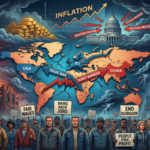
For decades, the global economy operated on a relatively predictable set of rules: free trade is good, government intervention should be limited, and central banks must remain independent. This framework — often called economic rationalism — drove globalization and lifted hundreds of millions out of poverty. But it also left many behind, hollowing out industrial heartlands and widening the gap between the ultra-wealthy and the working class.
That frustration has boiled over. From the United States to Europe, Latin America, and beyond, economic populism has moved from the political fringes to the absolute center of global power. Changes in trade policy have become the single most-cited risk to global economic growth, with the share of executives citing trade policy as a top concern more than doubling in just one year — a seismic shift in what keeps the world’s business leaders up at night.
But what exactly is economic populism? And when politicians promise to tear up the old economic rulebook, what does it actually mean for your savings, your investments, and the cost of your everyday life?
What Is Economic Populism — and Why Is It Spreading Globally Right Now?
Economic populism is a political approach that rejects mainstream economic consensus in favor of policies that promise immediate, tangible benefits to working and middle classes — often at the expense of long-term economic stability. While populism exists across the political spectrum, the economic playbook is remarkably similar regardless of ideology, relying on three core pillars: protectionism and nationalism, heavy state intervention, and deliberate disregard for budget constraints.
The appeal is straightforward: decades of globalization produced genuine winners and genuine losers. The winners — primarily the highly educated, the globally mobile, and the holders of capital — saw their wealth compound. The losers — manufacturing workers in hollowed-out regions, communities dependent on industries offshored for cheaper labor — experienced stagnant wages, declining social mobility, and the cultural disruption of rapid change. Economic populism speaks directly to that second group, offering simple villains (foreign competition, elites, institutions) and simple solutions (tariffs, subsidies, nationalist spending).
How Does Economic Populism Differ From Traditional Economic Policy?
| Feature | Economic Rationalism (The Old Rulebook) | Economic Populism (The New Reality) |
|---|---|---|
| Trade | Free trade, open borders, globalization | Tariffs, trade wars, economic nationalism |
| Government Role | Limited intervention, deregulation | Heavy intervention, industrial subsidies |
| Central Banks | Strictly independent, focused on inflation | Pressured by politicians to prioritize growth or rate cuts |
| Deficits | Viewed as a problem requiring management | Often ignored to fund tax cuts or spending promises |
| Labor | Market-driven wages, global talent pools | Immigration restrictions, wage interventions |
| Measurement of Success | GDP growth, productivity, long-run stability | Short-term job numbers, trade balances, political wins |
The 2025–2026 Populism Experiment: What the Data Actually Shows
The United States in 2025 provided the world’s most consequential real-time test of economic populism in modern history — and the results offer crucial lessons for investors and consumers everywhere.
The Tariff Shock: Larger Than Any in Decades
The Trump administration’s 2025 tariff regime — beginning with “Liberation Day” on April 2 — imposed sweeping duties on virtually all U.S. trading partners. J.P. Morgan calculated this took the average effective U.S. tariff rate from around 10% to just over 23% — the largest tax increase since the Revenue Act of 1968, potentially raising just under $400 billion in revenue or about 1.3% of U.S. GDP.
Why the Full Economic Damage Was Delayed — and Is Now Arriving
One reason American importers delayed raising prices was tremendous uncertainty over whether the tariffs were permanent. But more of the tariffs’ effects will show up in 2026. The delay mechanism involved businesses front-loading inventory purchases before tariffs hit, supply chain rerouting to avoid the highest duties, and retailers absorbing short-term margin compression rather than passing costs to consumers immediately. These buffers are now largely exhausted. U.S. annual average inflation is expected to remain elevated at 2.7–2.8% in 2025–2026.
The Federal Reserve Caught in the Middle
Perhaps the most dangerous aspect of economic populism for financial markets is the pressure it places on central bank independence. Fed Chair Jerome Powell warned that fresh import tariffs and industrial policies from Washington are raising “unusually elevated” uncertainty and could simultaneously push inflation up and dampen growth — the textbook definition of stagflation, a combination the Fed has virtually no good tools to address.
For central banks, pressures to ease monetary policy always backfire. While such measures may lower real interest rates in the short term, inflation and inflation expectations ultimately increase more than desirable. Trust in central banks helps anchor inflation expectations; as independence erodes, decades of hard-won credibility vanish.
The Global Growth Cost
The IMF projects global growth to slow from 3.3% in 2024 to 3.2% in 2025 and 3.1% in 2026 — with advanced economies growing around just 1.5%. Risks to the outlook are tilted to the downside, with prolonged uncertainty and escalating protectionist measures the primary threat.
Why Populist Economics Frequently Backfires Over the Long Term
The Inflation Trap
When populist governments restrict cheap foreign imports via tariffs and cheap foreign labor via immigration restrictions, the cost of domestic production rises. If the government is simultaneously running large deficits to fund tax cuts or stimulus programs, demand remains elevated. High demand plus restricted supply is a reliable recipe for persistent inflation — which destroys the real wages of the working-class voters populism claims to help.
The Bond Market Veto
Bond markets are highly sensitive to populist fiscal policies. When investors see a government borrowing heavily with no credible plan to restore sustainability, they demand higher interest rates as compensation for future inflation risk — pushing up long-term borrowing costs across the economy. The U.S. faces stagflationary pressures from tariffs in 2026, with long-term yields remaining elevated due to persistent or rising risk premiums even as the Fed cuts short-term rates.
The Retaliation Effect
Protectionism rarely happens in isolation. Every major U.S. trading partner imposed retaliatory measures in 2025, creating a cycle of escalation that raised costs for businesses and consumers on both sides of every border involved. The IMF estimates tariff escalation could lower global output by an additional 0.3% next year.
The Gold Signal
One of the clearest market signals of populist economic anxiety is the flight to gold. Gold reached an all-time high of $3,167.57 per ounce in April 2025, rising approximately 15% from the start of the year, driven by geopolitical uncertainty and investor concern about inflationary pressures from tariffs. When sophisticated investors are buying gold at record prices, they are signaling a fundamental distrust of the fiat monetary system under political pressure.
How This Impacts You: Navigating the Populist Era With Your Personal Finances
The macroeconomic effects of economic populism filter directly into your household budget, your mortgage rate, your retirement account, and the price of virtually everything you buy.
Expect structurally higher inflation. The era of ultra-low inflation driven by cheap global manufacturing is over. Build inflation assumptions into your financial planning — a 3–4% long-run inflation expectation is more realistic than the 2% of the 2010s.
Prepare for elevated long-term interest rates. As governments run larger deficits and bond markets demand higher yields for fiscal risk, do not plan your financial life around interest rates returning to the rock-bottom levels of the 2010s. Lock in fixed mortgage rates where possible, and be cautious with variable-rate debt.
Diversify globally — but selectively. Populism creates distinct winners and losers. Domestic industries protected by tariffs may see short-term stock gains; multinationals reliant on global supply chains face ongoing margin compression.
Consider hard assets as inflation protection. Gold’s record-breaking run in 2025 reflects genuine institutional concern about fiscal trajectories. Real assets — real estate, commodities, TIPS, and precious metals — provide meaningful protection against currency debasement risk.
Maintain a robust emergency fund. Populist economic policies increase volatility, create abrupt supply disruptions, and generate sudden industry-specific job losses. A six-month emergency fund is essential in the current environment.
Understand which sectors benefit and which suffer. Domestic steel, aluminum, and manufacturing may benefit from trade protection. Agriculture, technology, automotive, and retail face structural headwinds. Align your career and investment decisions with this reality.
📩 Stay Ahead of the Financial Curve
Economic populism is reshaping markets, prices, and your financial future in real time. Get plain-English analysis of the policies and trends that matter most — delivered straight to your inbox, free.
No spam. No fluff. Just the financial insights you actually need.
Frequently Asked Questions
1. Is economic populism a left-wing or right-wing political movement?
It is genuinely both — and that bipartisan appeal is what makes it so powerful and persistent. Left-wing populism focuses on wealth redistribution, heavy corporate regulation, and expanded government services. Right-wing populism focuses on trade protectionism, immigration restrictions, and nationalist industrial policy. Both share a fundamental skepticism of free markets and established institutions.
2. Why does economic populism so frequently produce inflation rather than prosperity?
Populist policies typically combine supply restriction (tariffs that raise input costs, immigration limits that raise labor costs) with demand expansion (deficit spending, tax cuts). Even in the United States, growth is weaker and inflation higher than projected — hallmarks of a negative supply shock that monetary policy cannot easily counteract without causing a recession.
3. How do bond markets signal distrust of populist governments — and why should I care?
When bond investors believe a government is borrowing recklessly or will pressure the central bank to inflate away its debt, they demand higher interest rates on government bonds. Those higher yields flow directly into mortgage rates, corporate borrowing costs, and consumer loan rates — affecting every borrower in the economy.
4. Can populist policies ever deliver genuine economic benefits?
In specific sectors and in the short term, yes. Targeted industrial policy, infrastructure investment, and trade protection can create real jobs in specific industries. The problem is that populist policies are typically designed for political impact rather than economic coherence, creating volatility that undermines their own objectives.
5. What investments tend to perform best during periods of economic populism and trade war uncertainty?
Historically, the assets that outperform during populist episodes include gold and precious metals, domestic-focused equities in protected industries, real estate, and short-duration bonds. Underperformers typically include export-dependent multinationals, emerging market equities tied to global trade flows, and long-duration bonds in countries running large deficits.
Internal Resources Worth Reading
- Tariffs and Trade Wars: A Comprehensive Guide to Who Really Pays
- The National Debt in 2026: Should We Worry?
- Universal Basic Income: Pros, Cons, and Its Impact on the Economy
- Who Really Owns Central Banks?
External Sources:
IMF World Economic Outlook |
McKinsey Global Economics Intelligence |
J.P. Morgan: US Tariffs Impact Analysis |
Belfer Center for Science and International Affairs |
Rabobank: Global Outlook 2026
Leave a Reply