
Bruce Creighton
Money Creation – Why Banks Don’t Just Lend Out Existing Money

AFFILIATE DISCLOSURE:
This article contains affiliate links. We may receive a commission for purchases made through these links, at no extra cost to you. We only recommend products and services we believe will genuinely help you achieve your financial goals.
Why Banks Don’t Just Lend Out Existing Money (And How They Really Create It)
Discover the surprising truth about money creation! Learn how private banks generate most of the money in our economy and how this impacts your financial life.
Have you ever wondered where all the money in the economy comes from? It’s a question that often sparks curiosity and sometimes even confusion. Many assume that banks act like giant warehouses, lending out the money deposited by their customers. But the reality is far more intriguing and has significant implications for your financial well-being.
Forget the image of banks simply shuffling existing funds. The truth is, private banks are the primary creators of new money in our modern economy. This might sound counterintuitive or even a little shocking, but understanding this fundamental principle is crucial for anyone wanting to truly grasp how our financial system works and make smarter money decisions.
This long-form guide will demystify the process of money creation, explaining it in clear, straightforward language. We’ll delve into the mechanics behind it, explore its impact on everything from inflation to loan availability, and empower you with the knowledge to navigate the financial landscape with greater confidence.
Debunking the Myth: Banks as Mere Intermediaries
For a long time, the popular understanding of banking was that institutions collected deposits and then lent those same deposits out to borrowers. This “loanable funds” theory paints a picture of banks as intermediaries, connecting savers with borrowers. While deposits are certainly important to banks, this model doesn’t fully explain how the vast majority of money enters our economy.
Mini Case Study: Imagine Sarah deposits $1,000 into her savings account at First National Bank. According to the simple intermediary view, the bank would then lend out a portion of that $1,000 to Mark who wants to start a small business. However, the reality is that when the bank approves Mark’s loan, it doesn’t necessarily take that $1,000 directly from Sarah’s deposit. Instead, it creates a new deposit in Mark’s account – essentially, new money comes into existence.
The Bank of England, in its seminal paper “Money creation in the modern economy,” explicitly states: “Commercial banks create money by making new loans.” https://www.bankofengland.co.uk/-/media/boe/files/quarterly-bulletin/2014/q1/money-creation-in-the-modern-economy.pdf This isn’t just theoretical; it’s how the system fundamentally operates.
The Magic of Fractional Reserve Banking and Loan Creation
So, how exactly do banks create money out of seemingly thin air? The key lies in the system of fractional reserve banking. Under this system, banks are required to hold only a fraction of their deposits in reserve (either in their vaults or at the central bank). This fraction is known as the reserve requirement, set by the central bank (in Canada, this was historically in place but is no longer a strict requirement in the same way, though banks still maintain reserves for operational and regulatory reasons).
Mini Case Study: Let’s say, for simplicity, a hypothetical reserve requirement is 10%. If First National Bank receives a $100 deposit, it is only obligated to keep $10 in reserve. The remaining $90 can then be lent out. When this $90 is lent to another customer, it becomes a new deposit in their account, effectively increasing the total amount of money in the economy.
This process can repeat itself. The borrower who received the $90 might deposit it into another bank, which can then lend out a portion of that deposit, and so on. This is known as the multiplier effect, where an initial deposit can lead to a larger overall increase in the money supply.
What Limits Money Creation by Private Banks?
While private banks have the power to create money, this power isn’t unlimited. Several factors constrain their ability to do so:
- Demand for Loans: Banks can only create money if there are individuals and businesses willing and able to borrow. If loan demand is low, money creation will be limited.
- Creditworthiness of Borrowers: Banks need to assess the risk of borrowers defaulting on their loans. They will only create money (issue loans) to those they deem likely to repay.
- Profitability: Banks are profit-seeking entities. They will only extend loans if they believe they can earn a sufficient return through interest payments.
- Capital Requirements: Regulatory bodies often set capital requirements, which dictate the amount of capital banks must hold relative to their assets (including loans). These requirements act as a buffer against losses and can limit the amount of lending a bank can undertake. You can learn more about capital requirements from the Bank for International Settlements (BIS): https://www.bis.org/bcbs/basel3.htm
- Central Bank Influence: The central bank plays a crucial role in influencing the overall money supply and credit conditions through various tools, such as setting interest rates and conducting open market operations (buying and selling government securities).
Mini Case Study: During an economic downturn, even if banks have the capacity to lend, businesses and individuals might be hesitant to take on new debt due to uncertainty about the future. This reduced demand for loans would naturally limit the amount of new money created by the banking system.
The Role of the Central Bank: Steering the Monetary Ship
While private banks create most of the money, the central bank (like the Bank of Canada) plays a vital role in overseeing the monetary system and ensuring its stability. The central bank does not typically create physical currency in the way private banks create digital money through loans, but it controls the supply of physical currency and bank reserves.
The central bank’s key functions include:
- Setting Monetary Policy: Influencing interest rates and credit conditions to achieve macroeconomic goals like price stability and full employment.
- Issuing Banknotes and Coins: Providing the physical currency in circulation.
- Acting as a Lender of Last Resort: Providing liquidity to banks facing financial difficulties.
- Supervising and Regulating Banks: Ensuring the safety and soundness of the banking system.
Understanding the distinct but interconnected roles of private banks and the central bank is essential for a complete picture of money creation.
Download Your Free Guide: Want a quick reference to the key terms and concepts discussed? Download our free “Understanding Money Creation: Key Concepts Checklist” to reinforce your learning!
Understanding Money Creation: Key Concepts Checklist
TheMoneyQuestion.org
- Fractional Reserve Banking: [ ]
- Loan Creation: [ ]
- Multiplier Effect: [ ]
- Reserve Requirement: [ ]
- Capital Requirements: [ ]
- Central Bank’s Role: [ ]
<footer><p style=”text-align:center;”>themoneyquestion.org</p></footer>
Why Does This Matter to You? Understanding the Implications
Grasping how money is created has several important implications for your financial life:
- Inflation: When banks create more money, and if the supply of goods and services doesn’t keep pace, it can lead to inflation – a general increase in prices and a decrease in the purchasing power of your money. Understanding this link can help you make informed decisions about saving and investing.
- Mini Case Study: Imagine a period where there’s a surge in lending and new money creation, but factories are facing supply chain issues, limiting the production of goods. The increased money chasing a limited supply of goods can lead to higher prices for everyday items like groceries and gasoline.
- Economic Cycles: The availability of credit and the rate of money creation can significantly influence economic booms and busts. During economic expansions, increased lending can fuel investment and consumption. Conversely, during recessions, reduced lending can exacerbate the downturn.
- Interest Rates: The process of money creation is closely linked to interest rates. When demand for loans is high, or when the central bank tightens monetary policy, interest rates tend to rise, making borrowing more expensive for individuals and businesses. This impacts everything from mortgage payments to business investment.
- Mini Case Study: If you’re considering taking out a loan for a new car, understanding the current interest rate environment, which is influenced by money creation and central bank policy, is crucial for determining the overall cost of your loan.
- Financial Literacy: By understanding the fundamentals of money creation, you become a more informed participant in the economy. You can better interpret financial news, understand the potential impact of government policies, and make more strategic financial decisions for yourself and your family.
Related Article: To further explore the role of central banks, read our article on “[Understanding Central Bank Interest Rate Hikes and Their Impact](insert internal link to relevant TMQ article here)”.
Trending Question Answered: Does the Government Print All the Money?
A common misconception is that the government printing presses are responsible for creating most of the money in the economy. While the government (through the central bank) does print physical currency (banknotes and coins), this constitutes a relatively small fraction of the total money supply. The vast majority of money in modern economies exists in digital form as bank deposits, created by private banks when they issue loans.
The printing of physical currency is primarily to meet public demand for cash. The amount of physical currency in circulation is influenced by factors like consumer spending habits and the level of economic activity. The central bank carefully manages the supply of physical currency to ensure there is enough to meet demand without causing instability in the financial system.
Actionable Tips: How to Navigate a Money-Creating Economy
Now that you have a better understanding of how money is created, here are some actionable tips to help you navigate this environment effectively:
- Manage Your Debt Wisely: In an economy where credit is readily available (and creates new money), it’s crucial to be mindful of your borrowing. Understand the terms of your loans, avoid unnecessary debt, and strive to maintain a healthy debt-to-income ratio.
- Mini Case Study: Maria took out a low-interest personal loan to consolidate some higher-interest credit card debt. By understanding the power of credit and using it strategically, she reduced her monthly payments and improved her overall financial situation.
- Invest for the Long Term: Given the potential for inflation in a money-creating economy, consider investing in assets that have the potential to outpace inflation over the long term, such as stocks, real estate, and diversified investment funds.
- Build an Emergency Fund: Economic conditions can fluctuate, and job security isn’t always guaranteed. Having a well-funded emergency fund can provide a financial cushion during unexpected events, reducing the need to take on debt during vulnerable times.
- Continuously Improve Your Financial Literacy: The more you understand about how the financial system works, the better equipped you’ll be to make informed decisions and adapt to changing economic conditions. Stay curious, read reputable financial resources, and seek out educational opportunities.
- Consider Inflation in Your Financial Planning: When setting financial goals, such as retirement planning, factor in the potential impact of inflation on the future cost of living.
Freebie Alert! Download our “Debt Management Checklist” to help you assess your current debt situation and develop a plan to manage it effectively.
Debt Management Checklist
TheMoneyQuestion.org
- List all outstanding debts (including interest rates and minimum payments): [ ]
- Calculate your debt-to-income ratio: [ ]
- Identify high-interest debts to prioritize for repayment: [ ]
- Explore debt consolidation or balance transfer options: [ ]
- Create a debt repayment plan and track your progress: [ ]
- Review your credit report for any errors: [ ]
Here are some affiliate products and services that can help you take control of your finances in a money-creating economy:
- Personal Finance Tracking Software (e.g., Mint, Personal Capital):
- Description: These platforms allow you to link your bank accounts, credit cards, and investment accounts to get a holistic view of your financial situation.
- Value to Reader: Helps you track your spending, monitor your net worth, and identify areas where you can save more money, crucial in managing your finances effectively.
- Call to Action: Sign up for [Personal Finance Software Name] today and gain better visibility into your financial life!
- Online Brokerage Account (e.g., Vanguard, Fidelity, Interactive Brokers):
- Description: Provides a platform to invest in stocks, bonds, ETFs, and other securities.
- Value to Reader: Enables you to grow your wealth over the long term and potentially outpace inflation, a key strategy in a money-creating economy.
- Call to Action: Start investing in your future – open an account with [Brokerage Name] now!
- Credit Monitoring Service (e.g., Equifax, TransUnion):
- Description: Monitors your credit report for changes and alerts you to potential fraud or errors.
- Value to Reader: Helps you maintain a good credit score, which is essential for accessing loans and favorable interest rates in a credit-driven economy.
- Call to Action: Protect your credit – enroll in [Credit Monitoring Service] for peace of mind.
- Financial Education Courses (e.g., Coursera, Udemy):
- Description: Offers a wide range of courses on personal finance, investing, and economics.
- Value to Reader: Empowers you with the knowledge and skills to make informed financial decisions in a complex economic environment.
- Call to Action: Invest in your financial literacy – explore the courses available on [Online Education Platform]!
- Budgeting Apps (e.g., YNAB, PocketGuard):
- Description: Tools designed to help you create and stick to a budget.
- Value to Reader: Essential for managing your spending and ensuring you’re not overextending yourself in a credit-based economy.
- Call to Action: Take control of your spending – download [Budgeting App Name] and start budgeting today!
Conclusion: Empowering Your Financial Future Through Understanding
Understanding that private banks create most of the money in the economy might seem like an abstract concept, but its implications for your financial life are very real. By grasping this fundamental principle, you can better understand the forces that shape inflation, interest rates, and economic cycles.
This knowledge empowers you to make more informed decisions about managing your debt, saving and investing for the future, and navigating the financial landscape with greater confidence. Continue to learn, stay informed, and take proactive steps to secure your financial well-being in this dynamic economic environment.
Frequently Asked Questions (FAQ)
- If banks create money by lending, where does the money come from to repay the loan? When a borrower repays a loan, the corresponding deposit in their account is reduced, effectively “destroying” the money that was created when the loan was issued. Interest payments compensate the bank for the risk and cost of lending.
- Does the government control how much money banks can create? While private banks create the initial deposits through lending, the central bank influences the overall amount of lending and money creation through tools like reserve requirements (historically), capital requirements, and interest rate adjustments.
- Is it dangerous that private banks have the power to create money? The system has inherent risks, such as the potential for excessive lending leading to asset bubbles and financial instability. This is why regulation and central bank oversight are crucial to maintaining a stable financial system.
- How does inflation relate to banks creating money? If banks create too much money relative to the amount of goods and services available in the economy, it can lead to an increase in demand that outpaces supply, causing prices to rise (inflation).
- Can banks create unlimited amounts of money? No, banks are constrained by factors like the demand for loans, the creditworthiness of borrowers, profitability considerations, capital requirements, and the influence of the central bank.
- What is the difference between the money created by banks and the money printed by the government? Banks create digital money in the form of deposits when they make loans. The government (through the central bank) prints physical currency (banknotes and coins), which is a smaller portion of the overall money supply and is primarily used for transactions.
- How do central bank interest rate changes affect money creation by private banks? When the central bank raises interest rates, borrowing becomes more expensive, which can reduce the demand for loans and thus slow down the rate of money creation by private banks.
- Why don’t banks just create a lot of money for themselves? Banks are heavily regulated and must adhere to capital requirements. Creating excessive amounts of money without sufficient capital backing would put them at risk of failure and violate regulatory standards. Their profit comes primarily from the interest charged on loans, not from simply creating money for their own accounts.
- How does the money creation process differ in different countries? The fundamental principle of private banks creating money through lending is similar across most modern economies that utilize fractional reserve banking. However, the specific regulations and tools used by central banks to influence money creation can vary.
- As an individual, how can I protect myself from the potential negative effects of money creation and inflation? By managing debt responsibly, investing strategically in assets that can outpace inflation, building an emergency fund, and continuously improving your financial literacy.
Affiliate Disclosure: Please note that some of the links above may be affiliate links, and I may earn a commission if you make a purchase through these links. This helps support TheMoneyQuestion.org and allows us to continue providing valuable content to you. We only recommend products and services that we believe can genuinely benefit our readers.
How to Spot Predatory Lending and Credit Traps: Protect Your Financial Future


Authoritative Sources
Editorial Disclosure: This article is for informational purposes only and does not constitute financial advice. Some links on this page may be affiliate links — if you click through and make a purchase or apply for a product, The Money Question may receive a commission at no additional cost to you. We only recommend products and services we believe provide genuine value. Always consult a qualified financial professional before making major financial decisions.
How to Improve Your Credit Score Fast (7 Proven Tips)


Authoritative Sources
Editorial Disclosure: This article is for informational purposes only and does not constitute financial advice. Some links on this page may be affiliate links — if you click through and make a purchase or apply for a product, The Money Question may receive a commission at no additional cost to you. We only recommend products and services we believe provide genuine value. Always consult a qualified financial professional before making major financial decisions.
How to Manage Your Debt Effectively


AFFILIATE DISCLOSURE:
This article contains affiliate links. We may receive a commission for purchases made through these links, at no extra cost to you. We only recommend products and services we believe will genuinely help you achieve your financial goals.
Learn actionable steps to manage your debt effectively and regain financial freedom. Discover proven strategies for everyday readers to take control of their money.
Introduction
Debt is a burden that many individuals carry throughout their lives, often feeling like a never-ending cycle. Whether it’s credit card debt, student loans, or personal loans, debt can take a toll on your mental and financial well-being. But it doesn’t have to be this way. With the right strategies, you can manage your debt effectively, regain control of your finances, and pave the way toward a debt-free life.
In this guide, we’ll walk you through the most actionable steps you can take to understand your debt, reduce it efficiently, and develop habits that will keep you debt-free in the future. By using these tips and taking a proactive approach, you’ll be empowered to take control of your financial life.
Why Debt Management Is Important
Before we delve into the strategies, it’s essential to understand why managing your debt is so important.
-
Improved Credit Score: Your credit score directly impacts your ability to borrow money, apply for loans, and even secure a rental property or job. Debt management can improve your credit score over time, making it easier to access financial opportunities. Check out our article How to Improve Your Credit Score Fast (7 Proven Tips).
-
Mental and Emotional Relief: Carrying debt can cause stress and anxiety, especially when it feels overwhelming. Learning how to manage debt can bring peace of mind and reduce financial anxiety.
-
Better Financial Opportunities: By reducing or eliminating debt, you create space for other financial goals like saving for retirement, buying a home, or traveling.
Understanding the impact of debt on your financial future is the first step toward managing it effectively. Now, let’s explore how you can start taking control.
Step 1: Understand Your Debt
The first step in managing debt is to get a complete picture of your financial obligations. This means taking stock of every debt you owe and understanding the details of each.
List All Your Debts
Start by creating a comprehensive list of all your debts. This includes:
-
Credit card balances
-
Student loans
-
Personal loans
-
Auto loans
-
Mortgage payments
-
Medical debt (if applicable)
For each debt, write down the following information:
-
Amount owed
-
Interest rate
-
Minimum monthly payment
-
Due dates
-
Creditor contact information
Creating a clear list of your debts will help you prioritize them and develop a strategy for repayment.
Evaluate the Impact of Interest Rates
Interest rates play a crucial role in debt repayment. The higher the interest rate, the more money you’ll pay over time. Credit card debt typically carries the highest interest rates, while student loans and mortgages usually have lower rates. Understanding how much interest you’re paying will help you prioritize which debts to focus on first.
Step 2: Categorize Your Debts
Once you have a complete list of your debts, it’s time to categorize them. Debt prioritization is crucial to paying off debt efficiently. Two popular strategies are the Debt Snowball Method and the Debt Avalanche Method.
The Debt Snowball Method
The Debt Snowball Method involves paying off your smallest debts first. By eliminating smaller debts quickly, you gain momentum and motivation to keep going. As you pay off smaller debts, you free up more money to apply to larger debts.
Example:
If you have a $500 credit card balance and a $5,000 car loan, focus on paying off the $500 credit card first. Once that’s paid off, apply the money you were paying toward the credit card to the car loan.
The Debt Avalanche Method
The Debt Avalanche Method is based on paying off your highest-interest debts first. While it may take longer to see progress with this method, you’ll save more money in the long run by tackling the debts that are costing you the most.
Example:
If your credit card has a 20% interest rate and your student loan has a 4% rate, pay off the credit card first to reduce the amount of interest you’re paying over time.
Both methods are effective, but the right choice depends on your personality and financial goals. If you need quick wins to stay motivated, the Debt Snowball may be best. However, if you’re focused on saving money on interest, the Debt Avalanche is more cost-effective.
Step 3: Create a Budget That Works for You
Creating a budget is a crucial step in managing debt effectively. A well-designed budget helps you track your income and expenses, enabling you to allocate more funds to debt repayment.
50/30/20 Rule
The 50/30/20 Rule is a simple budgeting framework that can guide your financial decisions:
-
50% Needs: Essential expenses like rent, utilities, groceries, and transportation.
-
30% Wants: Non-essential items such as entertainment, dining out, and hobbies.
-
20% Savings/Debt Repayment: This portion should be used to pay off debt and build savings.
When you allocate 20% of your income to debt repayment, you can make significant progress toward eliminating debt. If you can allocate more—say, 30% or 40%—you’ll reduce your debt even faster.
Track Your Spending
To make your budget effective, track your spending. Use a budgeting tool or app (such as YNAB) to categorize your expenses and identify areas where you can cut back. This will help you increase the portion of your income directed toward debt repayment.
Step 4: Cut Back on Unnecessary Expenses
One of the quickest ways to accelerate debt repayment is by cutting back on non-essential spending. This gives you more money to put toward your debt without needing to find extra income.
Smart Ways to Cut Back:
-
Cancel unused subscriptions: Evaluate your streaming services, gym memberships, and other subscriptions. Cancel anything you’re not using regularly.
-
Cook at home: Dining out can add up quickly. Try cooking at home more often to save money.
-
Shop smart: Use coupons, shop during sales, or buy secondhand to reduce your spending on clothing and household items.
Small changes can add up quickly, giving you more money to pay down your debt.
Step 5: Consider Debt Consolidation or Refinancing
If you have multiple high-interest debts, consider consolidating them into one loan or refinancing them to lower interest rates. This can make it easier to manage your payments and may save you money in interest.
Debt Consolidation
Debt consolidation involves taking out a new loan to pay off multiple existing debts. This can simplify your payments by combining them into one monthly payment. Additionally, it might offer a lower interest rate, which can help you save money.
-
Personal loans: You can take out a personal loan to consolidate your credit card debt and other loans.
-
Balance transfer credit cards: These cards allow you to transfer high-interest credit card debt to a card with a lower (or 0%) interest rate for an introductory period.
Refinancing
Refinancing involves replacing an existing loan with a new loan at a lower interest rate. You can refinance auto loans, student loans, and mortgages to reduce your interest rate and monthly payment.
Example:
Refinancing a mortgage with a lower interest rate can save you thousands of dollars over the life of the loan.
Before consolidating or refinancing, make sure to compare offers and consider any fees associated with these options. Consolidation and refinancing can be beneficial, but they must fit your financial situation.
Step 6: Build an Emergency Fund
An emergency fund is a financial cushion that can help you avoid further debt when unexpected expenses arise. Without an emergency fund, you might be forced to rely on credit cards or loans when life throws you a curveball.
How to Build an Emergency Fund:
-
Start small: Set a realistic goal, such as saving $500 or $1,000, and build from there.
-
Automatic transfers: Set up automatic transfers from your checking account to your savings account to make saving easier.
-
Prioritize your emergency fund: Treat building your emergency fund as a top priority, especially if you don’t have one yet.
An emergency fund will prevent you from adding to your debt in case of unforeseen circumstances, like medical bills, car repairs, or job loss. Check out our post How to Build an Emergency Fund – Even if You Are Struggling
Step 7: Avoid Accumulating More Debt
One of the most important steps in managing your debt is making sure you don’t accumulate more. Here are some strategies to avoid adding to your debt load:
-
Freeze your credit cards: If you tend to overspend, consider freezing your credit cards or leaving them at home to avoid impulse purchases.
-
Pay bills on time: Avoid late fees and penalties by paying your bills on time. Late payments can also negatively impact your credit score.
-
Live within your means: Focus on living below your means and avoiding unnecessary debt. Budgeting effectively and prioritizing your needs over wants can help you avoid the temptation to spend on non-essentials.
Trending Question: Should You Pay Off Debt or Save for Retirement First?
A common question many people have is whether they should focus on paying off debt or saving for retirement. While both are important, there’s a general guideline to follow:
-
Pay off high-interest debt first: Prioritize paying off high-interest debt, like credit card debt, before saving for retirement. The interest on high debt can accumulate faster than the gains from retirement savings.
-
Contribute to retirement savings: If you have employer-matched retirement contributions, aim to contribute at least enough to get the match. It’s essentially “free money.”
External Links:
-
-
National Foundation for Credit Counseling (NFCC) – A trusted resource for credit counseling and debt management advice.
-
Federal Trade Commission (FTC) Consumer Information – Offers valuable insights on managing debt and understanding consumer rights.
-
Conclusion
Managing your debt effectively doesn’t have to be a daunting task. By following the steps outlined in this guide, you can reduce your debt, improve your financial situation, and work toward financial freedom. Remember, the key is to take action and stay disciplined.
Start with understanding your debt, create a solid budget, and commit to making small changes that will add up over time. With persistence, you’ll be well on your way to a debt-free future.
FAQs
-
How can I pay off debt quickly without extra income?
-
Cut unnecessary expenses and allocate those savings to your debt repayment.
-
-
Is debt consolidation a good option for me?
-
Debt consolidation can simplify payments and lower interest rates, but make sure to compare offers carefully.
-
-
What’s the best method to pay off credit card debt?
-
Use the Debt Avalanche Method to tackle high-interest debt first, or the Debt Snowball for quick wins.
-
-
Should I invest while paying off debt?
-
Focus on paying off high-interest debt first, but consider contributing to retirement accounts if your employer offers matching funds.
-
-
Can I negotiate my credit card interest rate?
-
Yes, you can contact your credit card company to request a lower interest rate.
-
-
How much of my income should I use to pay off debt?
-
Aim to allocate at least 20% of your income to debt repayment.
-
-
How do I stay motivated to pay off debt?
-
Track your progress and celebrate small victories to stay motivated.
-
-
What should I do if I can’t make a debt payment?
-
Contact your creditor to negotiate a modified payment plan or deferment.
-
-
Can I pay off debt with a side job?
-
A side job can help increase your income and accelerate your debt repayment.
-
-
How do I prevent new debt from accumulating?
-
Stick to your budget, avoid impulse purchases, and live below your means.
-
Disclosure:
Authoritative Sources
Editorial Disclosure: This article is for informational purposes only and does not constitute financial advice. Some links on this page may be affiliate links — if you click through and make a purchase or apply for a product, The Money Question may receive a commission at no additional cost to you. We only recommend products and services we believe provide genuine value. Always consult a qualified financial professional before making major financial decisions.
Why You Need a Money Plan (Not Just a Budget)


Authoritative Sources
Editorial Disclosure: This article is for informational purposes only and does not constitute financial advice. Some links on this page may be affiliate links — if you click through and make a purchase or apply for a product, The Money Question may receive a commission at no additional cost to you. We only recommend products and services we believe provide genuine value. Always consult a qualified financial professional before making major financial decisions.
Inflation vs Wage Growth: Are You Falling Behind?
Inflation and wage growth are at odds in today’s economy. Learn how rising prices affect your earnings and what you can do to stay ahead financially.
AFFILIATE DISCLOSURE:
This article contains affiliate links. We may receive a commission for purchases made through these links, at no extra cost to you. We only recommend products and services we believe will genuinely help you achieve your financial goals.
Introduction: The Battle Between Inflation vs Wage Growth
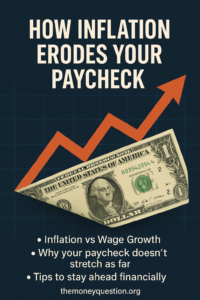
In recent years, many individuals have noticed something unsettling: their paycheck doesn’t seem to stretch as far as it once did. Whether it’s the rising cost of groceries, gasoline, or housing, prices are climbing faster than the pay raises many workers receive. This phenomenon has left millions wondering: are we falling behind in the fight between inflation and wage growth?
As inflation continues to rise, it erodes purchasing power—meaning the same amount of money buys fewer goods and services. On the other hand, wage growth has been sluggish, and many workers have seen their salaries barely keep up with the rising costs of living. In this post, we’ll break down the relationship between inflation and wage growth, how it affects you, and what you can do to stay financially strong in the face of these challenges.
Understanding Inflation and Wage Growth
What Is Inflation?
Inflation is the rate at which the general level of prices for goods and services rises, eroding purchasing power. It means that the money you earn today will buy less than it did a year ago. In the U.S., inflation is often measured by the Consumer Price Index (CPI), which tracks the cost of a basket of goods and services over time. A high inflation rate means a significant increase in prices, while a low rate means prices are rising slowly or not at all.
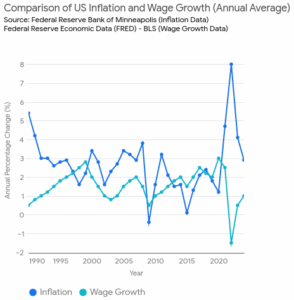
As of 2023, the CPI showed inflation at approximately 6.5%, an alarming rate compared to historical averages. This marked a sharp increase from the relatively low inflation rates seen in the previous decade. Inflation affects virtually every aspect of the economy, from the cost of everyday necessities to long-term investments and savings. It’s a crucial indicator to track, especially when compared to your wage growth. Learn more at Investopedia – What is the Consumer Price Index (CPI) and Federal Reserve – Inflation
What Is Wage Growth?
Wage growth refers to the rate at which wages or salaries increase over time. Ideally, wages should rise in tandem with inflation, allowing workers to maintain their purchasing power. However, if wage growth lags behind inflation, workers experience a reduction in their real income—what they can actually afford to buy.
In the U.S., wage growth has been relatively sluggish in recent years, especially when compared to the rising costs of living. For instance, in 2023, the average wage growth rate was approximately 4.5%, whereas inflation was pushing around 6.5%. This means that for many workers, their real income was effectively shrinking, making it harder to cover expenses and save for future goals.
Why Is This Relationship Important?
The interaction between inflation and wage growth is critical because it directly impacts your financial wellbeing. If inflation outpaces wage growth, it can lead to a decrease in your standard of living. Simply put: if your wages don’t grow as quickly as the cost of living, you’re effectively losing money.
Inflation vs Wage Growth: A Closer Look
How Inflation Affects Your Purchasing Power
When inflation increases, the prices of everyday goods and services—such as food, gas, and rent—go up. This can create a significant financial strain, especially for individuals living paycheck to paycheck. If your wage increase doesn’t match the pace of inflation, you may find yourself unable to afford the same things you did the previous year.
For example, in 2023, U.S. inflation was reported at around 6.5%, while average wage growth hovered closer to 4.5%. That’s a significant gap, and it means workers are not keeping up with rising costs.
For instance, grocery prices have risen dramatically, with food prices increasing by 8-10% in some sectors over the last year. This means that for families, the cost of a typical grocery bill can be hundreds of dollars higher annually, creating a strain on their finances. Additionally, higher gasoline prices and housing costs are making it even more difficult for individuals to make ends meet.
The Impact on Savings and Retirement
Inflation doesn’t just affect your day-to-day spending; it can also impact your long-term financial goals. For instance, inflation erodes the value of your savings. If your savings account yields a 1% return, but inflation is 4%, you’re effectively losing money in real terms. The purchasing power of your nest egg is shrinking, making it harder to save for retirement, a home, or your children’s education.
Inflation also impacts the value of fixed-income investments, like bonds. While bonds can offer a steady stream of income, inflation can erode the purchasing power of those payments, reducing the returns investors get over time.
Are You Falling Behind? How to Know If Inflation is Outpacing Your Wage Growth
Understanding the Numbers
To truly understand whether you’re falling behind in the inflation vs wage growth battle, it’s essential to track both metrics. You need to ask yourself: Is my wage increase enough to cover rising prices?
Here’s how you can evaluate your situation:
-
Compare your salary increase to the inflation rate: If your wages are increasing by 3% annually, but inflation is 6%, your real purchasing power is decreasing.
-
Track your spending: Keep a close eye on rising costs in categories such as food, housing, and transportation. If these prices are increasing faster than your wage, it’s time to reconsider your budget or look for ways to increase your income.
-
Focus on long-term financial goals: If your salary is stagnant, focus on building wealth through other means such as investments or starting a side business to make up for lost purchasing power.
Actionable Tips: How to Stay Ahead of Inflation
1. Negotiate Your Salary
If you’re concerned that your wage growth isn’t keeping up with inflation, the first step is to ask for a raise. Many employers are open to negotiating salaries, especially if you can demonstrate your value to the company. Here are a few strategies to increase your chances:
-
Do your research: Use tools like Glassdoor and Payscale to find out the average salary for your position in your area.
-
Prepare your case: Be ready to explain your accomplishments and how they have benefited the company.
-
Show the market rate: If your current pay is lower than the market average, use this information to strengthen your argument.
2. Invest to Combat Inflation
One of the best ways to protect yourself from inflation is by investing. Inflation erodes the value of cash, but investments—especially in assets like stocks, real estate, and bonds—tend to outpace inflation over the long term. Here are a few investment options to consider:
-
Stocks and ETFs: Historically, the stock market has provided returns that outpace inflation.
-
Real estate: Property values generally increase with inflation, providing a hedge against rising prices.
-
Precious metals: Gold and silver are often seen as safe havens during times of high inflation.
3. Reduce Your Expenses
If your salary isn’t keeping up with inflation, reducing your expenses can help you maintain your financial stability. Here are a few strategies:
-
Cut discretionary spending: Consider reducing costs on things like dining out, entertainment, and subscriptions.
-
Shop smarter: Use coupons, look for sales, and buy in bulk to save on everyday expenses.
-
Refinance loans: Lower your interest rates on mortgages, student loans, and credit cards to free up more cash.
4. Diversify Your Income
Building multiple streams of income can provide financial resilience when inflation erodes the value of your paycheck. Here are some ideas:
-
Start a side business: Whether it’s freelance work, selling handmade goods, or offering services, a side business can boost your income.
-
Invest in dividend-paying stocks: These stocks provide a steady stream of passive income.
-
Rent out property: If you have an extra room or property, consider renting it out for additional income.
Internal Links & Resources
-
Who Really Controls the Money? A Look at Central Banks: Understanding how central banks influence the economy and wage growth.
-
The Debt Myth: Why Government Borrowing Isn’t Like a Household Budget: A breakdown of how government spending and monetary policy can affect inflation and wages.
Conclusion: How to Protect Yourself from Falling Behind
As inflation continues to outpace wage growth, it’s crucial to take proactive steps to safeguard your financial future. By negotiating your salary, investing wisely, reducing expenses, and diversifying your income, you can stay ahead of the curve and maintain your purchasing power. While the economic landscape may seem daunting, there are plenty of opportunities to adapt and thrive financially.
Frequently Asked Questions
-
How does inflation affect my daily expenses?
Inflation raises the cost of everyday goods and services, making it harder to maintain your standard of living. -
Can I keep up with inflation through wage growth alone?
It’s possible, but it requires constant wage increases that match or exceed inflation. In practice, this can be difficult. -
What’s the best way to protect my savings from inflation?
Invest in assets like stocks, bonds, or real estate that historically outperform inflation. -
How can I measure if my wage growth is enough?
Compare your annual salary increase to the inflation rate to see if you’re maintaining or losing purchasing power. -
Is there a specific industry where wages grow faster than inflation?
Technology and healthcare industries often see faster-than-average wage growth. -
What happens if I don’t adjust my financial plan during inflation?
You may find it more difficult to meet financial goals like saving for retirement or buying a home. -
Are there any government programs to help with inflation?
Programs like Social Security adjustments and certain tax credits may provide relief, but they often don’t keep pace with inflation. -
Should I focus on cutting expenses or increasing income?
A balance of both is ideal, but diversifying your income streams can be more sustainable long-term. -
What’s the best investment to hedge against inflation?
Stocks, real estate, and precious metals are common inflation hedges. -
How can I negotiate a raise to match inflation?
Do research on market rates for your role and present evidence of your contributions and achievements.
Affiliate Disclosure
Affiliate Link Disclosure: TheMoneyQuestion.org may earn a small commission if you make a purchase through one of the links in this article. However, we only recommend products and services that we believe will add value to your financial journey.
Content Disclaimer: The information in this article is for informational purposes only and is not intended to substitute for the advice of a licensed or certified attorney, accountant, financial advisor, or other certified financial professionals. Always seek professional advice before making financial decisions.
Disclosure: This post may contain affiliate links. If you click through and make a purchase, The Money Question may earn a small commission at no additional cost to you. We only recommend products and services we genuinely believe in. See our full disclaimer for details.
What Crypto Hype Means For Everyday Investors

Why Private Banks Create Most of the Money in the Economy
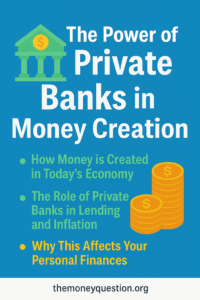
The popular belief that governments, through their central banks, print and control the money supply is largely a myth. Learn how private banks create money, why it matters for your financial life, and how understanding this can empower your personal finance decisions.
AFFILIATE DISCLOSURE:
This article contains affiliate links. We may receive a commission for purchases made through these links, at no extra cost to you. We only recommend products and services we believe will genuinely help you achieve your financial goals.
Introduction: Who Really Controls Money in Our Economy?
Have you ever wondered where money actually comes from? We tend to think of it as something printed by the government, but the reality is far more complex. In fact, private banks create most of the money circulating in the economy today.
This might sound surprising, but once you understand how it works, it can transform the way you think about money, debt, and even your personal finances. In this post, we’ll dive deep into how private banks create money through the lending process, the implications of this for economic stability, and why it matters to you as a consumer. By the end, you’ll have a clearer understanding of the monetary system and its impact on your financial life.
The Role of Banks in the Economy: More Than Just Lenders
How Banks Work
Banks play a crucial role in the economy, but they’re not just places to deposit your paycheck or take out a loan. Private banks, in particular, are the primary entities responsible for creating the vast majority of money in circulation. How? Through a process called fractional reserve banking.
What is Fractional Reserve Banking?
In simple terms, fractional reserve banking allows banks to lend out most of the money deposited by their customers, keeping only a fraction in reserve. This creates money out of thin air, as loans are made that exceed the actual deposits in the bank’s vaults.
For example:
-
You deposit $1,000 into a bank.
-
The bank is required to keep only 10% (or $100) in reserve, which means it can lend out $900.
-
When the bank loans that $900 to someone else, that money is spent and deposited into another bank.
-
The second bank can now lend out 90% of that deposit, and the cycle continues.
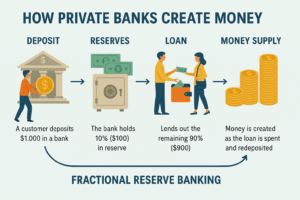
This process of lending and re-lending creates money in the form of credit and debt that circulates throughout the economy. As a result, the actual supply of money in the economy can be many times greater than the amount physically printed by the government.
How Do Private Banks Create Money?
Private banks are not just custodians of money; they are active participants in its creation. Here’s a breakdown of how this happens:
1. Deposits Lead to Loans
When you deposit money into a bank, it doesn’t just sit there. The bank uses your deposit as a source of funds to offer loans to others, and in the process, it creates new money.
2. Money Multiplier Effect
The act of lending leads to more deposits being made, which the bank can then lend out again. This “money multiplier” effect causes the supply of money to grow exponentially. The initial deposit creates more than just a one-to-one increase in money supply.
3. Interest Payments and Debt
The money that banks lend is not free. The borrower must pay interest on the loan. This interest is a form of revenue for the bank, but it also means that the economy is operating on a debt-based system. The more money is created, the more debt there is, and the higher the interest payments.
The Consequences of Private Bank Money Creation
While this system allows for economic growth and provides consumers with access to credit, it also has some serious implications:
1. Debt Levels and Economic Cycles
Because private banks create money through debt, the economy becomes heavily reliant on borrowing. As debt levels increase, the risk of economic downturns also rises. When too many people or businesses default on loans, it can lead to financial crises, like the 2008 recession.
2. Inflation and Asset Bubbles
In some cases, the money created by banks leads to inflation, particularly in asset prices like real estate and stocks. When banks lend excessively, demand for these assets rises, which drives up prices, potentially creating asset bubbles.
3. Limited Control Over the Money Supply
Despite the fact that private banks create most of the money, the government and central banks still try to regulate the supply of money through tools like interest rates and reserve requirements. However, because the vast majority of money is created privately, government control over the money supply is limited.
How Does This Impact Your Personal Finances?
Understanding how private banks create money is not just an academic exercise – it has real-world implications for your financial life:
1. Access to Credit
The availability of credit depends largely on the lending policies of private banks. If banks are reluctant to lend, it can be harder for you to get a loan, whether it’s for a car, home, or business. Conversely, if banks are too eager to lend, it can lead to an oversupply of credit and potential financial instability.
2. Interest Rates
Interest rates are influenced by the central bank, but they are also set by private banks based on market conditions and competition. A low-interest rate environment, which happens when banks have easy access to money, can make borrowing more affordable, but it also fuels debt levels.
3. Inflation and Purchasing Power
As banks create more money through loans, inflation can rise, which erodes the purchasing power of your money. For instance, if more money enters the economy, the cost of goods and services may increase. Understanding this can help you make smarter decisions about savings and investing.
4. Wealth Inequality
The way money is created and distributed can also contribute to wealth inequality. Those who can access loans – often the wealthy – are able to benefit from the rising asset prices that are often driven by bank lending. Meanwhile, those who can’t access credit may find themselves left behind.
Trending Question: Can the Creation of Money by Private Banks Lead to Economic Instability?
Many critics argue that the ability of private banks to create money leads to economic instability. They believe this system can encourage irresponsible lending, creating financial bubbles, and contributing to economic crises. Understanding this dynamic is crucial for understanding why policies like Modern Monetary Theory (MMT) and Sovereign Money Systems have been proposed to reform how money is created and controlled.
1. Modern Monetary Theory (MMT)
MMT suggests that governments, particularly sovereign ones, should issue currency directly and spend freely to finance public services, without worrying about balancing the budget. Proponents of MMT argue that a sovereign money system would reduce reliance on private banks and mitigate the risk of financial instability caused by debt-based money creation.
2. Sovereign Money System
In a Sovereign Money System, only the government would have the authority to create money. Under such a system, private banks would no longer be able to create money through loans, which could significantly reduce the risks of inflation and financial instability.
Internal Links:
-
Who Really Controls the Money? A Look at Central Banks
-
This article provides an in-depth look at central banks and their role in the monetary system, complementing the discussion on private banks’ money creation.
-
-
Modern Monetary Theory: Rethinking Economics and Monetary Reform
-
This post explores alternatives to the current monetary system, including MMT, which proposes changes to the way money is created and managed.
-
-
What the Fed’s Move Means For Your Wallet
-
This post explores the implications of central bank actions on personal finances, linking to the discussion of monetary policy and private banks’ role in creating money.
-
External Links:
-
Federal Reserve – How the Federal Reserve Operates (Federal Reserve official site)
-
This official government site offers a clear explanation of how the Federal Reserve System works, its role in regulating money supply, and its relationship with private banks.
-
-
Bank of England – Money Creation in the Modern Economy (Bank of England)
-
A credible and educational source from the Bank of England that explains how money is created in the modern economy, including the role of private banks in the money creation process.
-
- The Bank of International Settlements (BIS) – Money Creation (BIS official publication)
-
The BIS is an international financial institution that provides in-depth reports and studies on money creation, central banking, and its impact on the global economy. This authoritative resource can add credibility to your post.
-
Conclusion: Take Control of Your Financial Future
Understanding that private banks create most of the money in the economy is a powerful insight into how the financial system works. While this system allows for economic growth, it also introduces risks like inflation, asset bubbles, and increased debt levels.
By becoming aware of how money is created and understanding the broader economic forces at play, you can make more informed decisions about your personal finances. Whether it’s understanding how interest rates impact your loans or recognizing the potential risks of an overheated economy, the more you know, the better equipped you’ll be to navigate the complexities of money.
FAQs: Answering Your Burning Questions on Money Creation
-
What is fractional reserve banking, and how does it create money?
-
Fractional reserve banking is where banks hold only a portion of their customer deposits as reserves and lend the rest to borrowers, thus creating new money in the process. This process is called the money multiplier effect.
-
-
How does private bank money creation affect inflation?
-
The creation of money through loans can lead to inflation, especially if too much money is created relative to the supply of goods and services. The more money that is created through lending, the less each unit of currency is worth.
-
-
Why do private banks create money instead of the government?
-
Private banks have the ability to create money through lending, which has become a standard part of the modern banking system. This contrasts with a system where only the government can issue money.
-
-
Can private bank money creation lead to economic crises?
-
Yes, excessive lending can lead to financial bubbles, excessive debt, and instability in the economy.
-
-
How do central banks regulate the money created by private banks?
-
Central banks regulate the money supply through tools like reserve requirements, interest rates, and monetary policy. By adjusting these controls, central banks can increase or decrease the amount of money and credit available.
-
-
What is the difference between sovereign money and fractional reserve banking?
-
Sovereign money is a system where only the government creates money, while fractional reserve banking allows private banks to create money through lending.
-
-
How can I protect myself from inflation caused by money creation?
-
By investing in assets that tend to hold value during inflationary periods, such as stocks, real estate or commodities (i.e. gold, silver).
-
-
Does the government have control over the money supply?
-
The government, through its central bank, can influence the money supply but doesn’t directly control the vast majority of money in circulation, which is created by private banks. It’s important to note the distinction between control and influence — in most developed countries, central banks operate with a degree of independence from the direct political control of the government.
-
-
What are the risks of a debt-based money system?
-
Risks include financial instability, slower economic growth, asset bubbles, and higher levels of national debt. Higher levels of national debt could lead to limited government fiscal flexibility as more government revenue is directed towards interest payments.
-
-
How can I better manage my finances in a debt-driven economy?
-
By creating a comprehensive budget and focusing on paying down high-interest debt, saving consistently, and investing in a diversified portfolio to protect against inflation. In addition, boosting your income and increasing your financial literacy will put you in a better position to manage your finances.
-
Disclosure:
From Gold to Code: The Evolution of Money in the 21st Century
How Interest Rates Actually Work (and Who They Benefit)

AFFILIATE DISCLOSURE:
This article contains affiliate links. We may receive a commission for purchases made through these links, at no extra cost to you. We only recommend products and services we believe will genuinely help you achieve your financial goals.
Understand how interest rates work, who they benefit, and how they impact your financial life in this easy-to-understand guide.
Introduction: Interest Rates Unpacked – The Key to Your Financial World
Interest rates are a fundamental part of financial conversations, but their impact on your daily life often goes unnoticed. Whether you’re buying a home, taking out a loan, investing in savings accounts, or simply managing debt, interest rates shape your financial reality. But how exactly do they work, and more importantly, who stands to benefit from them?
In this comprehensive guide, we’ll explore the mechanics of interest rates, how they are set, and most importantly, who benefits when they rise or fall. By the end of this article, you’ll have a clear understanding of how interest rates work and how you can use that knowledge to improve your financial decisions. Let’s dive into the world of interest rates!
What Are Interest Rates? A Simple Definition
In simple terms, an interest rate is the price of borrowing money, or the return on money you invest. It is expressed as a percentage of the loan amount or deposit. When you borrow money, the lender charges you an interest rate for the privilege of using their funds. Conversely, when you lend money (by depositing funds in a savings account or purchasing bonds), you earn interest as a return.
Types of Interest Rates:
-
Fixed Interest Rates: These remain the same for the entire loan term, providing predictability in monthly payments.
-
Variable Interest Rates: These fluctuate based on market conditions and may change during the term of the loan.
-
Nominal Interest Rates: The stated rate, without factoring in inflation.
-
Real Interest Rates: Adjusted for inflation, representing the true cost or benefit of borrowing or lending.
How Do Interest Rates Affect Your Finances?
Interest rates have a wide-ranging impact on personal finance. Whether you’re borrowing money, saving it, or investing, the rate applied to your financial products directly affects how much you pay or earn.
1. Borrowing Costs:
-
Mortgages and Car Loans: If you’re purchasing a home or car, a lower interest rate will reduce your monthly payments and the total amount you pay over the life of the loan. Conversely, higher interest rates make these loans more expensive.
-
Credit Cards and Personal Loans: Interest rates are often higher for credit cards and personal loans. This means borrowing on these terms can quickly accumulate debt if not paid off promptly.
2. Savings and Investments:
-
Savings Accounts and Certificates of Deposit (CDs): When interest rates rise, the returns on savings accounts, money market accounts, and CDs tend to increase, offering savers better rewards for holding their money in these products.
-
Bonds: If interest rates go up, the price of existing bonds tends to fall. New bonds are issued with higher yields, which can make older, lower-yielding bonds less attractive to investors.
3. The Economy:
-
Central Bank Decisions: Central banks, such as the Federal Reserve in the U.S., play a significant role in determining interest rates. By raising or lowering rates, they aim to control inflation and stimulate or slow down economic growth.
Who Benefits from High or Low Interest Rates?
Understanding who stands to gain from high or low interest rates is essential in knowing how they affect your finances.
1. Borrowers:
-
Low Interest Rates: When interest rates are low, borrowing is cheaper. This benefits individuals and businesses that need loans for homes, cars, or other ventures. You will pay less in interest, and the total cost of the loan decreases.
-
High Interest Rates: High interest rates can be a significant burden on borrowers. Monthly payments on loans and credit cards increase, making it harder for consumers to manage debt.
2. Savers and Investors:
-
Low Interest Rates: For savers, low interest rates mean lower returns on savings accounts and fixed-income investments like bonds. This can be frustrating, especially if you rely on interest income for financial security.
-
High Interest Rates: Savers and conservative investors benefit from high interest rates. Your savings grow faster, and fixed-income investments such as bonds or CDs offer more attractive returns.
3. Financial Institutions:
-
Low Interest Rates: Banks and financial institutions typically face a reduced margin between the interest they charge borrowers and the interest they pay on deposits when interest rates are low.
-
High Interest Rates: On the other hand, banks tend to benefit from higher interest rates, as they can charge more for loans and offer more favorable terms on their financial products.
How Do Central Banks Set Interest Rates?
Interest rates are not solely determined by market forces. Central banks, like the Federal Reserve in the U.S., have significant influence over short-term interest rates. Central banks set a benchmark interest rate, such as the Federal Funds Rate, which is the rate at which commercial banks lend to each other. This rate impacts everything from mortgages to business loans to credit card interest.
Why Do Central Banks Raise or Lower Rates?
-
To Control Inflation: Central banks raise interest rates when inflation is too high. Higher rates reduce borrowing and spending, cooling off the economy and helping keep inflation in check.
-
To Stimulate Growth: During times of economic downturn, central banks may lower interest rates to encourage borrowing and investment, boosting spending and job creation.
The Federal Reserve’s decisions have wide-reaching implications for the financial markets and individual borrowers. For example, the Federal Reserve’s actions during the 2008 financial crisis and the COVID-19 pandemic demonstrate how interest rates can be used to stabilize the economy by making borrowing cheaper for businesses and consumers.
External Link: Federal Reserve – Interest Rates – Learn about the Federal Reserve’s policies on setting interest rates and their impact on the economy.
How Do Interest Rates Impact the Stock Market?
Interest rates also play a crucial role in the stock market. While stocks are often seen as an investment that yields capital gains, they can also be sensitive to interest rate changes.
-
Rising Interest Rates: When interest rates rise, it becomes more expensive for companies to borrow money, and consumer spending may decrease. As a result, company profits can decline, leading to lower stock prices. Investors may shift their investments into bonds or other fixed-income products that offer more favorable returns.
-
Falling Interest Rates: Conversely, lower interest rates make borrowing cheaper for businesses and consumers, encouraging spending and investment. This can boost profits for companies, leading to higher stock prices.
Interest rates are often seen as a barometer of economic health. During times of low rates, investors may be more willing to take on risk by investing in stocks. However, higher rates often push investors toward safer assets, like bonds.
External Link: Investopedia – How Interest Rates Affect the Stock Market – Learn how interest rates influence the stock market and the broader economy.
Trending Question: Why Are Interest Rates So Low During Economic Crises?
It’s common to see interest rates drop during economic crises, such as the 2008 financial crisis or the 2020 COVID-19 pandemic. You might wonder why central banks lower rates in such times.
Answer:
During times of economic crisis, central banks typically lower interest rates to stimulate the economy. The goal is to make borrowing cheaper for businesses and consumers, encouraging investment, spending, and job creation. By reducing the cost of borrowing, central banks hope to keep the economy from slipping into a deeper recession.
In times of crisis, lower interest rates can provide businesses with the liquidity needed to survive and continue operations, and consumers may be more likely to purchase homes or take out loans for essential expenses.
How to Use Interest Rates to Your Advantage
Understanding interest rates allows you to make smarter financial decisions. Here are some strategies for navigating interest rates in your personal finances:
1. Shop Around for Loans and Credit Cards:
-
Always compare interest rates before committing to a loan or credit card. Even a small difference in the rate can save you hundreds or thousands of dollars in the long run.
2. Refinance High-Interest Loans:
-
If you have existing loans with high interest rates, consider refinancing them to lower rates. This can reduce your monthly payments and help you pay off your debt faster.
3. Pay Off Debt Faster:
-
If interest rates are high on your credit card or personal loans, try to pay them off as quickly as possible. Paying down debt faster reduces the amount of interest you pay overall.
4. Maximize Your Savings During High-Interest Periods:
-
When interest rates rise, consider moving your savings into high-yield savings accounts, CDs, or bonds to earn a higher return.
5. Keep an Eye on Central Bank Announcements:
-
Stay informed about central bank decisions, as these can signal changes in the interest rate environment. Understanding these shifts can help you make better decisions on loans, investments, and savings.
Conclusion: Mastering Interest Rates to Improve Your Financial Life
Interest rates play a crucial role in your financial life, impacting everything from how much you pay for loans to how much you earn on your savings. By understanding how interest rates work and how they are influenced by central banks, you can make more informed financial decisions. Whether you’re borrowing money, saving for the future, or investing in the stock market, mastering interest rates is a key to achieving your financial goals.
FAQ: Everything You Need to Know About Interest Rates
-
What is the difference between a fixed and variable interest rate?
-
A fixed rate stays the same throughout the loan term, while a variable rate changes based on market conditions.
-
-
How do interest rates affect my credit score?
-
Interest rates themselves don’t directly impact your credit score, but high-interest debt that’s not managed well can hurt your score.
-
-
How do interest rates affect inflation?
-
Higher interest rates reduce borrowing and spending, which helps keep inflation in check. Lower rates encourage spending, which can increase inflation.
-
-
What is a good interest rate for a mortgage?
-
A good mortgage rate depends on your credit score, the loan term, and market conditions. Lower rates are generally better.
-
-
What happens if interest rates rise after I take out a fixed-rate loan?
-
Your loan’s rate remains unchanged, but the cost of borrowing for new loans will be higher for others.
-
-
Should I wait for lower interest rates to buy a house?
-
If rates are rising, it may be wise to act sooner. However, it’s always essential to consider your financial readiness.
-
-
Can I negotiate my interest rate on loans?
-
Yes, many lenders are open to negotiation, especially if you have a good credit score.
-
-
Why do interest rates matter for personal finance?
-
Interest rates affect everything from how much you pay for loans to how much your savings will grow.
-
-
How often do interest rates change?
-
Interest rates can change frequently based on central bank policies and economic conditions.
-
-
How do interest rates affect the stock market?
-
Rising rates can hurt stocks, while falling rates may boost them.
Affiliate Disclosure
This article may contain affiliate links. If you click on a link and make a purchase, we may earn a small commission at no extra cost to you. This helps support our mission to provide valuable, free content. Thank you for your support!